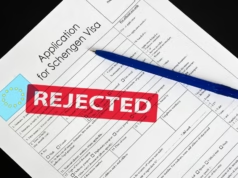
Schengen visa rules require travellers visiting several European countries to apply through the country that represents the main purpose or longest part of their trip, not necessarily the country they enter first. Getting this distinction wrong can lead to an application being submitted to the wrong embassy or consulate, creating unnecessary delays and complications before departure.
A Schengen visa allows eligible travellers to visit multiple countries within the Schengen Area without applying for a separate short-stay visa for each destination. This makes it possible to plan a single European trip that includes several countries, such as France, Germany, Italy, Spain and the Netherlands. However, although the visa generally covers the entire area, applicants must still determine which country’s authorities are responsible for processing their application.

The deciding factor is the main destination of the journey. Under the Schengen visa rules, travellers should apply through the country where they intend to spend the longest period. This is generally determined by the number of days planned in each country, rather than the order in which the destinations appear on the itinerary.
A traveller spending five nights in France, three in Italy and two in Germany should normally apply through France, even if the flight from their home country lands in Germany. The first country of arrival does not automatically determine which embassy should receive the application.
The situation becomes more complicated when the trip involves different activities. Someone travelling to Germany for a business conference before spending an equal number of days on holiday in France may have to apply through Germany if the business visit represents the main purpose of the journey. The Schengen Visa Code considers both the length of stay and the purpose of the visit when determining the competent country.
Where the traveller intends to spend an equal number of days in several countries for the same purpose, such as tourism, the application should be submitted to the country whose external border they will cross first when entering the Schengen Area. For example, a tourist planning to spend four days each in Spain, Portugal and France, entering through Spain, should apply through Spain.
This distinction is important because the country where a traveller submits a visa application is not necessarily the country where they must first arrive. A person who receives a Schengen visa from France can generally enter the Schengen Area through Germany, the Netherlands or another participating country, provided the visa is valid and the traveller meets the applicable entry conditions. The issuing country does not impose a general requirement that every visitor must begin their journey there.
ALSO READ: How to Apply for a Multiple Entry Schengen Visa Without a Bank Statement
The rules are based on the Schengen Visa Code, the European Union legislation governing the examination and issuing of short-stay Schengen visas. Article 5 identifies the Member State responsible for examining an application. Where a journey includes several destinations, responsibility normally belongs to the country that constitutes the main destination in terms of the length of stay or the purpose of the visit. If no main destination can be established, the country whose external border the applicant intends to cross first becomes responsible.
This means that travellers should not select an embassy simply because it has an earlier appointment, a more convenient application centre or a reputation for processing applications quickly. The correct country must be determined by the actual travel plans. Applying through a country that is not the main destination can result in the application being rejected or the applicant being directed to the appropriate consulate. Finland’s Ministry for Foreign Affairs, for example, specifically warns that an application submitted to a Finnish mission when Finland is not the applicant’s primary destination may be rejected.
The itinerary therefore deserves careful attention before an appointment is booked. Travellers should establish how many nights they intend to spend in each country, identify the main reason for the trip and make sure that their accommodation reservations, transport arrangements and supporting documents reflect those plans. A clear itinerary helps the consulate understand why the application has been submitted to that particular country.
This is particularly relevant for travellers combining tourism with business meetings, conferences, family visits or other activities. The number of days alone may not settle the question if the journey has a clearly identifiable main purpose. For instance, a traveller attending a three-day business event in the Netherlands and spending three additional days sightseeing in Belgium should consider the Netherlands as the main destination if the business engagement is the principal reason for the trip. The same principle applies to family visits and other journeys where the main purpose can be established.
Applicants should also remember that the right to apply through a particular country’s consulate is linked to where they legally reside. As a general rule, the application must be submitted to the consulate responsible for the area in which the applicant is legally resident. If the country responsible for the main destination does not have an embassy or consulate in that country of residence, another Schengen country may represent it for visa processing. Applicants should check the official embassy or consulate website to establish which authority handles applications in their location.
There is also a difference between holding a Schengen visa and having an unconditional right to enter the area. A valid visa allows the holder to travel to an external Schengen border and request entry, but border officials may still ask questions about the purpose of the visit, accommodation, available funds, return arrangements and other entry conditions. A visa issued by one country does not remove these requirements when entering through another.
Travellers should be particularly careful about making changes after receiving their visa. A revised itinerary does not automatically invalidate a visa, but significant changes to the main destination or the purpose of the journey can raise questions about whether the original application was submitted to the correct country. If plans change substantially before departure, applicants should contact the issuing consulate for guidance rather than assume that the original application remains appropriate.
For those planning a multi-country European holiday, the safest approach is to organise the journey before choosing an embassy. Work out where the longest stay will be, consider whether another country is the main destination because of the purpose of the visit, and use the first country of entry only when no main destination can otherwise be determined. This avoids a common misunderstanding: a Schengen visa may cover several countries, but the application must still be handled by the country responsible for the journey.
The European Commission advises applicants to submit their applications at least 15 days before their intended departure and permits applications up to six months in advance. Processing can take longer in individual cases, so leaving the appointment and documentation until the final weeks is a risk travellers should avoid. The Commission also directs applicants to the embassy or consulate of their main destination for country-specific requirements.
For a trip involving several Schengen countries, the question is therefore not simply where the plane will land first. It is which country is genuinely the main destination of the journey. Getting that decision right is one of the most important steps in preparing a multi-country Schengen visa application.