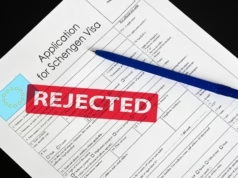
Schengen visa sponsorship is possible, and applicants do not always have to finance their European trip entirely from their own savings. A family member, friend, employer or another person may be able to cover some or all of the costs, depending on the circumstances and the requirements of the Schengen country handling the application.
However, having someone willing to pay for a trip does not automatically make an applicant eligible for a visa. Immigration authorities still need to establish that the visit is genuine, that the applicant has a credible reason for travelling, and that the arrangements for accommodation and financial support are sufficiently documented.

The distinction is important because a financial sponsor and a visa applicant have different responsibilities. A sponsor may help demonstrate that the visitor can afford the trip, but the applicant remains responsible for meeting the conditions of the visa.
The legal framework allows Schengen countries to consider financial support from another person. Article 14 of the EU Visa Code provides for supporting documents showing that an applicant has sufficient means of subsistence, including proof of sponsorship or private accommodation where the relevant member state requires it. This means that applicants do not necessarily have to demonstrate that every euro needed for the trip is held in their own bank account. A credible sponsor can help establish how the visit will be financed.
A sponsor does not necessarily have to be a parent, spouse or close relative. Depending on the destination country’s rules and the circumstances of the visit, a friend, partner, relative, employer, business or organisation may provide financial support. Someone living in the Schengen country may agree to pay for the visitor’s accommodation, food, local transport and other expenses. An employer or organisation may also cover the costs of a business trip, conference or professional event.
The relationship between the applicant and the sponsor matters because consular officials need to understand why another person is financing the visit. An applicant travelling to see a sibling, for example, has a straightforward explanation for receiving financial support from that family member. Someone whose entire trip is being funded by a person they have never met may face additional questions about the purpose of the arrangement and whether the supporting documents can be trusted.
Applicants should also understand that an invitation letter and a financial sponsorship are not necessarily the same thing. An invitation letter explains who is inviting the visitor, the relationship between the two parties, the purpose of the visit and, where relevant, where the visitor will stay. It does not automatically mean that the inviting person has agreed to pay the visitor’s expenses.
Financial sponsorship involves a commitment to cover specified costs. Some Schengen countries have official sponsorship forms that must be completed by the inviting person. Others have different procedures or supporting-document requirements. Applicants should therefore avoid assuming that a general invitation letter will be sufficient when someone else is paying for their trip.
Finland provides a useful example of how these arrangements work in practice. The Finnish Ministry for Foreign Affairs allows an inviting person to undertake to finance a visa applicant’s visit through a proof of sponsorship form. The sponsor may be a Finnish citizen or a person residing in Finland with a residence permit. Supporting documents can include a copy of the sponsor’s identity document, employment contract, recent payslips and bank statements. Evidence of accommodation and the relationship between the applicant and sponsor may also be required, depending on the circumstances.
The Netherlands has a separate procedure for visitors whose host will pay their expenses. Its official guidance requires a completed proof of sponsorship and/or private accommodation form, alongside evidence of the sponsor’s employment and income. Where a friend or family member living in the applicant’s country of residence is paying instead, the Netherlands also requests financial documents from that person.
These examples demonstrate why applicants should check the requirements of the country they intend to visit rather than relying on advice from someone who successfully obtained a visa for another Schengen destination.
The sponsor will generally need to demonstrate that they have the financial capacity to meet the commitment. Depending on the country’s procedure, this may involve recent bank statements, payslips, an employment certificate, an employment contract or other evidence of income. If the sponsor is self-employed or operates a business, relevant financial or business documents may be requested instead.
The applicant will also need to provide information about the proposed trip. This can include the travel itinerary, accommodation arrangements, intended length of stay, reason for visiting and evidence of the relationship with the sponsor. If the applicant is visiting a friend or relative, previous communication or evidence of earlier meetings may help explain the relationship, where relevant.
A sponsorship arrangement should be genuine and consistent across the application. If the sponsor claims to be paying for the entire visit, but the travel plans suggest that the applicant will be responsible for substantial expenses, the consulate may seek clarification. The same applies when the sponsor’s declared income appears insufficient to support the proposed commitment.
One of the most common misunderstandings surrounding Schengen visa sponsorship is the belief that a sponsor’s bank balance automatically solves an applicant’s financial eligibility problem. It does not.
Consular authorities assess the application as a whole. They consider the purpose and conditions of the visit, the reliability of the documents, the applicant’s personal circumstances and whether there are reasonable grounds to believe that the visitor will leave the Schengen area before the visa expires. Financial support is one part of that assessment, not a guarantee of approval.
Finland’s guidance makes this distinction particularly clear. Even when a host agrees to pay for a visitor’s expenses, the applicant must still provide information about their own financial situation. The Finnish authorities also assess the applicant’s circumstances in their country of residence. For private visits, the host’s wealth is not simply substituted for the applicant’s economic circumstances. Finland’s stated minimum financial requirement for short stays is EUR 50 per day, although a qualifying sponsorship arrangement can be taken into account when assessing how the visit will be financed.
This is an important consideration for applicants who are unemployed, studying, between jobs or unable to demonstrate substantial personal savings. Having a sponsor may help address the cost of the proposed trip, but it does not remove the need to explain the applicant’s circumstances or establish the credibility of the visit. A student, for example, may provide evidence of enrolment and an explanation of the holiday period, while an employed applicant may submit an employment letter and approved leave information.
Applicants should also be careful about the difference between sponsorship and accommodation. A person may offer a visitor a place to stay without agreeing to finance flights, meals or other expenses. Equally, someone may pay for a visitor’s trip while the visitor stays in a hotel. The application should accurately describe which costs the sponsor will cover and which expenses the applicant will pay independently.
Travel medical insurance remains another separate requirement. Having a financially capable sponsor does not remove the obligation to provide appropriate insurance for a short-stay Schengen visa. Applicants must also submit the other required documents, including a valid travel document and evidence supporting the purpose and conditions of the visit.
ALSO READ: How to Apply for a Schengen Visas Without Getting Rejected
There is also a practical issue that applicants sometimes overlook: agreeing to sponsor someone may carry financial responsibilities for the inviting person. The extent of that responsibility depends on the national procedure and the document signed. In Switzerland, for example, a formal declaration of sponsorship is a guarantee that the costs arising during the visitor’s stay will be covered by the person signing it. This is more than simply writing a friendly invitation letter.
For anyone planning to use a sponsor, the most sensible approach is to establish the arrangement before submitting the application. The applicant should identify the main destination country, check its official embassy or immigration guidance, confirm whether a prescribed sponsorship form is required and obtain the sponsor’s supporting financial documents. Both parties should understand exactly what expenses are being covered.
It is equally important to avoid purchasing unnecessary travel arrangements or submitting documents that do not reflect the actual plan. False sponsorship declarations, misleading financial information and fabricated accommodation arrangements can seriously undermine an application.
Ultimately, someone else can sponsor a Schengen visa application, and there are established procedures for doing so. But sponsorship should be understood as evidence of how a trip will be financed, not as a way of bypassing the visa assessment. A convincing application still needs a genuine travel purpose, credible supporting documents and a clear explanation of the applicant’s circumstances. The person paying for the holiday may make the journey financially possible, but the decision to issue the visa remains with the relevant consular authorities.