
A Schengen visa refusal does not necessarily mean the end of your plans to travel to Europe. Applicants whose visas are rejected have the right to receive an explanation of the decision and, depending on the circumstances, may challenge it through an appeal or submit a new application after addressing the reasons for refusal.
For many travellers, receiving a refusal letter can be frustrating, particularly after spending time gathering documents, paying the application fee and making travel arrangements. The immediate temptation may be to apply again at another embassy or submit a fresh application with additional paperwork. However, doing so without understanding why the original application was rejected can lead to another refusal.
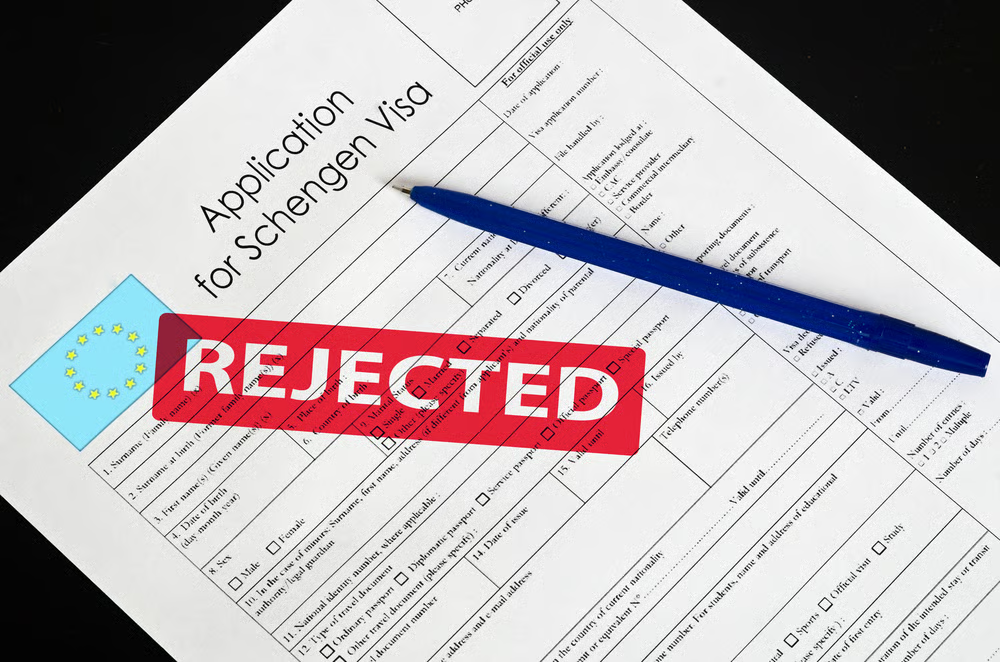
The first step is to examine the official refusal notification carefully. Under the Schengen Visa Code, applicants must be informed when their visa application is refused, and the notification must indicate the grounds for the decision. The standard refusal form identifies the reason or reasons selected by the consulate or visa authority. These can include doubts about the purpose of the visit, insufficient financial resources, concerns about the reliability of submitted documents, problems with travel medical insurance, or uncertainty about whether the applicant intends to leave the Schengen area before the visa expires.
A refusal should not automatically be interpreted as an accusation of dishonesty or an indication that an applicant is permanently ineligible to visit Europe. Visa decisions are made on the information available to the authorities at the time of assessment. A consulate may be unconvinced that the documents establish the applicant’s circumstances, even when the applicant believes that everything submitted is genuine and complete.
Understanding the specific reason for the refusal is therefore more useful than immediately preparing another application.
The refusal form may contain several grounds, and each deserves attention. For example, a person who has been refused because of insufficient financial evidence needs to examine how their income, savings and funding arrangements were presented. Someone whose application was rejected because of doubts about their intention to return home may need to look more closely at the evidence of employment, family responsibilities, studies, business activities or other circumstances in their country of residence.
These issues are not interchangeable. Adding more bank statements will not necessarily resolve a concern about the purpose of travel, just as providing a hotel reservation will not automatically address doubts about an applicant’s financial position.
Applicants should also distinguish between missing documents and evidence that the consulate considers insufficient or unconvincing. A file can contain every document on the embassy’s checklist and still fail to establish that the applicant meets the conditions for a visa. The assessment is not simply a matter of counting documents. Authorities consider the overall circumstances and whether the information provided supports the proposed journey.
Once the grounds have been identified, applicants have two main options: challenge the refusal or submit a fresh application. The appropriate choice depends on the reason for the decision, the evidence available and the national procedures of the country that refused the visa.
Under Article 32 of the EU Visa Code, applicants refused a Schengen visa have the right to appeal. However, the appeal is directed against the Member State that made the final decision, not against the Schengen area as a whole. The process is governed by that country’s national law, which means the procedure, submission method, applicable fees and deadlines can differ considerably between countries.
This distinction is particularly important because there is no single appeal deadline that applies to every Schengen visa refusal. Some countries allow a relatively short period in which to challenge the decision. Sweden, for example, requires an appeal to be submitted within three weeks of receiving the refusal. The Czech Republic sets a 15-day deadline for requesting a review of a Schengen visa refusal. Other countries operate different procedures.
Applicants should therefore follow the appeal instructions on their refusal notification and check the relevant immigration or foreign affairs authority’s official website. Waiting too long to decide whether to challenge a refusal can result in missing the applicable deadline.
An appeal is generally worth considering when the applicant believes the decision was based on an incorrect assessment, a misunderstanding of the submitted evidence or a failure to take relevant information into account. It is not simply an opportunity to repeat the original application. The applicant should explain why the refusal was wrong and identify the evidence supporting that position.
For instance, if a consulate questioned the availability of sufficient funds despite the applicant having submitted verifiable financial documents, the appeal should address the specific concern and explain why the original evidence meets the requirements. If the decision appears to have misunderstood the purpose of the visit, the applicant should clarify the relevant facts and refer to supporting material already submitted.
There is an important distinction between appealing a decision and providing new evidence. Some national review procedures assess whether the original decision was correct based on the information available when it was made. The Czech authorities, for example, state that information not included in the original application cannot be used as the basis for that particular appeal. Applicants should establish what their chosen country’s procedure permits before preparing their case.
A fresh application may be more appropriate when the original refusal identified genuine weaknesses that can be corrected. There is generally no EU-wide requirement to wait a fixed number of months before applying again after a standard Schengen visa refusal. Applicants can submit a new application, but the previous refusal should be taken seriously rather than treated as an administrative obstacle that can be bypassed.
The EU Visa Code makes clear that an earlier refusal does not automatically require authorities to reject a subsequent application. A new application must be assessed using all available information. This gives applicants an opportunity to demonstrate that their circumstances or supporting evidence now provide a stronger basis for the requested journey.
However, submitting the same documents with only minor changes is unlikely to produce a different outcome if the original concerns remain unresolved. Someone whose application was refused because their financial circumstances were unclear should provide a more convincing explanation of where their travel money comes from, who controls the funds and how the proposed trip will be paid for. Where another person is financing the journey, the applicant should make the sponsorship arrangement clear and provide appropriate supporting evidence.
Financial evidence should also make sense in relation to the proposed itinerary. A lengthy holiday, expensive accommodation and several planned destinations require a credible financial explanation. A large balance appearing shortly before an application is submitted may also require clarification of its source. Applicants should avoid borrowing money temporarily simply to create the appearance of stronger finances, particularly when they cannot explain or document the arrangement.
The same principle applies to employment and personal circumstances. An employment letter should accurately reflect the applicant’s position, salary and approved leave, where relevant. Business owners and self-employed applicants may need to demonstrate their professional activities and financial situation through appropriate records. Students may need evidence of enrolment and their arrangements for returning to their studies.
There is no universal document that guarantees a visa. The relevant evidence depends on the applicant’s individual circumstances, the purpose of travel and the concerns raised in the refusal.
Applicants should also resist the temptation to change their destination simply because another Schengen country appears easier to apply to. Under the Schengen rules, applications must generally be submitted to the consulate responsible for the applicant’s main destination. If the trip involves several Schengen countries, the main destination is normally determined by the purpose or length of the stay. Where there is no identifiable main destination, the country of first entry generally determines which consulate is responsible.
Submitting an application to a country that is not genuinely the main destination in the hope of obtaining a more favourable decision can create further questions about the credibility of the travel plans. A visa application should reflect the actual journey, not an itinerary designed around assumptions about which embassy is more likely to approve it.
Another issue worth checking is whether the refusal raises concerns about the authenticity or consistency of the documents. Applicants should never respond to a refusal by submitting altered bank statements, fabricated employment letters, false hotel reservations or misleading sponsorship documents. False information can undermine the credibility of an application and create more serious immigration difficulties than an ordinary refusal.
ALSO READ: How to Write an Invitation Letter for a Friend Visiting Europe: Requirements, Format and What to Include
If a document contains an error, the applicant should establish what happened and obtain a corrected version from the organisation responsible for issuing it. If information in the application was inaccurate, it is better to explain the discrepancy honestly than to attempt to conceal it in a subsequent submission.
Travel plans should also be reviewed before another application is lodged. Flight reservations, accommodation details, travel dates and the stated purpose of the visit should tell a consistent story. An invitation letter for a family visit, for example, should correspond with the applicant’s explanation of where they intend to stay and why they are travelling. A tourism application should contain a realistic itinerary that matches the length and financial demands of the proposed holiday.
It is also important to understand what a visa refusal means for future travel. A standard refusal does not automatically amount to a ban from entering Europe, nor does it mean that every future Schengen application will be rejected. The refusal is recorded in the Visa Information System, the EU database used by participating authorities to exchange visa application information. This means that a subsequent application may be assessed with knowledge of the earlier decision.
That makes consistency particularly important. Applicants should answer questions about previous refusals truthfully whenever requested. Attempting to hide an earlier decision is unlikely to help, especially when the relevant authorities have access to visa records.
For travellers with non-refundable flights, hotel reservations or other advance bookings, the financial consequences can be particularly difficult. A refusal does not normally mean that an airline or hotel must automatically return the money. Whether a booking can be cancelled, changed or refunded depends on its terms and conditions. Travellers planning future international trips should consider refundable arrangements or avoid making substantial non-refundable commitments before receiving their visa.
Those who believe they have been treated unfairly should also consider obtaining qualified immigration or legal advice, particularly where the refusal involves allegations of document fraud, security concerns or a complicated immigration history. The right appeal procedure may be more difficult to navigate than preparing a new application, and professional advice can help establish whether a challenge is appropriate.
The European Commission’s official visa guidance and the immigration authority of the country responsible for the decision are useful starting points. Applicants should rely on these sources rather than social media advice, informal claims about particular embassies or promises from visa agents who guarantee approval. No agent can guarantee that a consulate will issue a visa.
A refused Schengen visa application requires a careful response, not a hurried one. Whether the applicant chooses to appeal or apply again, the most important task is to understand what the authorities found unconvincing and respond to that concern with accurate, relevant evidence. A previous refusal does not close the door to future travel, but a stronger application must demonstrate more than a determination to try again. It must give the visa authorities a clearer and more credible reason to approve the journey.


