Finland’s Centre Party has proposed a sweeping overhaul of the country’s public administration, calling for the current ministry structure to be dismantled, more state responsibilities to be transferred to municipalities and regions, and wellbeing services counties to evolve into broader self-governing regions.
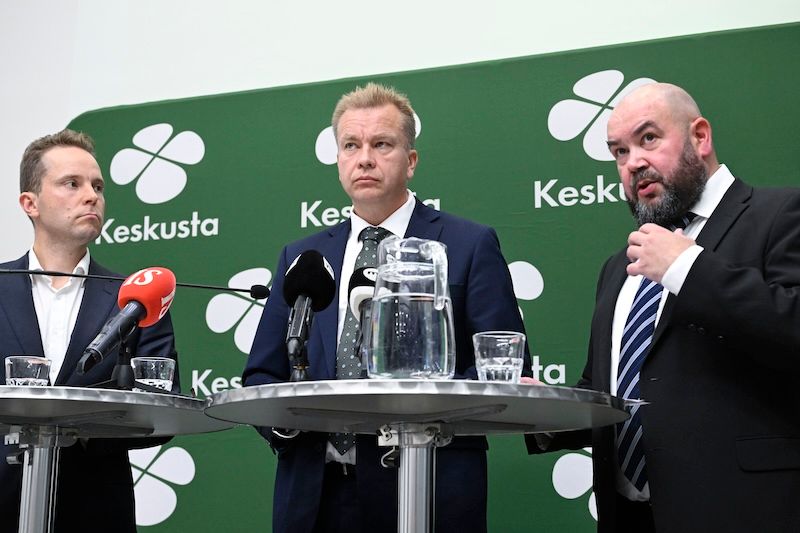
The opposition party unveiled its proposal, known as the “local model”, on Tuesday. It would establish three elected levels of government in Finland: municipalities, regions and the state. Administrative bodies operating between those levels would be removed or merged as part of a broader effort to simplify the public sector.
Centre Party leader Antti Kaikkonen said the proposal is intended to move political decision-making away from ministries and central government agencies in Helsinki and closer to municipalities and regions.
“Our public administration needs to be made lighter, bureaucracy reduced, and more decision-making power transferred closer to people and regions,” Kaikkonen told reporters.
At the centre of the proposal is a fundamental change to how Finland’s central government is organised. The Centre Party wants to abolish the ministries in their current form and reorganise their functions under the prime minister. The model draws partly on Sweden’s administrative system, where responsibilities can be organised across departments and adjusted according to the priorities of the government in office.
The proposal would also trigger a review of Finland’s central government agencies. Centre MPs Petri Honkonen and Mika Riipi, who were involved in preparing the plan, said some responsibilities currently handled by national agencies could instead be transferred to regional authorities.
The party’s approach would also give a new role to the wellbeing services counties created through Finland’s social and healthcare reform. Rather than dismantling the counties, the Centre Party wants most of them to develop into larger self-governing regions with responsibilities extending well beyond health and social services.
Under the proposal, these regions would continue to oversee healthcare and social services while also taking on duties currently carried out by regional councils and economic development authorities. Riipi stressed that the intention was not to dismantle the wellbeing services counties, but to broaden their responsibilities and move towards a stronger model of regional self-government.
The proposed regions would not, however, receive their own taxation powers.
Municipalities would also gain greater freedom to organise local services and decide how they cooperate with neighbouring municipalities. The Centre Party opposes compulsory municipal mergers, instead favouring voluntary arrangements supported by financial incentives.
The party also wants to broaden municipal tax bases, including changes to the way property taxation is handled. The aim would be to give municipalities greater control over their finances as more responsibility for local services is transferred away from central government.
Some regulatory powers would also be shifted from the state to the regions. Because such a change would affect the division of public authority under Finland’s constitutional framework, the proposal would require constitutional amendments. Among the areas mentioned by the Centre Party are certain environmental regulatory responsibilities.
The party estimates that reorganising central government administration could generate savings of at least EUR 500 million. Honkonen and Riipi said additional savings could be achieved by using artificial intelligence and eliminating overlapping administrative functions.
The scale of the proposal means that it would not be an immediate administrative adjustment. Kaikkonen wants the reform to be included in the next government programme and has said implementation should begin during the next parliamentary term. The Centre Party acknowledges that completing the restructuring would take considerably longer.
The proposal therefore amounts to more than a change in organisational charts. It would alter the division of responsibilities between Finland’s municipalities, regions and central government, while giving the regions a substantially broader role in running public services. For the Centre Party, the stated objective is a smaller central administration and more decisions made closer to the people and communities affected by them.