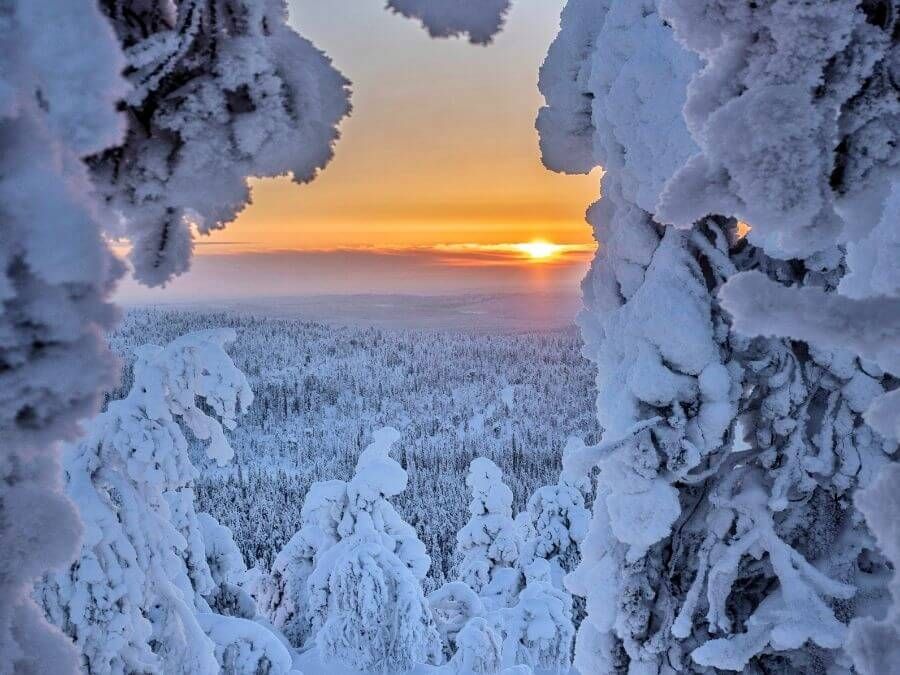
Finland could face a particularly cold and cloudy winter, with meteorological forecasts pointing to conditions that may bring periods of biting cold or heavy snowfall across the country.
The warning comes from Ari-Juhani Punkka, a meteorologist at the Finnish Meteorological Institute, who has examined the latest long-range outlook from the Copernicus Climate Change Service, known as C3S. The forecasting system combines information from several international meteorological centres to assess possible weather patterns as far as six months ahead.
The current outlook is drawing attention because of what it suggests for the middle of winter, particularly January and February. According to Punkka, the forecast indicates that Finland could find itself on the colder side of a low-pressure system, leaving the country exposed to winds arriving from the north, northeast or east.
The position of these weather systems matters because it can determine whether Finland receives milder air from the south or colder air flowing in from northern and eastern regions. If low-pressure systems track south of Finland during February, the milder air associated with them could also remain south of the country.
Punkka said it was unusual to see such strong indications of air-pressure movements in a forecast covering such a long period.
That does not necessarily mean Finland is guaranteed a relentlessly freezing winter. The same broad weather pattern could produce very different conditions depending on where individual weather systems develop and how they move.
One possibility is prolonged cold, potentially accompanied by significant snowfall. Another is a winter dominated by thick cloud cover without particularly deep snow. Cloudy conditions can keep temperatures from falling as sharply, meaning a winter can look distinctly wintry without consistently producing extreme cold.
“When we have clouds overhead, the temperatures can also be quite mild,” Punkka said.
There is also a colder scenario in the forecast. If a low-pressure system were to move towards Finland from Siberia, temperatures could fall considerably as much colder air reaches the country.
The broader atmospheric pattern may also be influenced by El Nino, a recurring climate phenomenon that develops when ocean temperatures in parts of the Pacific become unusually warm. El Nino events typically occur every two to seven years and can last around a year, with effects that extend beyond the Pacific region.
Punkka said a strong El Nino makes wintry weather patterns in Europe somewhat more likely than usual during January and February. That does not determine Finland’s weather on its own, but it is one of several factors meteorologists consider when assessing the prospects for the coming season.
For people in Finland, however, there is an important qualification to the forecast. A six-month outlook is very different from a short-range weather forecast, and its ability to predict specific conditions at a particular place and time is limited.
The current signals therefore point to a possible colder winter rather than a certainty of prolonged severe weather. Atmospheric patterns can change considerably before January arrives, and individual storms, snowfall events and temperature swings cannot be reliably determined this far in advance.
For now, the forecast offers an early indication that January and February could bring more distinctly wintry conditions to Finland, but how that winter actually unfolds will depend on weather systems that have yet to develop.