Data centre restrictions in Finland have gained enough public support to force a parliamentary debate, after a citizens’ initiative calling for tighter controls on the rapidly expanding industry collected the required 50,000 signatures within just three days.
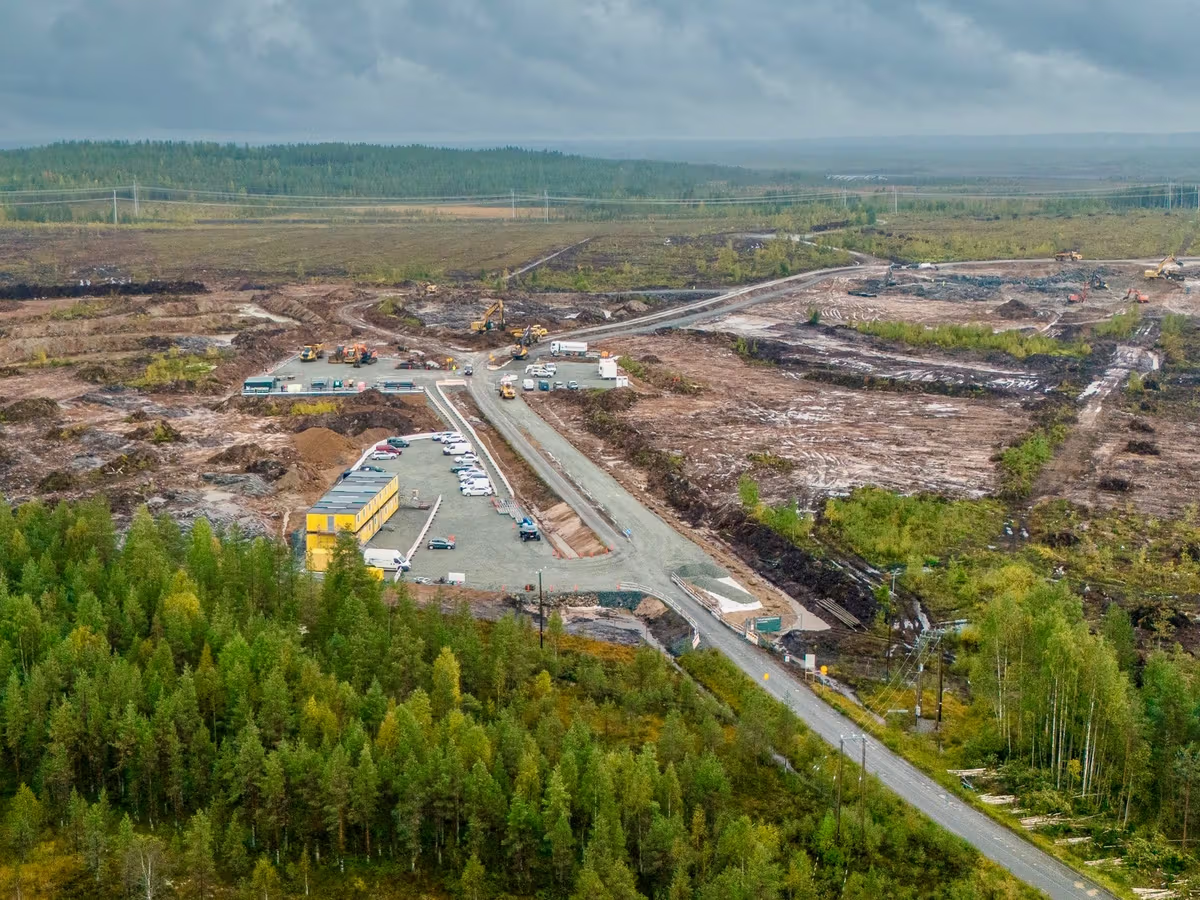
The initiative, titled “Datakeskukset kuriin“, or “Rein in the data centres”, was launched on Tuesday following Google’s announcement that it plans to significantly expand its data centre operations in Finland over the coming years. Reaching the 50,000-signature threshold means the proposal will now be submitted to Parliament, where MPs will have the opportunity to consider its demands.
At the centre of the initiative is a call for clearer rules governing how data centres connect to Finland’s electricity grid and how they operate. Its organisers argue that decisions about the industry should take greater account of the capacity of the electricity network, requirements for backup power and the potential use of waste heat generated by data centres.
The initiative also proposes a separate fee for data centre operators. According to the proposal, the charge would reflect the environmental impact of their operations and the resources they consume, including electricity, water and land.
The organisers argue that such a system would help prevent the growing demand from data centres from putting additional pressure on energy prices for households and other industries.
The debate comes as Finland has positioned itself as an increasingly attractive location for large-scale data infrastructure. International technology companies have announced major investments in the country, including Microsoft and ByteDance, the Chinese company that owns TikTok.
Finland’s appeal to data centre operators is partly linked to its climate. Cooler conditions can help reduce the costs involved in managing the large amounts of heat generated by data centre equipment. The country also has access to a substantial supply of low-carbon electricity, another factor that can make it attractive to companies seeking to operate energy-intensive facilities.
The rapid growth of the sector, however, is bringing greater attention to the amount of electricity, water and land required by these facilities and how their expansion fits into Finland’s wider energy system.
The 50,000-signature threshold does not mean that the proposed restrictions will automatically become law. It gives the initiative a route into Parliament, where its proposals will be examined and debated before MPs decide how to proceed.
For Finland, the parliamentary discussion is likely to add another dimension to an investment trend that has so far been driven largely by the country’s appeal as a reliable and relatively low-carbon location for digital infrastructure. The question now is how that growth should be regulated as demand for data centres continues to increase.