Finland’s agricultural policy put Prime Minister Petteri Orpo’s government under renewed parliamentary pressure on Friday, but the government survived a confidence vote by 96 votes to 82.
Twenty MPs were absent from the vote, while Social Democratic MP Timo Harakka abstained. The result allowed the government to remain in office despite a sharp parliamentary challenge over the state of Finnish agriculture and the government’s response to the sector’s financial difficulties.
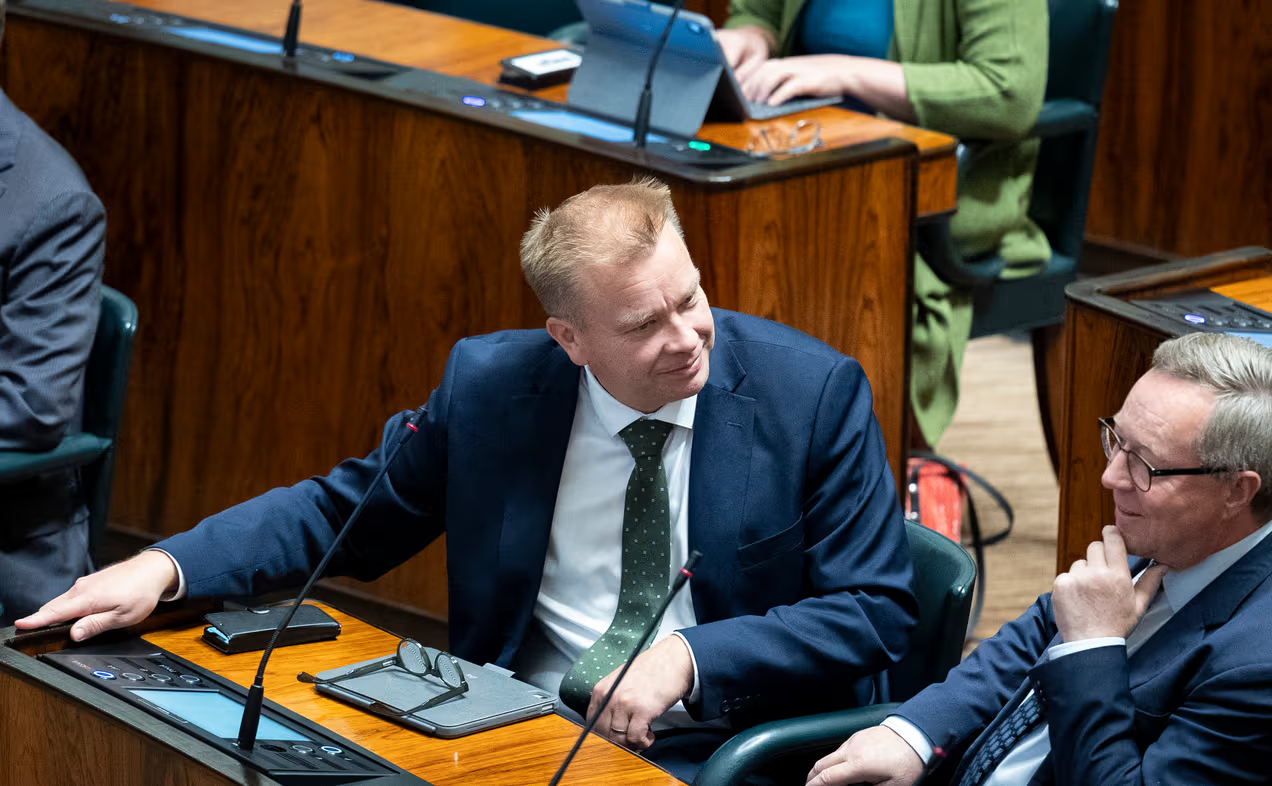
The vote followed an interpellation debate initiated by the Centre Party, which has traditionally had strong support among farmers and rural communities. The party has argued that Finnish agriculture is facing a particularly severe economic situation and that the government needs to take more immediate action.
Centre Party leader Antti Kaikkonen said earlier this month that Finnish agriculture is the least profitable agricultural sector in the European Union. The party’s interpellation called for emergency funding of between 100 million and 150 million euros to help farmers deal with the situation.
The proposal comes as agricultural producers continue to face concerns about the viability of farming in Finland, including the longer-term implications for domestic food production. Sweden’s outgoing government has recently proposed a similar emergency support package, which the Centre Party cited as an example of the kind of intervention it believes Finland should consider.
Kaikkonen has also argued that the position of Finnish agriculture has deteriorated further during the current government’s term. The Centre Party’s criticism has therefore focused not only on the wider economic pressures facing farmers, but also on whether the government’s existing policies are sufficient to protect the future of the sector.
One of the most politically significant elements of the Centre Party’s proposal is how the additional agricultural funding could be financed. The party suggested that the government could abandon its planned reduction in corporate tax rather than introduce new spending without an offsetting source of revenue.
Under the government’s proposal, Finland’s corporate income tax rate will fall from 20 percent to 18 percent next year. The change is expected to reduce state tax revenues by approximately 850 million euros.
For the Centre Party, redirecting part of that fiscal space towards agriculture represents a different set of priorities for government spending and taxation. The government, meanwhile, has retained its broader tax policy despite the opposition’s demands for additional support for farmers.
The parliamentary confrontation comes after farmers took their concerns directly to the streets earlier this year. Agricultural producers protested outside parliament in the spring, raising questions about the future of Finnish farming, national food supplies and the direction of agricultural policy.
The confidence vote does not resolve those underlying disputes. The government has secured parliamentary support on the issue, but the concerns raised during the debate remain tied to a sector facing persistent economic pressure.
For Finland, the agricultural debate extends beyond the income of individual farmers. It also touches on the country’s ability to maintain domestic food production and on the choices the government makes when balancing tax policy, public finances and support for industries considered strategically important.
The 96-82 vote has settled the immediate parliamentary challenge to the government, but it has not ended the political dispute over how Finland should respond to the difficulties facing its agricultural sector.