C&O Canal lockhouses offer something unusual for travellers in Maryland: the chance to spend the night inside buildings that once formed part of a working 19th-century canal system. Along the Chesapeake & Ohio Canal, historic cottages that were once homes to lock-keepers have been restored as overnight accommodations, allowing visitors to experience the landscape and history of the waterway at a much slower pace.
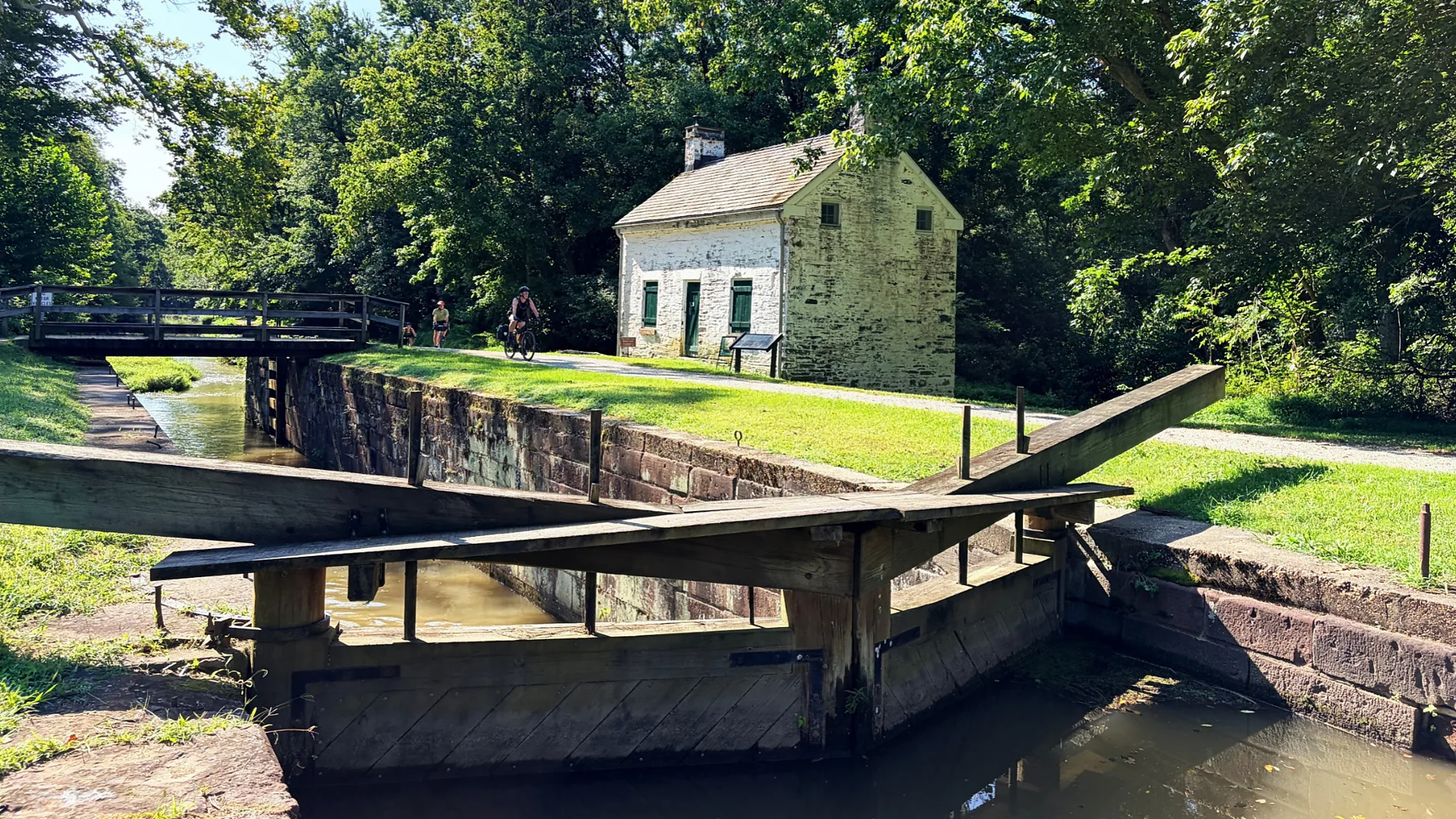
The experience begins in Georgetown, Washington DC, where the canal starts at mile zero before following the Potomac River west for 184.5 miles (297km). Today, the towpath is a popular route for cyclists, hikers and visitors exploring the Chesapeake & Ohio Canal National Historical Park. Two centuries ago, however, it was a working transport route crowded with mule-drawn canal boats.
I arrived at mile nine after several sweaty miles along the towpath, following the canal through dense Maryland woodland. The sounds of the city had gradually disappeared, replaced by birds, insects and the occasional cyclist. Then, beneath a canopy of trees, a small stone cottage appeared beside the canal.
This was Lockhouse 10, built in 1830 and once home to a lock-keeper. It would be my home for the night.
The Chesapeake & Ohio Canal was conceived as an ambitious route linking Washington DC with the Ohio River. Construction began in 1828, inspired in part by George Washington’s earlier vision of improving trade between the eastern United States and the developing territories to the west. The canal never reached the Ohio River. Instead, it stopped at Cumberland, Maryland.
The competition was already arriving. On the same day construction of the canal formally began, work also started on the Baltimore and Ohio Railroad. Rail transport would eventually prove faster and more efficient, but the C&O Canal survived as a commercial waterway for 93 years.
At its height in the 1870s, hundreds of mule-powered boats travelled the canal, passing through 74 lift locks operated by lock-keepers. During the American Civil War, the canal also became an important Union supply route and was repeatedly targeted by Confederate forces.
The canal finally closed in 1924. Its future was uncertain for years as the waterway deteriorated and sections of the old infrastructure fell into disrepair. The federal government acquired the canal property in 1938, and the Civilian Conservation Corps began restoring parts of it. A major flood in 1942 destroyed much of that work, and there were proposals to turn the abandoned canal corridor into a road.
Instead, the waterway was preserved. President Dwight D. Eisenhower designated it a national monument, and in 1971 the Chesapeake and Ohio Canal became a national historical park.
Much of that history can still be seen from the towpath. Of the 57 lockhouses that once stood along the canal, 26 remain. The C&O Canal Trust, working with the National Park Service, eventually developed a programme that would give some of these buildings another purpose.
The first overnight lockhouse opened in 2010. Today, eight historic lockhouses form part of the Canal Quarters programme, with accommodations ranging from relatively comfortable cottages to deliberately austere buildings designed to recreate earlier periods of canal life.
The idea is not simply to sleep in an old building. Each house is furnished to represent a particular period in the canal’s history, turning an overnight stay into a more intimate encounter with the site.
At Lockhouse 10, the interior evokes the late 1930s, when the Civilian Conservation Corps was working to rehabilitate the first 22 miles of the canal. The two-storey house contains fireplaces, two bedrooms and a bathroom with a claw-foot tub. In the kitchen, a mint-green colour scheme and period details create the feeling of stepping into another era.
There is still one important reminder that this is not a hotel. Guests must bring their own bedding, toiletries and food.
After spending the day hiking, I dropped my pack, explored the house and prepared a simple dinner using the supplies I had carried with me. Through the gingham curtains, cyclists and hikers occasionally passed along the towpath. Beyond the walls, cars travelled along Clara Barton Parkway.
Inside, the setting suggested the 1930s. Outside, the modern world carried on.
The following morning brought another stretch of the towpath, this time covering about eight miles to Lockhouse 21. The pace of travel felt very different from that of the original canal workers. A lock-keeper’s day could begin at 02:00, summoned by a boatman’s horn or the cry of “Hey-y-y-y lock!”
My morning began with oatmeal.
The trail remained shaded beneath a canopy of trees, with the Potomac River occasionally visible through the vegetation. Wildlife added another layer to the journey. Red-tailed hawks watched from above while green herons moved through the water and painted turtles rested on logs.
Near mile 12.3, hunger sent me across a footbridge to Old Angler’s Inn in Potomac, where a burger provided a welcome break before I returned to the trail.
Farther along, the landscape changed at Widewater, a broad section of the canal created from an old channel of the Potomac River. The canal expands dramatically there, growing from roughly 60 feet (18m) wide to almost 500 feet (150m). After hours of walking beside a narrow, engineered waterway, the sudden openness of the landscape is striking.
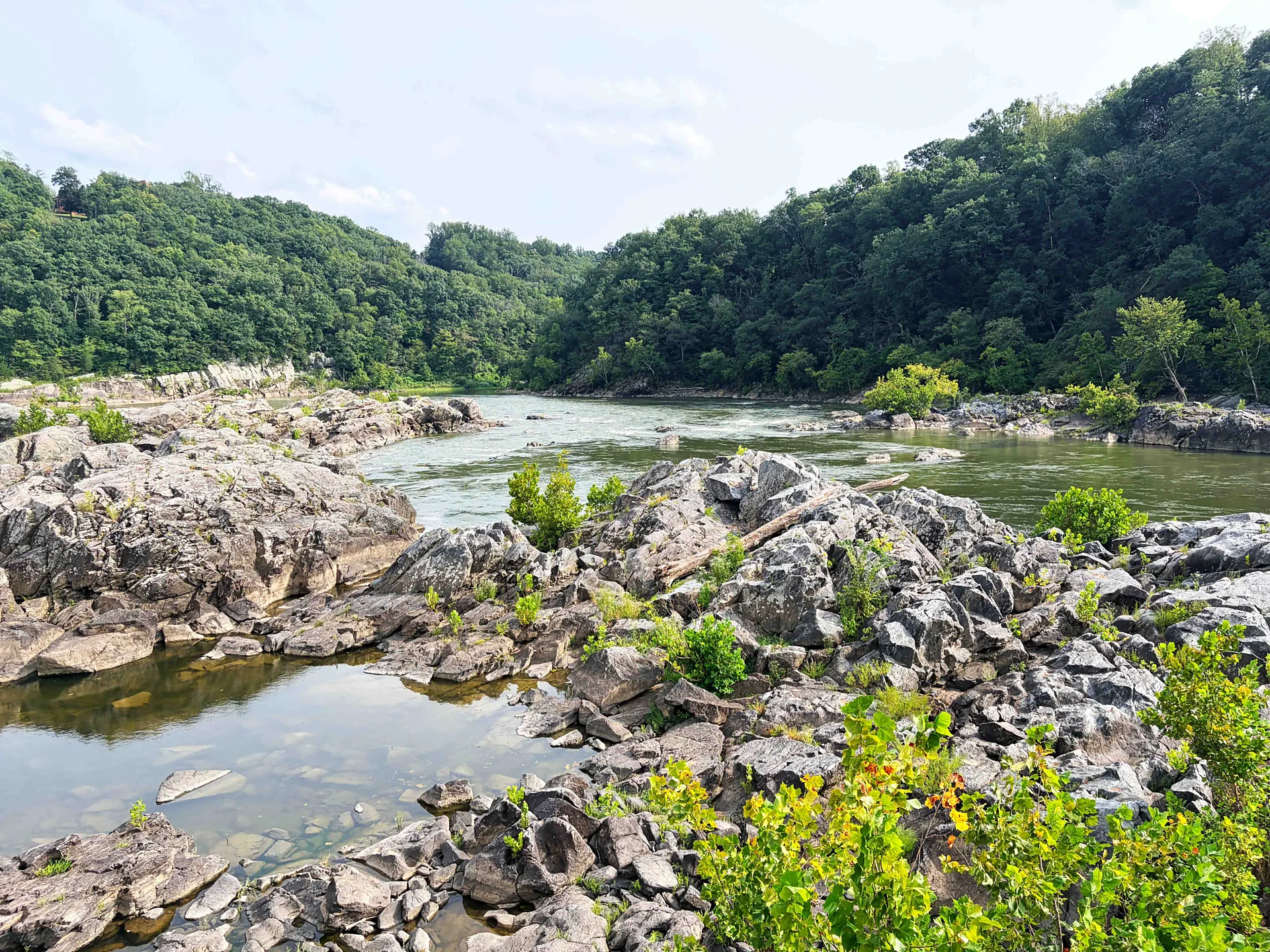
A detour to Mather Gorge offered another perspective. The narrow gorge cuts deeply into the Potomac, with water moving through rocks far below. Standing above it, the contrast between the wild river and the carefully engineered canal becomes difficult to miss. The two landscapes exist side by side, but they represent very different ideas about how people have used the river corridor.
Lockhouse 21 provided another glimpse into the canal’s working years. Built in 1830, it has been furnished to evoke 1916, when commercial traffic on the canal was approaching its final years. Scrapbooks tell the story of the Swain family, who tended the nearby lock for more than a century.
Some details are historical recreations rather than original objects. An electric range, for example, has been designed to resemble an old-fashioned stove. The effect is less about creating a museum display than about giving visitors a sense of what life around the canal may have looked like.
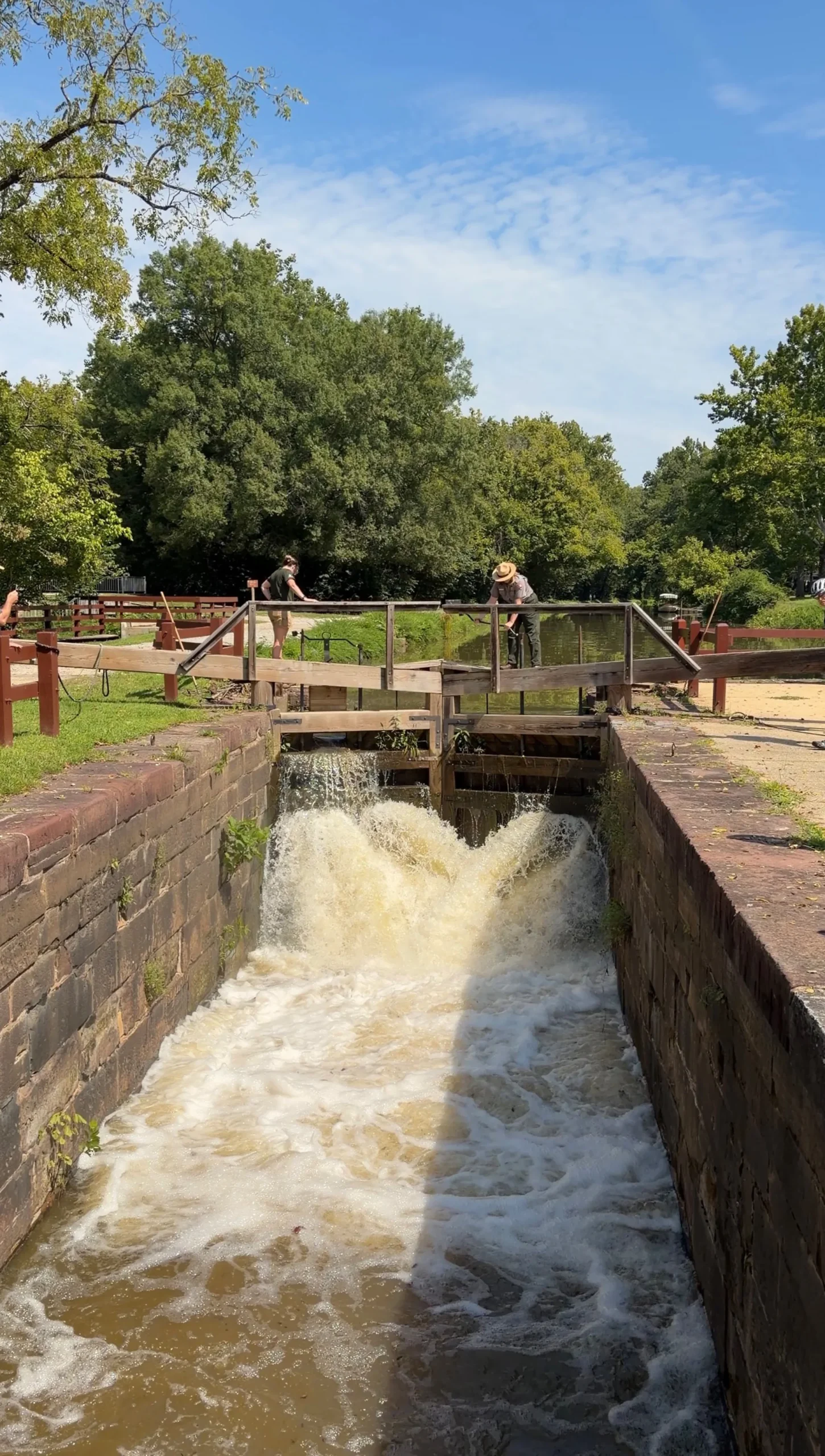
The next day brought a different kind of encounter with the canal. At Great Falls Tavern Visitor Center, a former lockhouse now used by the National Park Service, I joined a boat ride aboard a 30-foot replica launch. A ranger explained the canal’s history as the boat moved along the waterway before demonstrating a restored lift lock.
After spending days looking at the massive wooden structures from the towpath, being invited to push one of the balance beams made the engineering feel much more tangible.
The final overnight stop was Lockhouse 22, and it offered the most stripped-back experience of the trip.
There was no electricity and no running water. Battery-operated lanterns provided light, while an outhouse served as the bathroom. Exposed beams, gaps in the floorboards and mismatched wooden furniture reinforced the sense of stepping further back into the canal’s past.
Information inside the house tells the story of the engineering achievements that once made the canal possible, including the Seneca Aqueduct, which carried the canal over Seneca Creek and was combined with a lift lock. The site also has a connection to President Grover Cleveland, who was known to fish at Lock 22.
After dark, the experience became even more removed from the present. Lantern light picked out the occasional spider on the wall, while outside the hot Maryland night filled with the sound of crickets. The beds offered one concession to modern comfort: memory-foam mattresses.
The C&O Canal lockhouses are not luxury accommodation, and that is part of their appeal. They ask visitors to slow down, walk the towpath and pay attention to the physical remains of a transportation system that shaped the region before railways and highways transformed American travel.
The canal is approaching its 200th anniversary, but preservation work continues. During the trip, Lockhouse 8, located at mile 8.3, was reopened as the newest addition to the overnight programme, with its interior reflecting the 1960s period when the canal was being preserved as a national monument.
More restoration work is planned, extending the opportunity to stay overnight farther along the canal.
For visitors, the lockhouses provide more than an unusual place to sleep. They create a direct connection between the landscape and the people who once lived beside it, maintained its locks and watched boats move slowly along the water. The towpath can be walked in a few hours, but staying beside the canal changes the pace of the journey. After sunset, when the cyclists have gone and the traffic fades into the distance, the old waterway begins to feel less like a preserved historic site and more like a place where its past is still present.