Hamburg’s Reeperbahn is one of Germany’s best-known nightlife destinations, but its reputation as a street of nightclubs, bars, theatres and adult entertainment grew out of a much different past. Long before international visitors arrived in search of live music and late-night entertainment, the area was a working district shaped by shipbuilding, rope-making, harbour trade and the constant movement of sailors.
Located in St. Pauli, close to the River Elbe and Hamburg’s historic port, the Reeperbahn has developed over several centuries into an entertainment district recognised far beyond Germany. Its transformation reflects the city’s maritime history, changing attitudes towards entertainment and the influence of music on popular culture.

The street’s name offers the first clue to its origins. Reeperbahn comes from the Low German word “Reep”, meaning rope. In the 17th century, rope-makers known as Reepschlaeger established workshops outside Hamburg’s city walls, where they could use long, straight stretches of land to manufacture the heavy ropes required by sailing ships. Producing ship rigging involved laying out and twisting long strands of hemp, making the open space particularly suitable for the trade.
The rope-makers’ work areas eventually gave the street its name. What began as an industrial location connected to maritime commerce would later become one of Europe’s most recognisable entertainment districts.
At the time, the surrounding area was not yet the fashionable nightlife destination that visitors encounter today. St. Pauli, then known as Hamburger Berg, stood outside Hamburg’s main city boundaries. It developed as a place where businesses and activities that were difficult to accommodate within the city could operate. Workshops, working-class housing, taverns and other establishments gradually appeared, creating a neighbourhood with a character distinct from Hamburg’s more established commercial centre.
The port played a decisive role in the area’s next transformation. As Hamburg expanded its maritime trade, increasing numbers of sailors, dockworkers and travelling merchants passed through the city. For seafarers arriving after long periods at sea, St. Pauli offered somewhere to eat, drink, socialise and find entertainment close to the harbour.
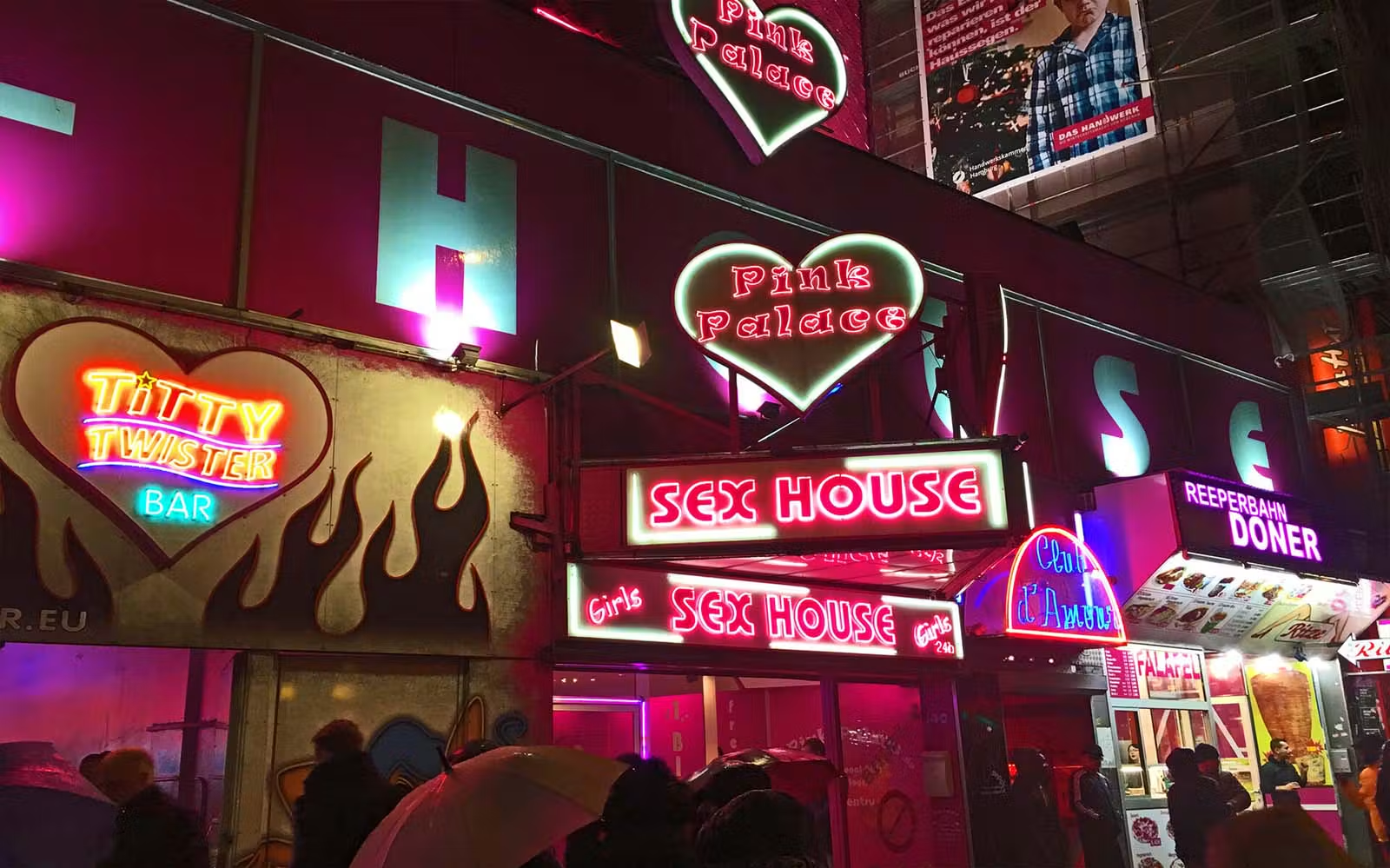
The growing demand encouraged the establishment of pubs, dance halls, theatres and other entertainment businesses. Prostitution also became increasingly associated with the neighbourhood. What had once been a centre for rope production was gradually developing into a place where commercial entertainment and maritime working life existed side by side.
During the 19th century, the area around Spielbudenplatz became particularly important to this development. Travelling performers, street entertainers, theatres and popular attractions drew audiences from Hamburg and beyond. The entertainment trade was not limited to nightlife as it is understood today. Visitors could encounter theatrical performances, exhibitions, unusual attractions and public spectacles.
The lifting of Hamburg’s night-time gate restrictions in 1861 also helped the district develop. Previously, St. Pauli’s position outside the city walls had meant that movement between the suburb and the city was restricted at night. Greater freedom of movement supported the growth of entertainment businesses and made the neighbourhood more accessible.
By the late 19th and early 20th centuries, St. Pauli had established itself as a major centre of popular entertainment. The Reeperbahn and its surrounding streets became associated with dance halls, bars, theatres, music venues and brothels. The district’s identity was increasingly shaped by the mixture of nightlife and adult entertainment that attracted sailors, local residents and visitors.
However, the Reeperbahn’s international reputation would eventually extend well beyond its association with prostitution. Music became one of the most important influences on its modern identity.
In August 1960, a young British band called The Beatles arrived in Hamburg to perform at the Indra Club on nearby Große Freiheit. The group, which included John Lennon, Paul McCartney, George Harrison and drummer Pete Best at the time, was still far from the international success it would later achieve.
Their Hamburg performances were demanding. The band played lengthy sets in crowded clubs, developing its stage presence and musical confidence through repeated performances. After the Indra, the group also performed at the Kaiserkeller and later at the Star-Club, which opened in 1962.
Hamburg became an important part of the Beatles’ early development. The experience of performing regularly in the city’s nightlife venues helped shape the musicians before international fame transformed their careers. Other British musicians and bands also performed in the district, making St. Pauli an important meeting point for emerging rock and roll culture.
Today, the connection is commemorated at Beatles-Platz, a public square at the intersection of the Reeperbahn and Große Freiheit. Its metal silhouettes of the band members have become a familiar attraction for music fans visiting Hamburg.
The district’s history, however, has not been one of uninterrupted growth. During the 1970s and 1980s, St. Pauli experienced serious problems involving organised crime, drug trafficking and violent disputes between rival groups. The neighbourhood became associated with a darker side of nightlife, and its reputation suffered.
The changing economics of the adult entertainment industry also affected the district. Competition from new forms of adult media, alongside broader social and economic changes, contributed to the decline of parts of the traditional red-light business. Some establishments disappeared, while others adapted to changing audiences.
Yet the Reeperbahn retained its importance as an entertainment destination. Its theatres, music venues, restaurants and clubs helped maintain the area’s appeal, while new cultural businesses gradually added to its identity. The result is a district that cannot be understood through its red-light reputation alone.
One of the most significant additions to its modern cultural profile is the Reeperbahn Festival. Established in 2006, the annual event brings musicians, music professionals and audiences to St. Pauli for performances, industry meetings and cultural activities. It has helped reinforce Hamburg’s position within the international music industry and given the neighbourhood a platform beyond its traditional nightlife businesses.
The modern Reeperbahn is consequently a mixture of different experiences. Large nightclubs and concert venues operate alongside smaller bars, restaurants, theatres, cabaret establishments and independent cultural spaces. Spielbudenplatz remains an important public gathering point, hosting markets and events throughout the year.
ALSO READ: Amsterdam’s Red-Light District Faces an Uncertain Future as Plans to Relocate Sex Work Are Reconsidered
The adult entertainment industry has not disappeared either. Herbertstrasse, a side street near the Reeperbahn, remains one of the most recognisable parts of Hamburg’s red-light district. Access is restricted to women and minors, reflecting the street’s longstanding association with prostitution. Its presence is a reminder that the neighbourhood’s older identity remains part of its present-day character.
For visitors, the appeal of the Reeperbahn depends largely on what they want to experience. Music enthusiasts can explore venues connected to the Beatles and Hamburg’s rock history. Theatre audiences have several established stages to choose from, while those interested in nightlife can find everything from small pubs to large clubs. Others visit simply to experience the atmosphere of one of Europe’s most recognisable entertainment streets.
But the Reeperbahn is not just a destination for people looking to spend a night out. It is also part of the wider St. Pauli neighbourhood, where residential life, independent businesses, football culture and alternative social movements exist alongside tourism and entertainment.
That combination is important to understanding its character. St. Pauli has long been associated with working-class communities and a strong local identity. Its residents have experienced the effects of commercial development, changing property values and the growing number of visitors attracted by the district’s international reputation. The neighbourhood is therefore more than a backdrop for nightlife; it is a lived-in urban community with its own history and social tensions.
The Reeperbahn’s transformation from a rope-making centre into an internationally recognised nightlife destination took place over several centuries. Maritime trade brought the sailors, entertainment businesses followed, and the music scene eventually gave the district a cultural identity that reached audiences around the world.
Its reputation may still be closely associated with neon lights, nightclubs and adult entertainment, but the history behind the street tells a much broader story about Hamburg itself. Few places in Germany demonstrate so clearly how a city’s working past can evolve into a major centre of popular culture without completely losing the traces of its origins.