White House media ban against CNN, MS NOW and Politico has escalated into a constitutional dispute over how much control the US president can exercise over journalists covering the White House, with the Justice Department arguing that access to restricted presidential areas is a privilege rather than a constitutional right.
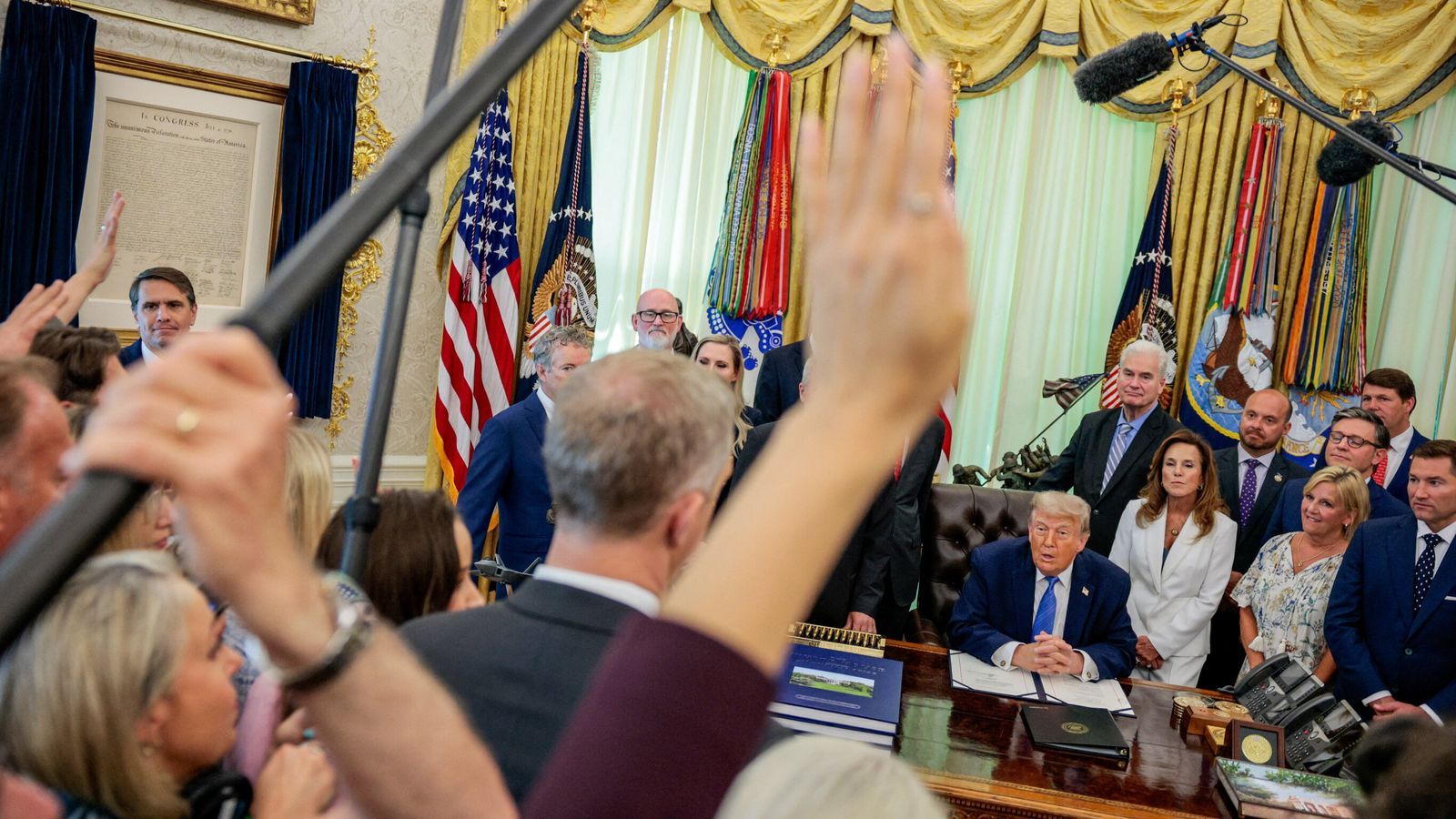
The dispute began on September 18, when President Donald Trump announced that the three news organisations would no longer be permitted access to the White House. Trump accused the outlets of repeatedly publishing what he described as false or negative coverage. Their journalists were subsequently denied entry to the White House grounds and had their press credentials deactivated.
CNN, MS NOW and Politico responded by taking the administration to federal court, arguing that the restrictions were retaliation for their journalism and violated protections for freedom of speech and the press under the First Amendment. They also challenged the way their credentials were revoked, arguing that they were not given adequate notice or an opportunity to contest the decision.
The Justice Department took a broader position in its response. Government lawyers argued that journalists do not have an unrestricted constitutional right to enter White House facilities and that the president has authority to determine access to areas such as the Oval Office. “Access to the White House is a privilege – not a right,” the department said in its court filing.
The administration also sought to justify the restrictions on national security grounds. According to the government’s filing, the White House had sent letters to the affected organisations pointing to reporting it alleged had threatened national security or spread falsehoods. CNN has disputed the administration’s characterisation of its journalism and has stood by its reporting.
Among the reporting cited by CNN was coverage concerning Trump’s reported plans for a bunker beneath the East Wing ballroom and reporting related to the Iran war. The outlets have rejected the suggestion that their reporting should determine whether their journalists are allowed to cover the president from the White House.
That distinction is at the heart of the legal dispute. The three organisations argue that allowing a president to remove journalists because of their coverage could give the government significant power to decide which news organisations receive access based on what they publish. The administration, by contrast, maintains that controlling access to restricted areas falls within presidential authority.
The case came before US District Judge Timothy Kelly in Washington on September 23. During the hearing, Kelly questioned whether the administration’s decision complied with existing legal precedents concerning the removal of White House press credentials. He did not issue an immediate ruling at the hearing.
The dispute also reached beyond the courtroom. CNN’s removal from the White House television press pool prompted the other major television networks participating in the rotating pool to suspend their participation. The arrangement normally allows a designated news organisation to cover presidential events and share the resulting footage with other outlets, an especially important system when space or access is limited.
The confrontation continued while Trump was in New York for the United Nations General Assembly. Journalists from the affected organisations remained able to cover the president there using credentials issued by the United Nations. Trump questioned CNN journalists’ presence while speaking to reporters at the UN on September 22, telling them that he was surprised they were covering him and that they should not be there.
The legal dispute moved quickly after the September 23 hearing. On September 24, Judge Kelly ordered the administration to restore the White House access of journalists from CNN, MS NOW and Politico and blocked enforcement of the ban for 14 days. He said the outlets were likely to succeed in showing that the revocation of their credentials violated constitutional due process protections. He also found that the administration’s national security justification lacked sufficient factual support in the record before the court.
The White House subsequently began reinstating the journalists’ access, although the process was initially chaotic. The affected organisations reported that some journalists were still being denied entry after the ruling, prompting further exchanges between the news organisations and the court before access was restored.
The judge’s order does not settle the broader lawsuit. It temporarily prevents enforcement of the ban while the constitutional challenge continues, leaving the central question of presidential control over White House press access to further proceedings.
For the news organisations, the case is about more than entry through the White House gates. They contend that government control over press access cannot be used as a response to journalism that a president dislikes. For the administration, the case concerns the president’s authority over access to restricted government spaces and its claim that national security considerations can justify limitations.
The outcome could therefore have consequences beyond CNN, MS NOW and Politico. At stake is how the government balances control over access to the president with the press’s ability to independently cover the presidency. For now, the court has required the administration to restore access while that larger legal question remains unresolved.