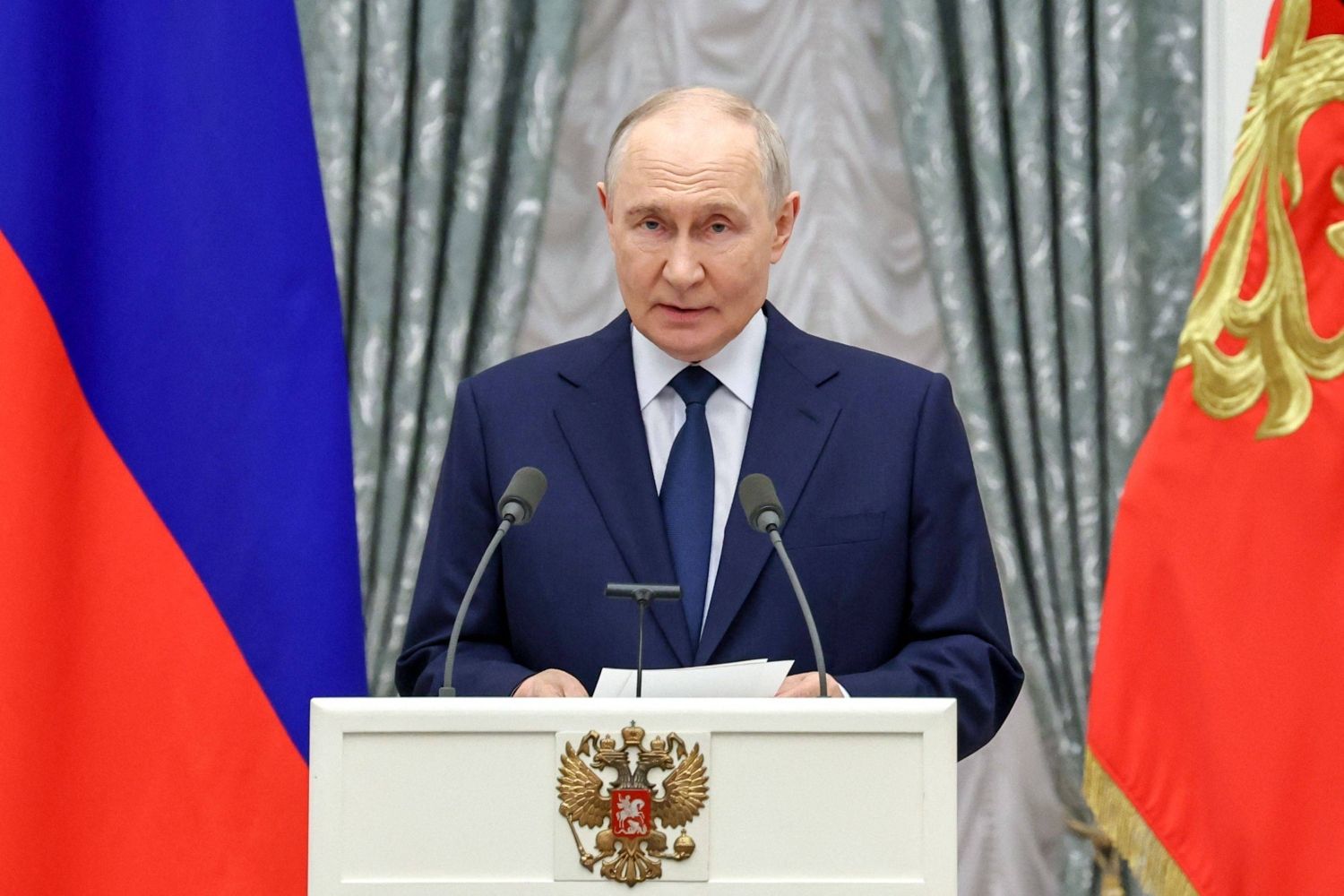
Putin ballot insult has resulted in a 14-day administrative detention for Russian blogger Stanislav Morozov, after he published a video showing himself writing an obscene message about President Vladimir Putin on a ballot during Russia’s parliamentary election.
Morozov, a blogger from the city of Penza, was sentenced by the Pervomaisky District Court to 14 days of administrative arrest on a charge of petty hooliganism under Part 1 of Article 20.1 of Russia’s Code of Administrative Offences. The court’s press service confirmed the sentence, according to independent Russian media.
The case followed a video Morozov posted on September 19, during the country’s three-day parliamentary vote. In the footage, he is seen filling out ballots outdoors. On one ballot, he crossed out the name of the candidate from United Russia, the party that supports Putin, while marking the boxes beside the other candidates. On another, he wrote an obscene insult directed at Putin.
The video was later removed after the chair of the election commission reportedly asked for it to be taken down. Copies, however, continued to circulate online. Morozov was detained by police later that day.
His mother initially confirmed that her son had been given 14 days of administrative detention but said she did not know why he had been jailed. The court later confirmed the petty hooliganism charge. Russian reports have noted that the court did not publicly specify which particular action described in the video formed the precise basis of the administrative case.
Morozov’s detention came during parliamentary elections that were held from September 18 to 20. The vote took place amid tight restrictions on political dissent and opposition activity. Independent reporting has described prominent anti-war figures as largely excluded from the election, while United Russia remained the dominant political force.
For Morozov, the ballot incident was also not his first confrontation with Russian authorities this year. He had been reporting on allegations involving the detention of men in the Penza region and pressure on them to sign military service contracts with the Russian Defence Ministry.
Independent Russian outlet Mediazona reported in July that the Federal Security Service had opened a criminal case against Morozov over alleged public calls for extremist activity. Investigators reportedly focused on a video in which he discussed claims that men were being pressured to sign military contracts and called for resistance against military recruitment officials. Morozov was briefly detained in July and subsequently barred from leaving Russia.
Novaya Gazeta Europe has separately reported allegations that security forces in the Penza region were rounding up military-age men and pressuring them to enlist. Russian authorities disputed accounts that people were being forcibly sent to fight in Ukraine, saying that officials were carrying out an operation to identify people who had not registered for military service. The regional Interior Ministry also warned against spreading what it described as false information about the detentions.
The latest case therefore places Morozov’s 14-day detention within a wider pattern of legal pressure on people who publicly criticize the Russian government or its war policy. Since Russia launched its full-scale invasion of Ukraine in February 2022, opposition politicians, activists, journalists and other critics have faced arrests, criminal prosecutions, imprisonment and exile.
The precise legal reasoning behind Morozov’s latest punishment remains significant because the court confirmed a petty hooliganism charge without publicly detailing which part of his conduct constituted the offence. What is clear from the available reporting is that his detention followed the publication of a video showing an openly hostile message about Putin on an election ballot.
The case has since drawn attention beyond Penza because it illustrates how an individual act of protest inside an election can become a matter for the courts in Russia. For Morozov, what began as an act captured on a ballot and shared online has now resulted in two weeks of administrative detention, adding another episode to his increasingly contentious relationship with Russian authorities.