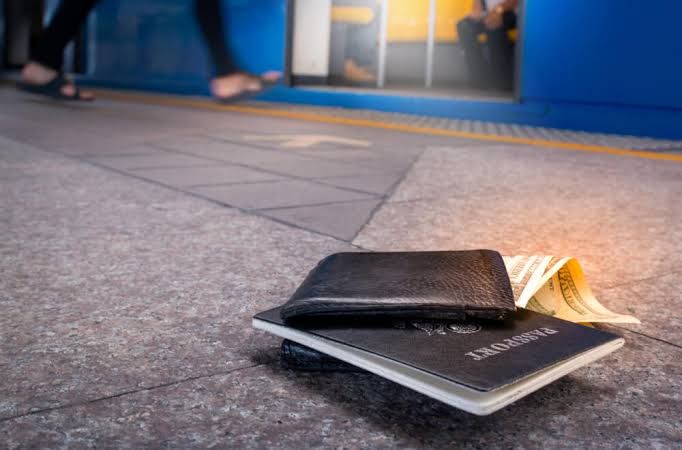
What to Do If You Lose Your Passport While Travelling
Losing your passport while travelling can turn an ordinary day abroad into a problem that needs immediate attention, but the situation is usually manageable if you act quickly and in the right order.
The first mistake many travellers make is treating a missing passport as something they can deal with later. A passport is not simply another item in a hotel room or a bag. It is the document that establishes your identity and nationality when you are outside your home country, and losing it can affect everything from your ability to cross a border to your ability to board a flight home.
If you realise your passport is missing, stop and think before moving on. Check the obvious places first: your hotel room, luggage, jacket pockets, wallet, airport security area, taxi, restaurant or the last place where you used it. If you have been travelling with other people, ask whether someone picked it up or put it somewhere for safekeeping. A few minutes spent retracing your steps can save considerably more time later.
If the passport still cannot be found, treat it as lost or potentially stolen. Contact the nearest police station if theft is suspected or if local authorities require a report. A police report can also be useful when dealing with your embassy or consulate, an insurer or other authorities. Requirements differ between countries, so it is important to follow the local process rather than assume that every destination handles lost documents in the same way.
The next call should normally be to your country’s embassy or consulate, or another official diplomatic mission responsible for citizens in the country where you are travelling. They can explain the process for replacing a lost passport and whether you may be eligible for an emergency travel document. The exact document, application process and conditions vary according to nationality and location.
This is where having a copy of your passport can make a frustrating situation considerably easier. A photocopy or secure digital copy can help you provide your passport details, including the document number, date of issue and expiry date. It does not replace the original passport, but it can give officials useful information when establishing your identity and processing replacement documents.
Travellers should also be prepared to prove who they are. An embassy or consulate may ask for additional identification, photographs, information about the circumstances of the loss and evidence of travel plans. Requirements vary, and some services may require an appointment. Checking the relevant diplomatic mission’s official website before travelling can therefore be as useful as checking the weather or visa requirements.
The timing can become particularly important if a flight is approaching. An airline may require valid travel documentation before allowing a passenger to board, while immigration authorities at the destination may have their own requirements. An emergency travel document may be accepted for a specific journey, but it should never be assumed that it works in exactly the same way as a normal passport or that every country will accept it for entry.
That is why travellers who lose a passport should contact the relevant authorities before changing their flight or making new travel arrangements. The replacement document may have specific restrictions, and the embassy or consulate is in the best position to explain what those restrictions mean for the journey.
There is another important distinction between losing a passport and having it stolen. If you believe the passport was stolen, provide as much information as possible to the police and diplomatic authorities. If you simply misplaced it, explain that honestly. Either situation can require a replacement, but the circumstances surrounding the loss may affect the documentation or reporting process.
Travel insurance may also become relevant. Some policies provide assistance or cover certain costs connected with lost or stolen travel documents, although the terms vary considerably. Keep receipts for reasonable expenses related to the incident and check your policy rather than assuming that every cost will be reimbursed.
Money and access to communication can become unexpected problems when a passport disappears. A traveller who is already dealing with a lost phone, bank cards and passport at the same time may find it difficult to contact anyone or access important information. This is one reason it is useful to keep copies of key travel documents separately from the originals and to have more than one way to access essential contact information.
If the passport was stolen together with your wallet or phone, take additional precautions. Contact your bank or card provider if payment cards are missing. Secure accounts if your phone has also disappeared. If your passport was stored with other identity documents, consider whether those documents could also be misused and tell the relevant authorities.
Travellers should also be careful about where they seek help. When a passport is lost, there may be a temptation to search social media for someone offering to arrange a replacement quickly. That is risky. Passport replacement is an official process, and travellers should rely on government authorities, recognised diplomatic missions, police and their legitimate travel or insurance providers. A person asking for large amounts of money in exchange for an unofficial “emergency passport” should be treated with particular caution.
The practical difficulty of losing a passport can depend heavily on where it happens. Losing one in a major international city with an accessible embassy or consulate may be very different from losing one while travelling through a remote region. Opening hours, public holidays, local reporting procedures and the availability of diplomatic services can all affect how quickly the problem is resolved.
For travellers who are moving between countries, there is another complication. A replacement document may solve the immediate problem without automatically solving every border or visa issue connected to the rest of the trip. If your passport contained visas, residence permits or entry stamps that matter for your journey, tell the diplomatic authorities about them. You may need to contact immigration authorities or another relevant institution as well.
The best time to think about losing a passport is before it happens. Keep the original document somewhere secure while travelling, especially when you do not need to carry it. Store a secure copy of the identification page separately from the physical passport. Write down the contact details of your embassy or consulate before departure. If you are travelling to several countries, check which diplomatic mission provides assistance in each destination.
It is also sensible to keep your passport details accessible without relying entirely on the passport itself. If your phone is lost at the same time, a cloud account or email account that you can securely access from another device can be useful, provided sensitive documents are stored safely and protected by strong authentication.
None of these precautions guarantees that a lost passport will be recovered. They do, however, reduce the amount of time spent trying to reconstruct basic information while standing in an unfamiliar city and dealing with an already stressful situation.
The most important thing is not to panic or continue travelling as though nothing has happened. Confirm that the passport is genuinely missing, report the loss or theft when appropriate, contact your embassy or consulate, secure any other compromised documents or accounts, and check the requirements for your next journey before making new travel arrangements.
A lost passport can disrupt a trip, but it does not necessarily mean the journey is over. The process may take time, paperwork and patience, yet travellers who respond quickly and work through the official channels generally have a clear path towards getting the documents they need to continue their journey or return home.