What Foreigners Find Strange About Finland often has little to do with the country’s cold winters or dark afternoons. The real surprises are usually found in ordinary moments: a bus stop where nobody speaks, a conversation that ends without small talk, a queue in which everyone seems determined to leave personal space between themselves, or an invitation to sit naked in a sauna as if this were the most normal thing in the world.
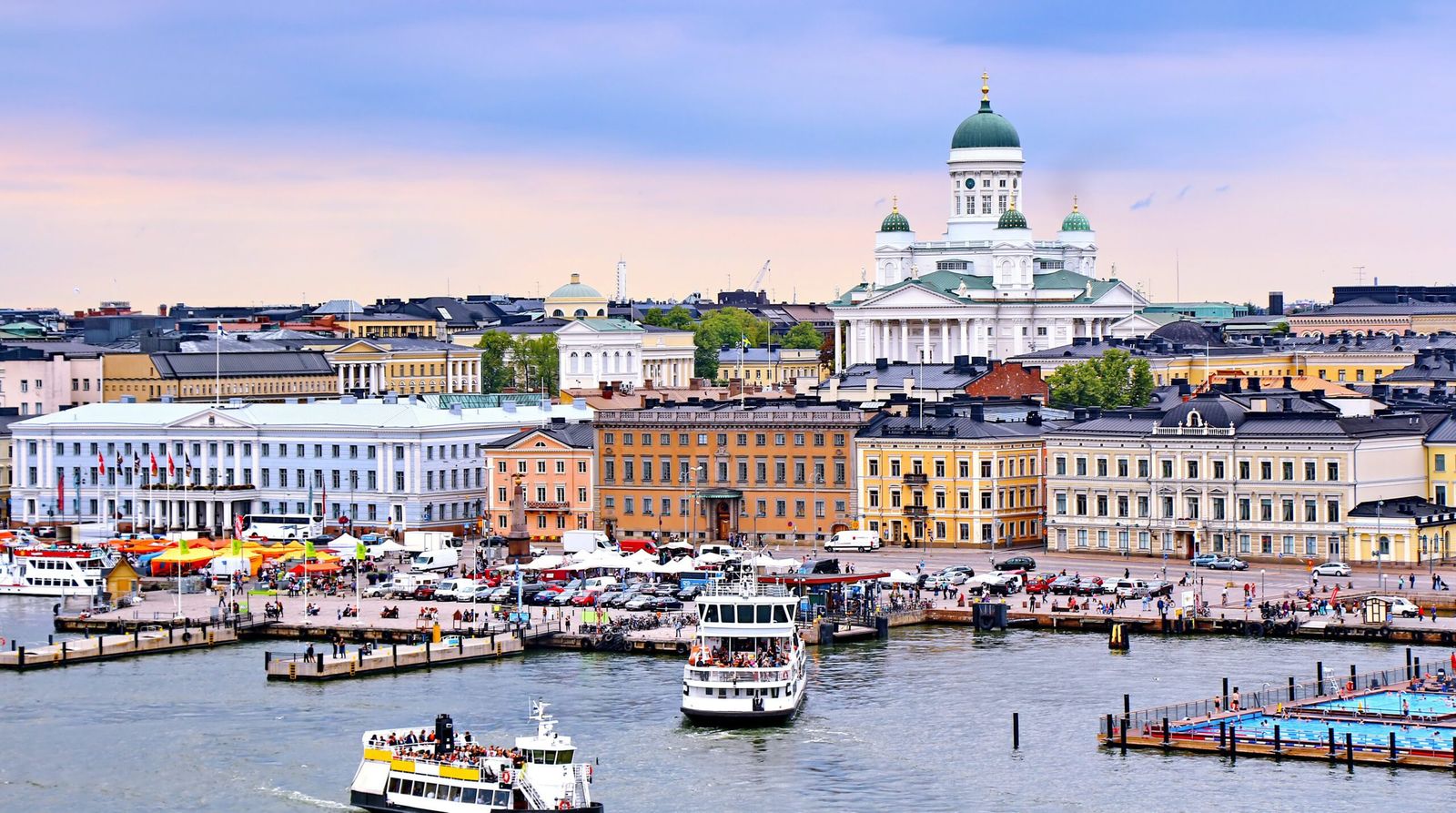
For someone arriving from a culture where friendliness is often expressed through conversation, physical closeness, questions about family and an eagerness to make strangers feel welcome, Finland can initially feel unusually quiet. It can also be difficult to work out what people are thinking.
The silence is probably the first thing many foreigners notice.
In Finland, a pause in conversation does not necessarily need to be repaired. There is no universal expectation that two people sitting together must keep talking. Finnish cultural guidance describes silence in conversations as natural rather than uncomfortable, while Finnish communication is generally direct and straightforward.
This can be confusing for a newcomer.
In many parts of the world, silence between strangers suggests that something has gone wrong. People talk about the weather, traffic, work, family, food or almost anything else simply to keep the interaction moving. In Finland, the same silence can mean that everything is perfectly fine.
A Finn sitting beside you on a train without saying anything is not necessarily ignoring you. A colleague who does not speak much in the lift is not necessarily unhappy to see you. Someone who answers a question with a short, direct sentence may simply have answered the question.
That distinction can take time to understand.
Small talk is another adjustment. Visit Finland notes that Finns are not particularly fond of small talk and tend to place more value on saying something meaningful than filling every pause with conversation.
For foreigners accustomed to greeting almost everyone, asking personal questions or chatting casually with shop assistants, neighbours and colleagues, this can feel distant at first.
Then there is the Finnish approach to personal space.
Standing very close to someone while talking can feel completely normal in some cultures. In Finland, people generally leave more physical distance between themselves, particularly with strangers. Even the famous joke about Finns standing far apart while waiting for a bus has survived because the stereotype contains a recognisable piece of everyday behaviour.
It is not that Finns dislike other people. It is more that social contact does not always have to involve constant interaction.
That difference becomes particularly noticeable in public places. On buses and trains, people may choose an empty seat rather than sit directly beside a stranger when other seats are available. In queues, people generally keep their distance. In waiting rooms, there may be several people in the same room without anyone feeling the need to start a conversation.
To a newcomer, the atmosphere can feel almost unusually orderly.
The Finnish way of speaking can create another surprise. The language itself is not responsible for the cultural difference. The issue is the expectation surrounding what people say.
According to InfoFinland, Finnish communication is generally direct, and people are expected to mean what they say.
That means a casual invitation may not always be treated as empty politeness. If someone says they should meet for coffee, there can be an expectation that the meeting will actually happen. Visit Finland makes a similar observation about Finnish communication: words are generally taken seriously rather than dismissed as social decoration.
For a foreigner used to saying “We should meet sometime” without necessarily making plans, this can be an unexpected cultural lesson.
Finnish modesty can be equally puzzling.
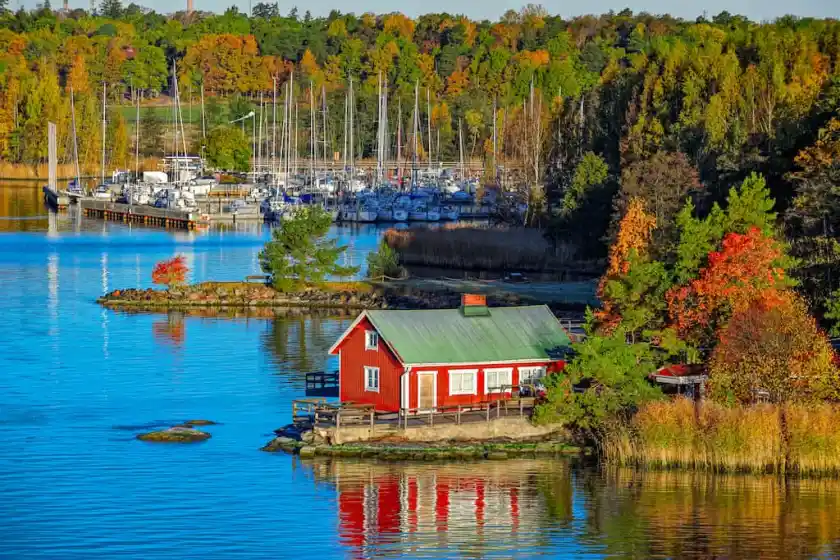
A visitor may look at a beautiful landscape, a well-designed public building, a forest beside a city or a lake stretching beyond the trees and ask a Finn what makes the country special. The answer may be surprisingly understated.
Finnish cultural descriptions often point to this modest, self-deprecating attitude. Visit Finland even notes that Finns can look at some of their country’s most striking scenery and wonder why anyone would want to visit.
A foreigner may hear someone say, “There is nothing special here,” while standing somewhere that another person has travelled thousands of kilometres to experience.
This modesty can sometimes be mistaken for a lack of pride. It is not necessarily that. Finland simply has a different relationship with self-promotion.
Then comes the sauna, which can be one of the biggest cultural surprises of all.
For Finns, sauna is not necessarily an exotic wellness experience reserved for hotels and expensive spas. It is part of ordinary life. Visit Finland describes sauna as deeply rooted in Finnish culture and notes that Finns commonly sauna without clothes, although wearing a towel or swimsuit is also acceptable depending on the setting.
For someone encountering the tradition for the first time, however, the idea of entering a hot room with other people and possibly removing all your clothes can seem extraordinary.
The surprise often comes from how little drama Finns attach to it.
There may be no special ceremony, no expectation that everyone must talk and no attempt to turn the experience into entertainment. Finnish saunas are typically calm and quiet. Phones are usually left outside. The focus is simply on heat, steam and being there.
That combination of nudity and silence can be particularly difficult for foreigners to understand until they experience it themselves.
Another cultural adjustment is the Finnish relationship with nature. In many countries, going into the countryside means having a specific activity planned. In Finland, simply being outdoors can be the activity.
A walk through a forest does not necessarily need a destination. Sitting beside a lake can be enough. Picking berries, going to a cottage, swimming, hiking or simply spending time away from the city can be treated as worthwhile in itself.
Finland’s long summer days and contrasting winters make this relationship with nature especially visible. Visit Finland describes cottage life as a major part of summer, with people escaping to the countryside to spend time by the water, barbecue, swim and simply slow down.
To some foreigners, the idea of deliberately doing very little can seem strange.
There is also the weather.
People who arrive in Finland during winter sometimes expect everyone to behave as though the cold is an emergency. Instead, life continues. People walk to work, wait for buses, take children outside and carry on with ordinary routines while temperatures fall and daylight becomes scarce.
The opposite can happen in summer. After months of cold and darkness, Finns seem to treat every warm, bright day as something worth using. The sudden change in atmosphere can be striking to anyone who has never experienced the Finnish seasonal rhythm.
Perhaps the strangest thing about Finland, though, is that many of these habits only seem strange when viewed from outside.
Silence can look like loneliness until you understand that it can also be comfort. Directness can look unfriendly until you realise that it can be a form of honesty. Personal space can look like distance until you see that it does not prevent friendship. Modesty can look like indifference until you understand that Finns do not always feel the need to advertise what they value.
Even the quietness of a Finnish public space tells part of the story.
Finland does not always demand that people perform friendliness for one another. There can be an acceptance that strangers are allowed to remain strangers, that conversations can have pauses and that being together does not require constant talking.
For foreigners, that may be one of the hardest things to understand at first. It can also become one of the most interesting things about living in Finland.
After enough time, the silence may stop feeling empty. The distance may stop feeling cold. A short answer may no longer seem rude. And the sauna may stop looking like a strange Finnish ritual and start looking like exactly what it is: an ordinary part of life in a country that has its own ideas about how people should share space, time and quiet.
That is perhaps why What Foreigners Find Strange About Finland is difficult to answer with a simple list. Much of what feels unusual is not spectacular at all. It is hidden in the everyday details, in the things Finns rarely stop to explain because, to them, those things are simply normal.