What people misunderstand about traveling in Finland is that the country can be reduced to Lapland, Northern Lights and Santa Claus. Those things are real, and they have become powerful reasons for international visitors to come north, but they tell only a small part of the story. Finland is a long country with sharply different regions, seasons and travel experiences, and understanding that matters more than knowing which glass igloo to book.
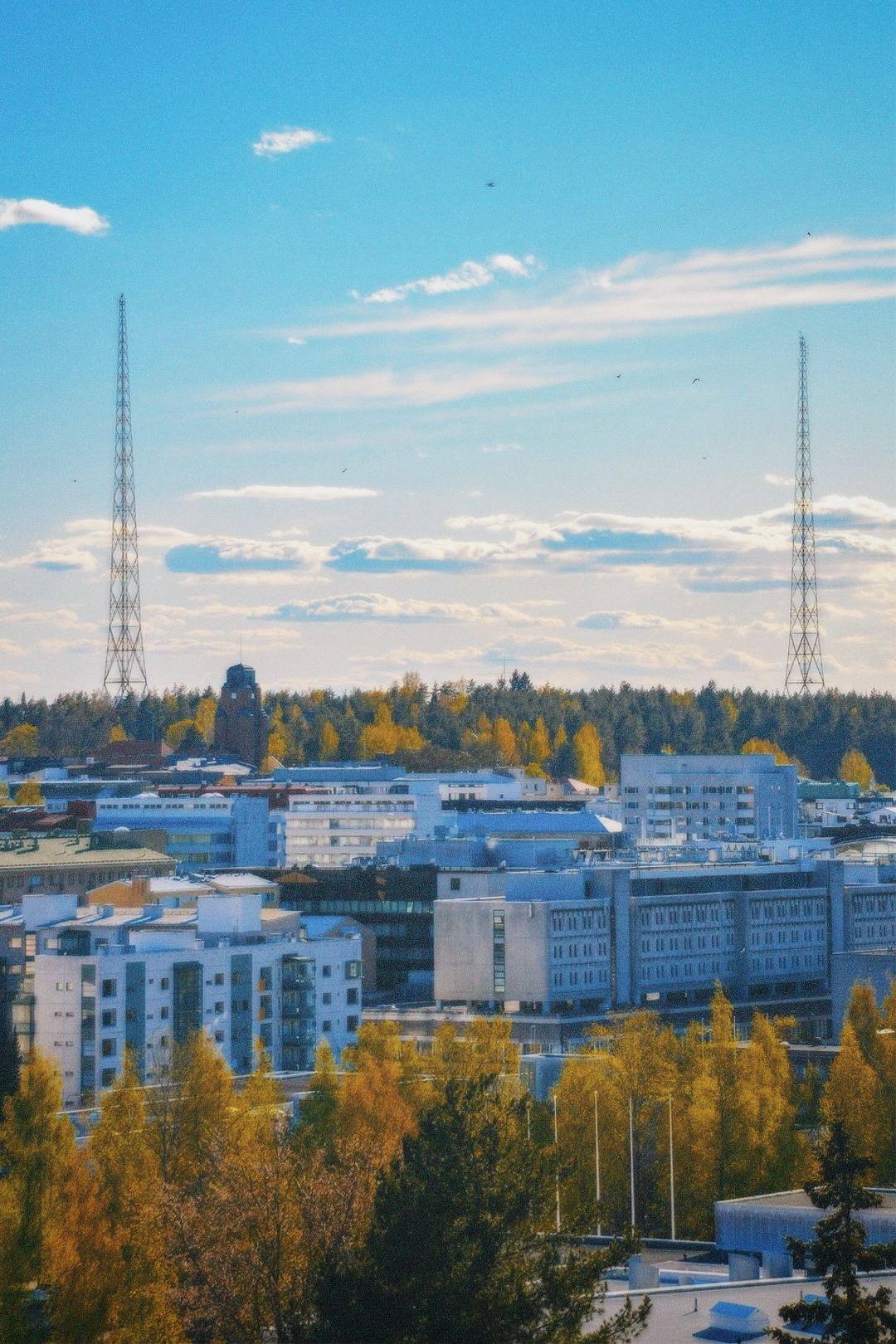
The first misconception is geographical. Finland may look manageable on a map, but it stretches nearly 1,200 kilometres from south to north. Helsinki and Lapland are not interchangeable versions of the same destination. Weather, daylight, landscapes and even the rhythm of a trip can change considerably as you move across the country.
That distance is easy to underestimate when planning a short holiday. A visitor may imagine that arriving in Helsinki means the Arctic is just a quick extension of the same trip. It is not. A journey north can take planning, and Finland rewards travellers who resist the temptation to treat the entire country as one itinerary.
This is also why the idea that there is one “best time” to visit Finland misses the point. The country does not simply change temperature throughout the year. It changes character. Winter, spring, summer and autumn can feel like different destinations.
Winter is the version of Finland that dominates international tourism, particularly in Lapland. Snow, frozen landscapes, husky rides, skiing, reindeer and the possibility of seeing the Northern Lights have become closely associated with the country. But even winter is not one uniform experience. Conditions in southern Finland are different from those in the far north, and the length and intensity of winter vary significantly across the country.
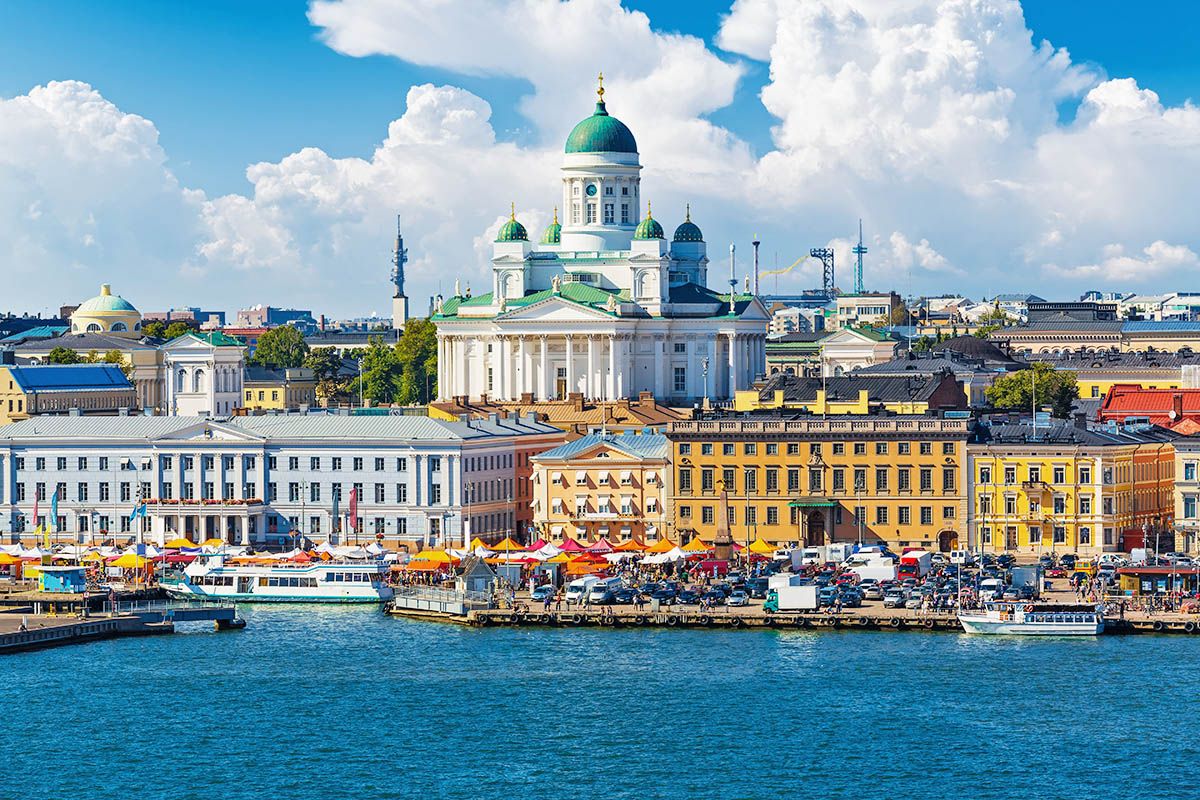
Then there is the other Finland, the one that becomes visible when the snow disappears.
Summer is not simply winter without snow. It has its own identity. Long, bright evenings change how people use cities, lakes, forests and coastlines. In northern Finland, the sun can remain above the horizon for extended periods around summer, while southern parts of the country also experience exceptionally long days.
For a visitor, this can produce a strange adjustment. Midnight does not necessarily feel like midnight. You can be sitting beside a lake late at night and still have enough light to walk, swim or continue a journey. The experience is not just a tourist attraction. It changes the atmosphere of everyday life.
The same is true of autumn. Finland’s forests do not suddenly become an accessory to the Northern Lights season. Autumn brings its own landscape, particularly in Lapland and the lake regions, where the changing colours create a very different reason to travel. Visit Finland identifies late August through early October as the main period for autumn colours in Lapland, with the season progressing southwards.
Spring is perhaps even easier for international travellers to overlook. Yet it exposes one of the country’s most interesting contradictions. While southern Finland may already be moving into a new season, northern areas can still have substantial snow and winter activities. Visit Finland notes that spring can offer skiing in Lapland while snow has already disappeared from much of the south.
Another misunderstanding concerns what there actually is to do in Finland. International images often make the country look like an enormous wilderness with a few towns attached. Nature is certainly central to Finnish travel, but Finland is not only a nature destination.
Its cities have their own identities, and the experience of travelling through Finland is not limited to escaping them. Helsinki offers the obvious international gateway, but cities such as Tampere, Turku, Oulu, Jyväskylä and others provide different combinations of culture, food, architecture, events and access to surrounding nature. Even Visit Finland presents the country through several distinct regions rather than treating Lapland as the whole story: the Helsinki region, Lakeland, the coast and archipelago, and Lapland.
That regional variety is one of the country’s most overlooked strengths.
Finland’s lake district, for example, is not simply a place to stop for a photograph of a lake. Water, forests, cottages and small communities shape an entirely different kind of journey from the Arctic tourism experience marketed abroad. The coast and archipelago offer another version of Finland altogether, with maritime landscapes and island communities that can feel surprisingly far removed from the image of a frozen northern wilderness.
The obsession with the Northern Lights creates another problem. Travellers can arrive expecting the sky to provide a guaranteed performance on a particular evening. It does not work that way. The Northern Lights are a natural phenomenon, not a scheduled attraction. Their visibility depends on conditions including darkness, cloud cover and solar activity. Visit Finland describes spring and autumn as strong seasons for aurora viewing in Finnish Lapland, while its broader travel guidance also points to the period from September to March.
That does not make the experience less worthwhile. It makes expectations more important.
A trip to Finland planned entirely around seeing one phenomenon can easily become frustrating. A trip planned around the wider landscape, with the Northern Lights treated as one possible experience among several, leaves room for the country itself to become part of the story.
There is also a tendency to misunderstand Finnish nature as something that can simply be entered without rules because so much of it feels open. Finland’s Everyman’s Rights allow people, including visitors, broad access to nature for activities such as walking and foraging, subject to important restrictions and responsibilities. Respect for private property, protected areas, wildlife and the environment remains essential.
That distinction matters because access does not mean ownership or unlimited freedom. The landscape may appear empty, but it is not without boundaries.
The Finnish sauna is similarly easy to turn into a tourist stereotype. For visitors, it can become another item on a checklist: go to sauna, take a cold plunge, photograph the experience and move on. But sauna is better understood as part of Finnish life rather than simply an exotic attraction. Visit Finland describes sauna as an experience available across the country in every season, not something confined to a particular winter package.
Perhaps the biggest misunderstanding, though, is that Finland is a destination that reveals itself immediately.
It often does not.
The country is not necessarily built around constant spectacle. Some of its most memorable travel experiences can be quiet: a long train journey through changing landscapes, an evening beside a lake, a walk through a city after the summer crowds have disappeared, an autumn forest, an ordinary neighbourhood cafe or the particular silence that arrives with snow.
That can be difficult for travellers accustomed to destinations where tourism is built around a long list of famous sights. Finland often asks for a different pace. You may have to stay somewhere longer, travel beyond the obvious places or simply pay more attention to what is happening around you.
This is particularly relevant for visitors who arrive with a fixed image of what Finland should look like. If the expectation is snow, Lapland in July can appear to be the wrong destination. If the expectation is darkness, a Finnish summer night can be disorienting. If the expectation is untouched wilderness, a Finnish city may seem too ordinary. If the expectation is that the whole country is Arctic, Helsinki in summer tells a very different story.
None of these experiences is the “real” Finland on its own.
The more accurate picture is a country defined by contrast. North and south are different. Summer and winter are dramatically different. Cities and wilderness coexist. The coast feels different from the lake region. A winter trip can be built around snow and darkness, while a summer journey can revolve around light, water and long evenings.
That is what people often misunderstand about traveling in Finland. The mistake is not simply failing to know where to go. It is arriving with an idea of Finland that is too small for the country itself.
The Northern Lights may bring someone here. Santa Claus may be the reason a family first considers Lapland. A sauna may appear on the itinerary because it seems quintessentially Finnish. But none of those things has to define the journey.
Finland becomes more interesting when the visitor stops looking for the version they have already seen in photographs and starts paying attention to the country that exists beyond them.