Uju Anya, the Nigerian-born professor at Carnegie Mellon University, has taken voluntary professional leave and will not teach at the university during the 2026-27 academic year while the institution reviews a series of controversial social media posts attributed to her.
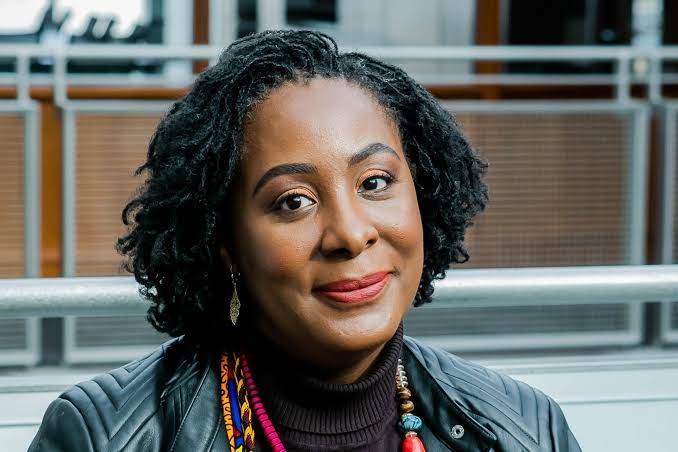
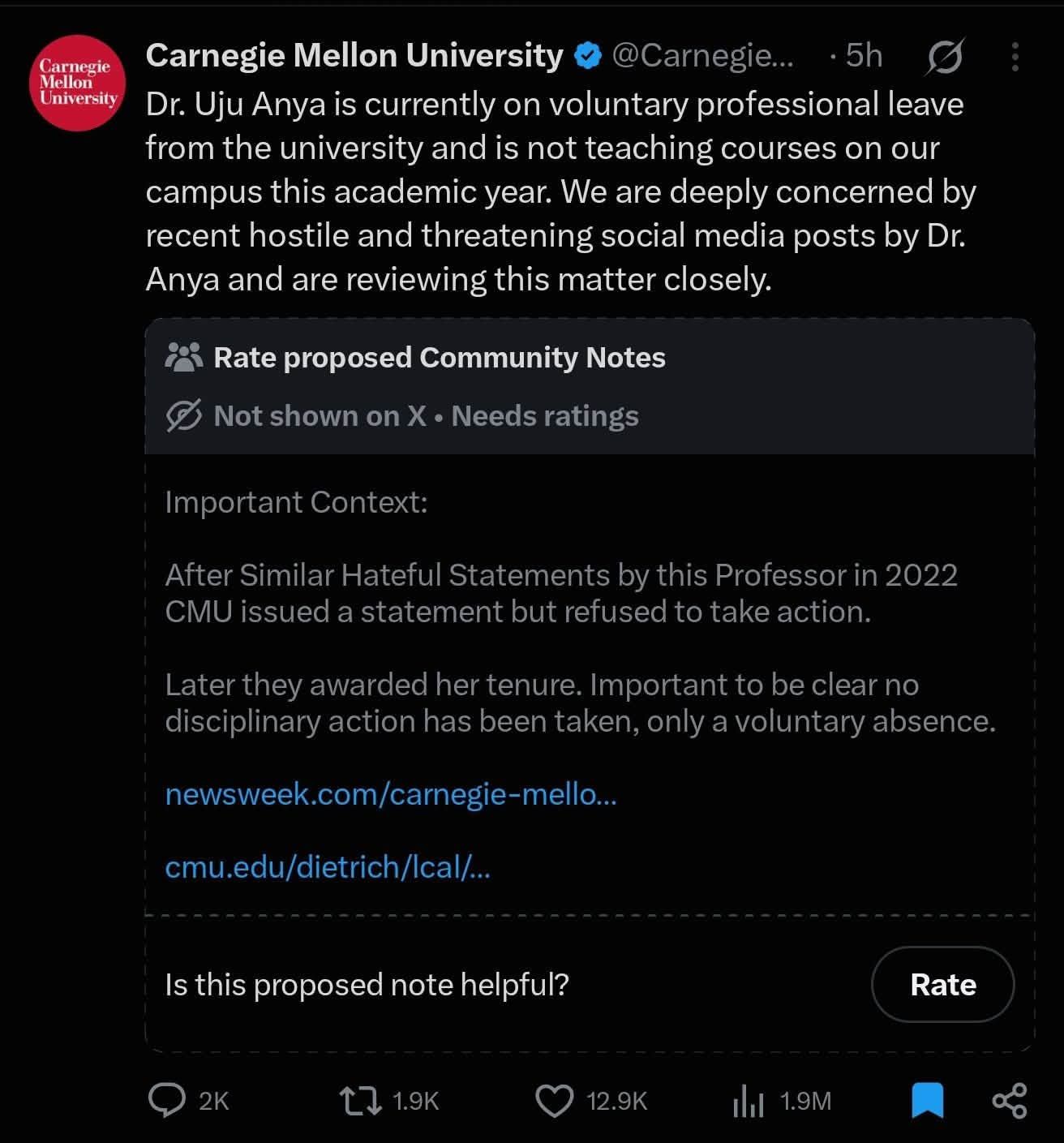
The university said it was examining what it described as “hostile and threatening” posts on social media, following renewed attention to comments made by Anya on X. Among the posts circulating online is one in which she appeared to call for the death of white men, prompting a wider backlash and drawing the attention of billionaire entrepreneur Elon Musk.
Carnegie Mellon said Anya is currently on voluntary professional leave and is not teaching courses on campus this academic year. The university did not describe the move as a suspension or dismissal, and it has not announced any formal disciplinary action against her.
“We are deeply concerned by recent hostile and threatening social media posts by Dr. Anya and are reviewing this matter closely,” the university said.
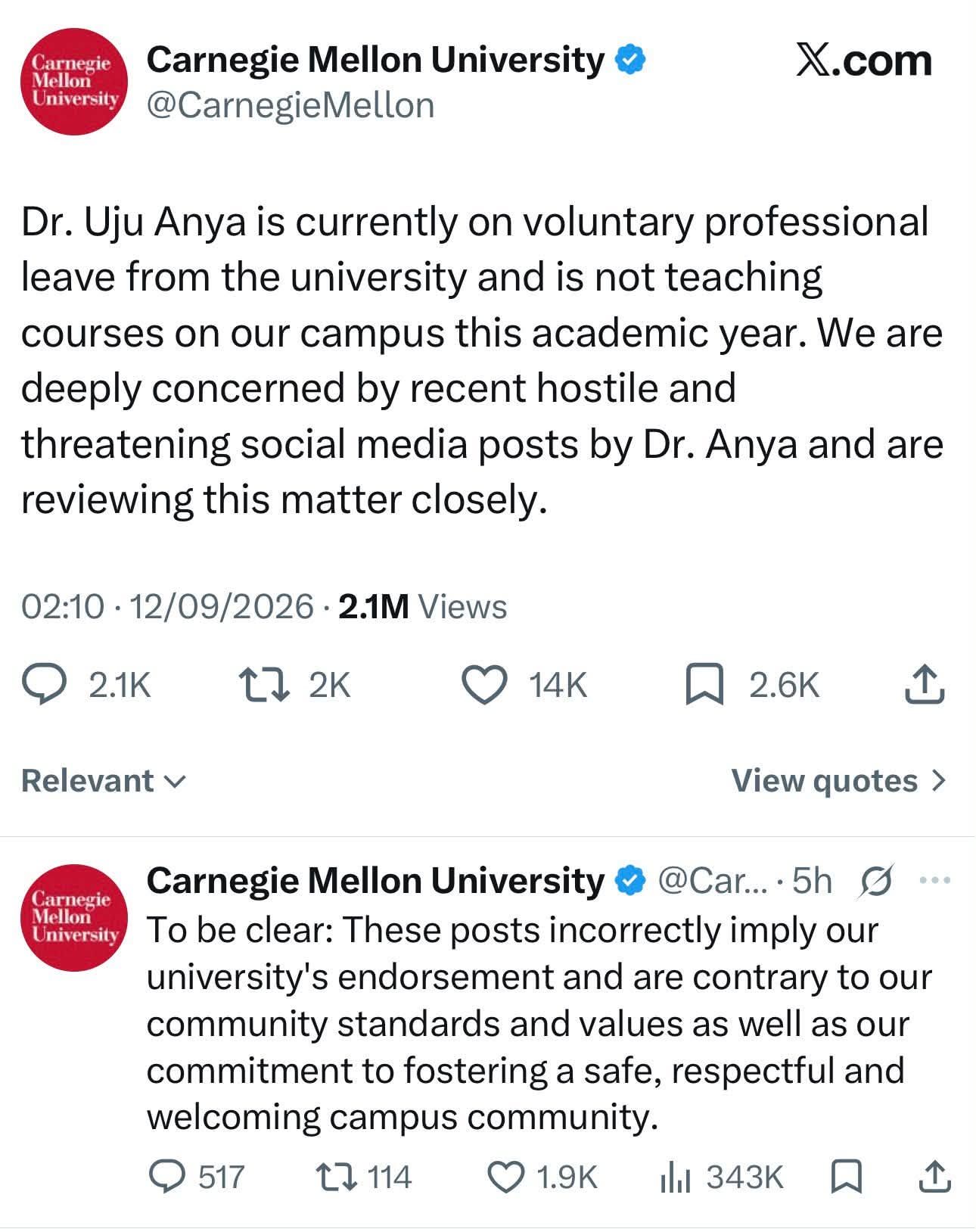
Carnegie Mellon also made clear that the views expressed in the posts should not be interpreted as representing the institution. The university said the posts were contrary to its community standards and its stated commitment to maintaining a campus environment that is safe, respectful and welcoming.
The controversy escalated after Musk responded to a post about Anya on X. Musk described her as a professor at Carnegie Mellon, while another user whose post he shared said they were consulting a lawyer over what they characterised as a death threat.
There is no indication in Carnegie Mellon’s public statement that Musk’s involvement led to Anya’s leave. The university has characterised her absence as voluntary and has not said that the social media reaction influenced its decision.
The current controversy is not the first time Anya has faced public criticism over comments posted online. The associate professor of second-language acquisition drew widespread attention in 2022 after making controversial remarks on social media as Queen Elizabeth II was nearing the end of her life.
Anya was again the subject of criticism in 2024 after posting “It was staged” following an assassination attempt against then-presidential candidate Donald Trump. Carnegie Mellon said at the time that statements made by faculty members on personal social media accounts did not necessarily represent the views of the university.
The latest review appears to raise a more specific question for the university because of the nature of the posts now under scrutiny. Carnegie Mellon has not disclosed every post being examined, nor has it said what disciplinary outcome, if any, could result from the review.
The university’s decision to publicly distance itself from the comments also reflects the difficult balance universities face when dealing with controversial speech by faculty members. Academic freedom and personal expression exist alongside institutional policies governing conduct and the safety of the wider university community.
For now, Anya remains away from classroom teaching while the review continues. Carnegie Mellon has not announced a final decision, and Anya had not publicly responded to the university’s latest statements as of the latest available report.