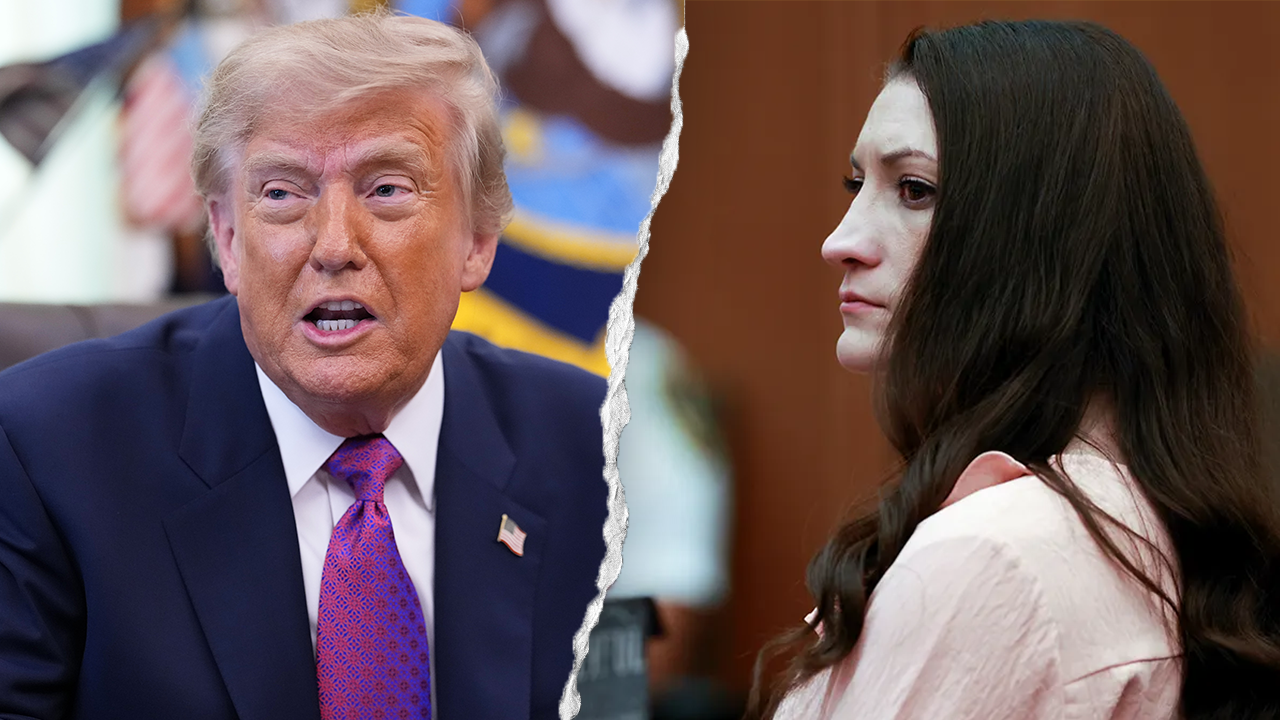
Lindsay Clancy’s attorney has asked President Donald Trump to pardon his client, but Trump says he has no authority to do so because the case is being handled by the state of Massachusetts, not the federal government.
Clancy is accused of killing her three children at the family’s home in Duxbury, Massachusetts, in January 2023. She has admitted causing their deaths, but her defense has argued that she should not be held criminally responsible because she was suffering from postpartum psychosis.
Her first trial ended in a mistrial on September 4 after the jury could not reach a unanimous decision. Eleven jurors reportedly supported finding Clancy not guilty by reason of insanity, while one juror did not agree.
Clancy’s lawyer, Kevin Reddington, made a public appeal to Trump during an appearance on “Good Morning America” on September 8. He asked the president to consider Clancy’s mental health history and what she had experienced before the killings.
Trump was asked about the request by reporters on Sunday. He described the case as a “very sad situation” but said it was a state matter.
“There is no winner there,” Trump said, referring to the deaths of the three children. He also praised Reddington as a good attorney and said he hoped the parties could find a resolution.
The issue is that a US president’s pardon power applies to federal offenses. Clancy’s case is being prosecuted under Massachusetts state law, so Trump cannot simply pardon her.
The legal dispute has centered on whether Clancy was criminally responsible for what happened to her children. Her defense has argued that postpartum psychosis left her suffering from hallucinations and delusions after the birth of her third child. Prosecutors have disputed the defense’s position and argued that she was responsible for her actions.
The jury’s failure to reach a verdict means the case is not over. A mistrial is not the same as an acquittal, and prosecutors can seek a new trial. Clancy’s defense has also asked the court to acquit her rather than allow another trial. A judge is expected to consider that request at a hearing on September 29.
The case has received widespread attention because of the questions it raises about postpartum mental illness and criminal responsibility. But the immediate legal decision remains with the Massachusetts courts and prosecutors, not the White House.