Cultural tourism is becoming a more important part of how travelers experience Asia, shifting attention beyond famous landmarks and conventional sightseeing toward heritage, food, religion, craftsmanship, festivals, art and the everyday traditions that give places their identity.
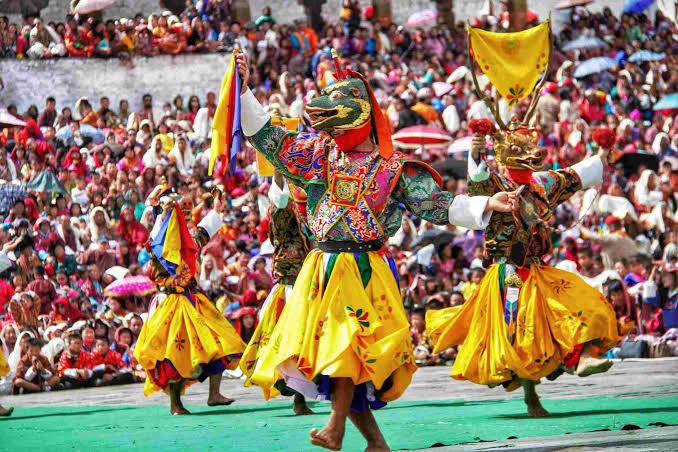
The change is visible across a region where tourism has recovered strongly and where governments are increasingly looking at culture not simply as something to preserve, but also as an important part of sustainable tourism and local economic development. ASEAN’s 2025 tourism outlook reported that international arrivals in the region had reached 92 percent of pre-pandemic levels by the end of June 2025, with Vietnam and Laos already exceeding their 2019 arrival figures. ASEAN estimated that the region could reach 96 percent of its pre-pandemic level by the end of 2025.
That recovery is taking place alongside a broader change in what cultural travel means. The traditional image of cultural tourism might involve visiting an ancient temple, walking through a historic district or standing in front of a famous monument. Those experiences remain important, but travelers are increasingly able to encounter culture through food markets, contemporary art, religious ceremonies, local festivals, traditional crafts, pilgrimage routes and creative communities.
UNESCO describes cultural tourism as one of the largest and fastest-growing parts of the global tourism market. Its work on sustainable tourism also points to the growing use of cultural assets by destinations seeking to develop distinctive identities in an increasingly competitive tourism industry.
Asia has an unusually deep cultural landscape on which to build that interest. The region contains ancient cities, religious traditions that have shaped societies for centuries, historic trade routes, indigenous cultures, living craft traditions and food cultures that vary dramatically from one country to another and often from one community to the next.
Japan provides one example of how heritage and contemporary culture can exist alongside each other. Its tourism offering includes historic villages, temples, castles and pilgrimage routes, but the country’s cultural appeal is not confined to preserved monuments. Contemporary art festivals, including the Setouchi Triennale, have also become part of the country’s cultural tourism landscape, bringing art and communities together across islands in the Seto Inland Sea.
The same broader movement can be seen elsewhere. In 2025, UNESCO’s Asia-Pacific heritage awards recognized conservation projects in countries including China, Japan, India, Malaysia and Nepal. The organization said the record 90 entries from 16 countries reflected an expanding range of heritage types and a growing emphasis on community participation, sustainability and conservation practices suited to individual places.
That matters because cultural tourism works differently from a model in which visitors simply arrive at a landmark, take photographs and leave. When managed carefully, spending can reach the people who maintain the culture itself: artisans, guides, performers, small restaurants, accommodation providers, community organizations and local businesses.
India is also looking more closely at that relationship. At a UNESCO and Indian Ministry of Tourism strategic meeting in New Delhi in August 2025, officials and tourism representatives discussed how the country’s World Heritage sites could support tourism while improving accessibility, visitor experiences and community participation. UNESCO noted that India’s 44 World Heritage sites are major cultural and historical assets, while also pointing out that many remain underused as tourism resources.
The challenge is that cultural tourism can easily damage the very places and traditions that attract visitors.
Historic neighbourhoods can become overcrowded. Religious sites can struggle with large visitor numbers. Traditional crafts can be reduced to souvenirs made primarily for tourists. Local communities can find themselves living around tourism rather than benefiting from it. The pressure becomes especially complicated when a place has both deep cultural meaning for residents and growing commercial value for visitors.
That tension is becoming more visible as Asian destinations expand their tourism ambitions. UNESCO’s approach to sustainable tourism increasingly emphasizes community-based management, heritage conservation and the need to balance tourism with the protection of cultural and natural assets. Its work in Southeast Asia, for example, has included efforts to develop community-based approaches at World Heritage sites in Malaysia, the Philippines and Indonesia.
Vietnam offers another indication of how cultural tourism is evolving. In 2025, the Yen Tu-Vinh Nghiem-Con Son, Kiep Bac complex was added to the UNESCO World Heritage List, bringing Vietnam’s total number of World Heritage properties to nine.
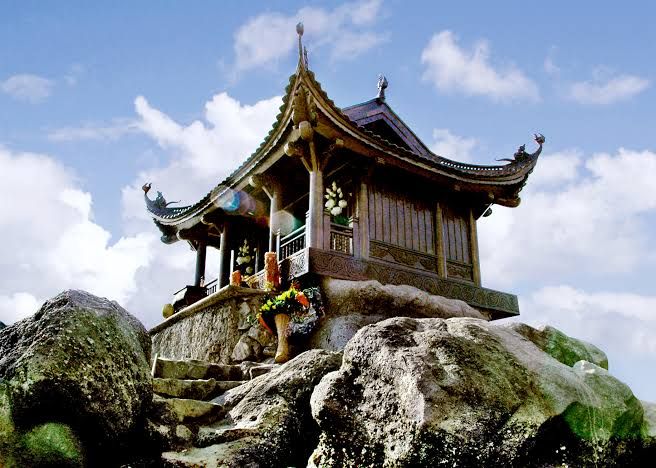
The site combines mountains, temples, pagodas, religious traditions and historical landscapes and remains a living pilgrimage destination. UNESCO has stressed that the new recognition brings a responsibility to protect the heritage while managing tourism and development carefully.
This idea of living heritage is increasingly important. Culture is not only found behind glass in museums or within the walls of ancient monuments. It can be found in the meal prepared in a family kitchen, the techniques of a craftsperson, the music performed at a local celebration, the rituals of a religious community or the way a historic neighbourhood continues to function.
For travelers, that can produce a different kind of experience. Instead of simply seeing a place, they spend time trying to understand it.
Food is a particularly powerful entry point. Across Asia, culinary traditions connect geography, migration, religion, agriculture and family history. A bowl of noodles, a regional spice blend or a traditional cooking method can reveal something about a society that a short visit to a monument may not.
Religious and spiritual travel is another major part of the picture. Buddhist temples, Hindu pilgrimage sites, Islamic heritage, Shinto shrines and other sacred places draw visitors for very different reasons. Some come as pilgrims, others as travelers interested in architecture, history or belief. The distinction matters because these are not simply tourist attractions. They are places where communities continue to practice traditions that existed long before international tourism arrived.
Asia’s historic trade routes provide another opportunity. UNESCO’s work on the Silk Roads has explored heritage corridors linking countries including China, Kazakhstan, Kyrgyzstan, Tajikistan and Uzbekistan, with an emphasis on conservation, community development and sustainable tourism.
Such routes also challenge the idea that cultural tourism should be organized around individual attractions. A historic city becomes more meaningful when connected to the trade routes, migrations, religions, languages and political exchanges that shaped it. Travelers can begin to see culture as a network rather than a collection of isolated monuments.
Technology is also changing how these experiences are discovered. Travelers increasingly encounter destinations through short videos, photography, documentaries, social media creators and digital storytelling before they ever arrive. A traditional market or small cultural festival that once depended largely on word of mouth can now reach an international audience almost instantly.
That creates opportunities, but also new risks. A place can become popular online faster than its infrastructure can adapt. A tradition can be taken out of context and presented as an exotic attraction. Communities may have little control over how their culture is represented to international audiences.
The growing attention to cultural tourism therefore raises a question that goes beyond visitor numbers: who controls the story of a place?
For destinations across Asia, the answer may determine whether cultural tourism becomes a long-term source of local opportunity or simply another form of mass tourism. The strongest models are unlikely to be those that turn every tradition into a product. They will be the ones that allow communities to remain part of the story and retain a meaningful role in deciding how their heritage is presented and used.
That is also why conservation is becoming inseparable from tourism policy. UNESCO’s recent work across the Asia-Pacific region repeatedly connects heritage protection with community engagement and sustainable development. In 2025, representatives from 39 Asia-Pacific states took part in a UNESCO regional consultation that included culture’s role in sustainable development, the digital transformation and the relationship between heritage and crises.
The direction is clear even if the outcome is not. Asia’s cultural tourism market is not simply expanding because travelers want more places to photograph. It is developing because culture itself has become an increasingly important reason to travel.
For destinations, that creates an opportunity to move beyond the familiar tourism formula of monuments, hotels and sightseeing buses. For travelers, it offers the possibility of encountering places through the people, traditions and histories that make them different.
The most interesting cultural journeys may therefore be the ones in which the visitor does not simply collect sights. They leave with a better understanding of why a place eats, worships, celebrates, builds and lives the way it does.
Across Asia, that shift is already reshaping the tourism conversation. The challenge now is ensuring that the culture drawing visitors across borders remains meaningful to the people who have carried it forward.