Strongest European passports for visa-free travel are increasingly defined by how easily their holders can cross borders without arranging a traditional visa before departure, and a new ranking places Spain at the top of Europe.
The Passport Reports ranking compares passports according to the number of destinations their holders can enter without a visa, with a visa on arrival or with an electronic travel authorisation (ETA). It also counts destinations where travellers must obtain a visa before they arrive.
For travellers, the difference can be significant. A passport that offers broad visa-free access can remove much of the paperwork and advance planning involved in international travel, particularly when a trip involves several countries.
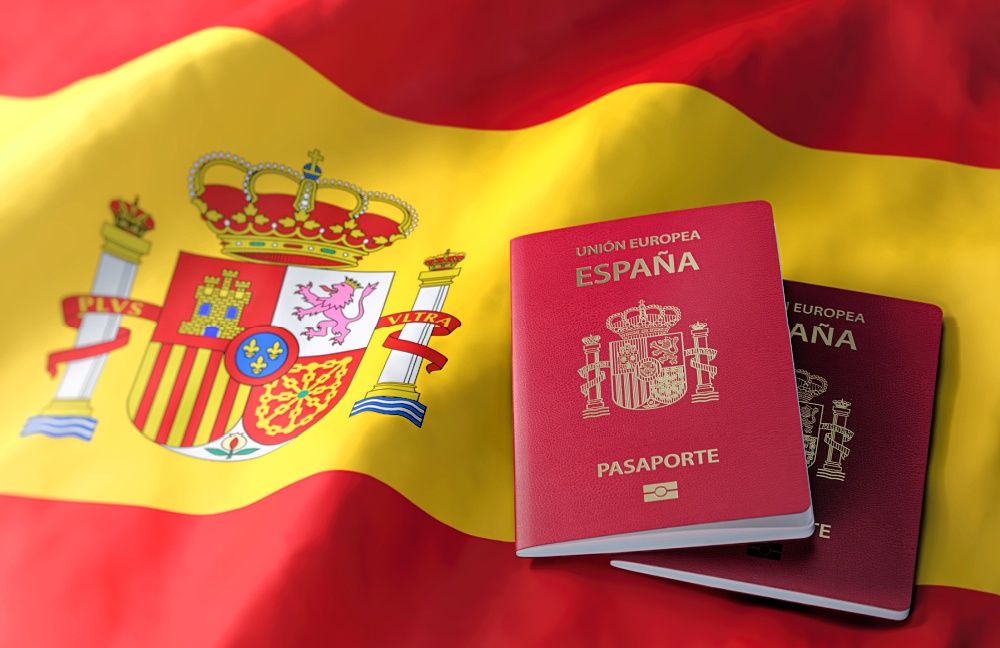
Spain ranks third worldwide in the latest assessment, making it the strongest European passport in the ranking. Spanish passport holders can enter 121 destinations without a visa, while another 42 allow entry with a visa issued on arrival. Travellers holding Spanish passports need an ETA for 11 destinations, while 24 destinations require them to secure a visa before travelling.
The Spanish passport’s mobility score is 174, putting it behind only the United Arab Emirates and Singapore in the overall ranking.
Luxembourg follows closely, ranking fifth worldwide with a mobility score of 173. Its passport provides visa-free access to 122 destinations, one more than Spain, while 41 destinations offer visas on arrival. An ETA is required for 10 destinations and a visa must be obtained in advance for 25.
Belgium and France share sixth place globally, both recording a mobility score of 173. Their passport holders can enter 121 destinations without a visa and another 41 with a visa on arrival. An ETA is required for 11 destinations, while 25 require a visa before entry.
A group of six European countries then shares seventh place. Denmark, Finland, Germany, Italy, the Netherlands and Sweden each record a mobility score of 173.
Citizens of these countries have visa-free access to 120 destinations. A further 42 destinations permit entry with a visa on arrival, while 11 require an ETA. Travellers also need a visa in advance for 25 destinations.
The results show how closely grouped many European passports are near the top of the international ranking. Small differences in the number of destinations requiring advance visas can separate countries that otherwise offer broadly similar travel access.
Greece ranks eighth, followed by Portugal and Switzerland, which share ninth place. Austria is 10th, while Norway ranks 11th and Ireland 12th.
Outside Europe, Japan appears in 13th place, followed by Malta in 14th. Hungary and Poland share 15th place.
The ranking also places the United Arab Emirates at the top globally, followed by Singapore. Malaysia takes fourth place, separating the two leading European passports from the rest of the European group.
For European travellers, the figures underline how much mobility can vary even among countries with relatively strong passports. While visa-free access is only one measure of passport strength, it remains a practical consideration for people who travel frequently and want to avoid advance applications, additional fees and uncertain processing times.
Passport access can also change as governments introduce new visa arrangements, electronic travel systems or entry requirements. The Passport Reports ranking therefore offers a snapshot of current mobility rather than a permanent measure of how easily a passport holder can travel.
The latest figures nevertheless place several European countries among the world’s most internationally mobile passports, with Spain leading the continent and a large group of European nations following within a narrow range.
The world’s strongest passports for visa-free travel
- UAE
- Singapore
- Spain
- Malaysia
- Luxembourg
=6. Belgium
=6. France
=7. Denmark
=7. Finland
=7. Germany
=7. Italy
=7. Netherlands
=7. Sweden - Greece
=9. Portugal
=9. Switzerland - Austria
- Norway
- Ireland
- Japan
- Malta
=15. Hungary
=15. Poland