Pet-friendly airlines in Europe offer a range of options for travellers who do not want to leave their cats or dogs behind, but the rules can vary sharply depending on an animal’s size, age, destination and how the flight is operated.
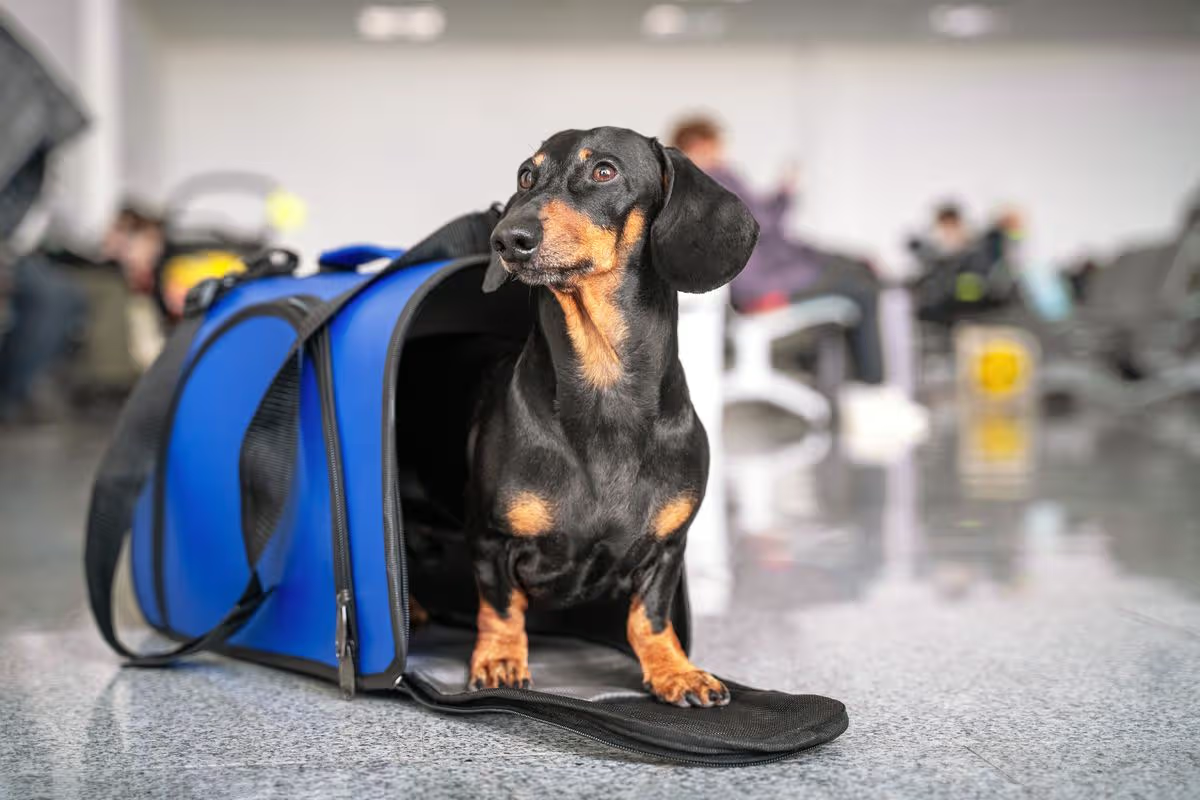
For many pet owners, taking a holiday starts with a practical question that has nothing to do with hotels or sightseeing: can the family pet actually get on the plane?
Across Europe, cats and small dogs can often travel in the cabin, usually inside an approved carrier and subject to a combined weight limit of around 8kg. Larger animals face more complicated arrangements. Some airlines accept them in the aircraft hold, while others may require them to travel as cargo or impose restrictions based on their destination.
A review by AirAdvisor, a global flight and baggage compensation service, examined the pet policies of 22 European airlines, looking at whether animals can travel in the cabin, whether larger pets can be carried in the hold or as cargo, and whether passengers can take their animals into airline lounges.
The review also points to several restrictions that can catch travellers out. Certain dog breeds, including bulldogs and pugs, can face additional rules, while many airlines do not accept very young animals. Pets are also not necessarily welcome in premium or business class cabins, and travelling on a codeshare flight can complicate matters because the airline selling the ticket may not be the carrier actually operating the journey.
The destination can be just as important. AirAdvisor notes that countries including the UK, US, Australia and Hong Kong can have stricter arrangements, with some airlines requiring pets to travel separately as freight rather than alongside their owners.
Among the European carriers reviewed, Aegean Airlines allows cats and dogs to travel in the cabin when the combined weight of the animal and carrier does not exceed 8kg. Cabin fees range from around EUR 35 on domestic Greek routes to EUR 65 on long-distance intercontinental flights. Larger pets can travel in the hold, with prices depending on their weight and whether the journey is domestic or international. Aegean also permits pets inside its lounges, provided they remain in their carriers.
Air France has a similar 8kg cabin limit for one dog or cat. Animals weighing between 8kg and 75kg can travel in the hold, while pets above 75kg are not accepted. International travel generally requires pets to be at least 15 weeks old, although younger animals can travel on certain domestic and French overseas routes. Cabin charges range from EUR 70 to EUR 250, while hold fees can reach EUR 750. Air France requires soft-sided carriers and allows pets in its lounges when they remain inside them.
KLM, which is part of the same group as Air France, follows many of the same principles, although its pet charges can reach EUR 500 each way depending on the journey.
Austrian Airlines allows up to two cats or dogs in the cabin, provided the combined weight does not exceed 8kg. Fees start at around EUR 65 for domestic Austrian flights and can rise to EUR 125 for intercontinental journeys. The animals must remain in a soft, bite-proof carrier both during the flight and when inside Austrian Airlines lounges.
Brussels Airlines also permits up to two small cats or dogs in the cabin, with the 8kg limit including their carriers. Fees generally range from EUR 80 to EUR 115 depending on the route. Other pets, including rabbits, fish, rodents and birds, must travel as cargo in the hold, with the price determined partly by the size of the carrier.
For travellers based in Finland or travelling through the country, Finnair offers one of the broader range of options described in the review. Cats and dogs can travel either in the cabin or hold across the airline’s routes. The carrier also accepts hedgehogs, tortoises and rabbits from EU countries, while ferrets can travel in the hold from any country. Two pets of the same species can share a carrier if the combined weight remains within the 8kg limit.
Finnair charges around EUR 60 for pets travelling in the cabin within Europe and EUR 120 on intercontinental flights. Hold charges range from EUR 140 within Europe to EUR 650 on intercontinental routes. The airline says booking pet travel at least seven days before departure can be cheaper. Pets can also enter Finnair lounges as long as they remain in their carriers.
LOT Polish Airlines accepts cats, dogs and ferrets in both the cabin and hold. Cabin travel is limited to two pets of the same species and an 8kg weight limit. Fees start at EUR 44 for domestic Polish flights, rising to EUR 70 for short-haul routes and EUR 100 for long-haul journeys. Pets can accompany their owners into LOT lounges, where they are permitted to move around under constant supervision.
Lufthansa gives passengers several options, allowing up to two pets to travel in the cabin, hold or separately as cargo, depending on the circumstances. Cabin prices range from EUR 50 to EUR 110 one way, while hold charges can reach EUR 380. Pets can enter Lufthansa lounges, but must remain inside their carriers.
SAS Scandinavian Airlines also permits up to two pets per traveller. Animals travelling in the cabin must weigh no more than 8kg and be at least eight weeks old. Pets younger than 14 weeks require a veterinary certificate. Cabin fees start at around EUR 55 on domestic and inter-Scandinavian routes and can rise to EUR 149 for flights to China. Hold charges range from EUR 90 to EUR 725. Pets are permitted in SAS lounges but must remain in their carriers.
TAP Air Portugal limits onboard pet travel to cats and dogs. Up to two pets can travel in the cabin, provided they are at least 10 weeks old and the combined weight does not exceed 8kg. The limit for animals travelling in the hold is 32kg. Cabin prices range from around EUR 40 on domestic Portuguese flights booked online during the low season to EUR 170 on intercontinental services during the high season. Hold charges range from EUR 78 to EUR 247.
The differences between these airlines show why booking a flight with a pet requires more planning than simply adding an extra passenger to a reservation. An airline may accept an animal in principle but impose restrictions based on its weight, breed, age, destination or the type of flight being operated.
Connections can create another complication. A journey involving two airlines may mean that different sets of pet rules apply to different parts of the trip. A codeshare flight can present a similar issue because the airline selling the ticket may not be responsible for operating the aircraft.
For travellers with smaller cats and dogs, the 8kg cabin limit used by many European airlines is likely to be one of the most important figures to check before booking. For owners of larger animals, the options become more limited and potentially more expensive, particularly on long-distance international journeys.
The most useful lesson from the comparison is that pet travel should be treated as part of the flight planning process rather than an afterthought. Checking the airline’s rules, the destination requirements, the operating carrier and the available arrangements for the animal before paying for a ticket can prevent an otherwise straightforward holiday from becoming a difficult journey for both owner and pet.