
Iran is reportedly changing its strategy for targeting commercial shipping in and beyond the Strait of Hormuz, seeking to keep global oil prices high and complicate US efforts to stabilize energy markets ahead of the November midterm elections, according to senior Iranian officials cited by Reuters.
The reported shift comes as tensions between Iran, the United States and Israel continue to disrupt one of the world’s most important routes for energy supplies. Since US and Israeli strikes against Iranian infrastructure began on February 28, Tehran has sought to tighten its control over the strategic waterway, increasing risks for commercial vessels and adding pressure to global energy markets.
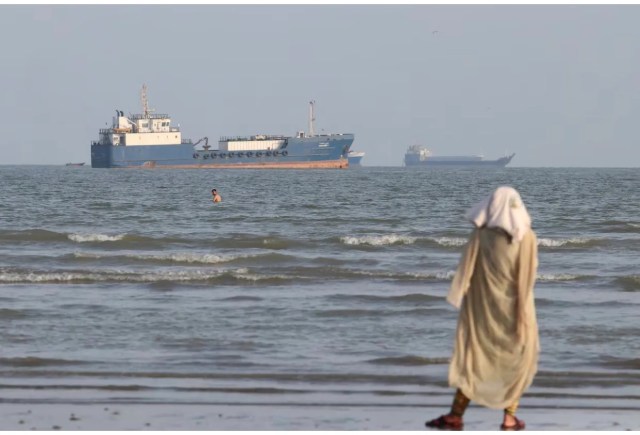
Before the conflict, the Strait of Hormuz carried roughly one-fifth of global oil and liquefied natural gas trade. Disruptions to shipping through the narrow passage have contributed to higher insurance costs for vessels operating in the region and heightened concerns about the stability of international energy supplies.
Two senior Iranian officials told Reuters that Tehran adopted a revised operational strategy around 10 days before their comments. Although they did not disclose specific details, they said the changes involved the timing and methods of attacks against vessels considered to have violated Iranian maritime restrictions.
One of the officials said the objective was to undermine efforts by the United States and its allies to bring down global oil prices. According to the official, the strategy was developed at the highest levels of Iran’s leadership.
A second official described the confrontation as a contest over whether Washington could stabilize energy prices before Americans vote in the November midterm elections. The official also warned that vessels targeted by Iran could face risks beyond the Strait of Hormuz, suggesting that the threat to commercial shipping may extend into surrounding waters.
Iranian sources also indicated that Tehran was moving towards a near-total closure of the strait to vessels that do not comply with its restrictions. Such a move would further threaten the movement of oil and gas through a corridor that remains central to international energy trade.
According to Reuters, a US military official speaking anonymously said Iranian forces had adjusted their tactics after extensive damage to coastal radar infrastructure. The official said the Islamic Revolutionary Guard Corps, or IRGC, had increasingly used unarmed spotters aboard small boats to identify targets and relay their coordinates to strike units.
The report cited a recently intercepted dhow that US forces neutralized as an example of the changing methods used to gather targeting information. The reported reliance on small vessels could allow Iranian forces to continue monitoring shipping activity despite damage to some of their coastal surveillance systems.
However, the US military has also indicated that the destruction of much of Iran’s naval capability has limited Tehran’s ability to stop oil shipments from moving through the strait. Oil exports transiting the waterway have reportedly been increasing despite the continuing confrontation.
Maritime security reports point to a renewed rise in attacks and harassment targeting commercial vessels in recent days. Incident reports submitted to the United Kingdom Maritime Trade Operations, known as UKMTO, and independent maritime security data indicate that incidents involving drones and threats against tankers near the Strait of Hormuz have returned to levels seen in early October.
The reported expansion of operations beyond the strait has added another layer of concern. Security analysts monitoring the region say the threat now extends into the Gulf of Oman and nearby waters off the coasts of the United Arab Emirates and Qatar, widening the area in which commercial shipping may face disruption.
The situation leaves energy markets exposed to further volatility as governments, shipping companies and insurers assess the risks of operating in the Persian Gulf. If attacks continue or access to the Strait of Hormuz becomes more restricted, the consequences could extend beyond the region through higher transport costs, pressure on oil supplies and renewed uncertainty over global energy prices.
The claim that Iran is deliberately seeking to influence the US midterm elections by sustaining high oil prices is based on statements attributed to senior Iranian officials by Reuters. It represents their account of Tehran’s strategic objectives, rather than independent confirmation that the operation will affect election outcomes. The wider confrontation continues to pose a significant security risk to commercial vessels and a potential source of disruption for international energy markets.


