Finland and Norway’s leaders have called Russian President Vladimir Putin to urge him to end the war in Ukraine and resume meaningful peace negotiations, as European governments consider a more direct role in diplomatic efforts to end the conflict.
Finnish President Alexander Stubb and Norwegian Prime Minister Jonas Gahr Store held the phone conversation with Putin on Tuesday, calling for de-escalation and a lasting political settlement. The move signals a renewed effort by the two Nordic countries to engage Moscow directly while maintaining their support for Ukraine.
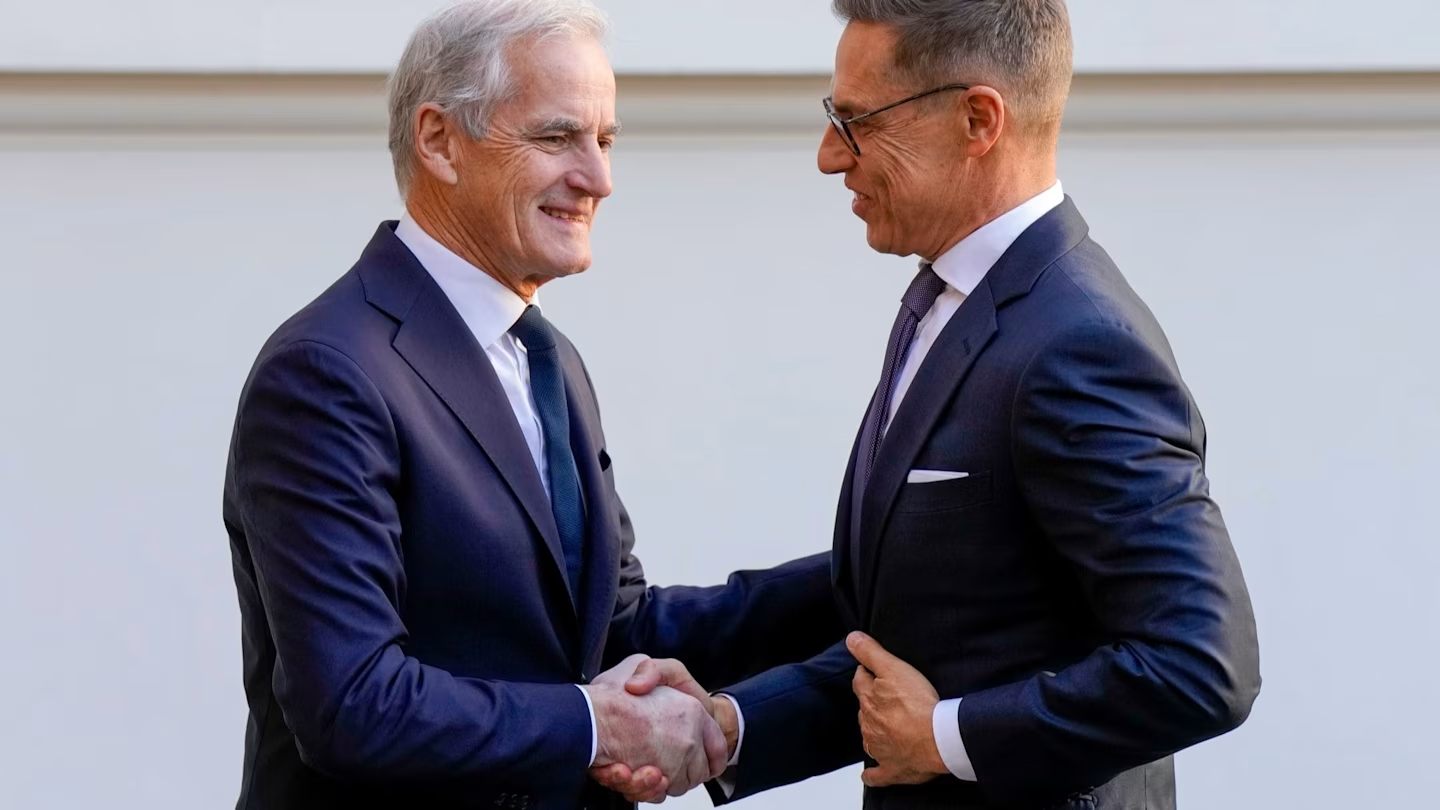
“The discussion was frank and substantive. We are neighbouring countries of Russia. The outcome of this war will have a direct impact on our and the broader European security. Ending the war requires direct discussion,” Stubb said in a statement following the call.
Store said the war had brought enormous human and material costs, with destruction and suffering likely to affect generations. He said the leaders had stressed the need to reduce tensions during their conversation with the Russian president.
Finland and Norway are both major providers of military assistance to Ukraine. According to the account of the call, the two leaders made clear that their support for Kyiv would continue despite their efforts to encourage negotiations with Moscow.
The discussions also covered security in the Baltic Sea region and the High North, areas of particular importance to the Nordic countries because of their proximity to Russia.
The Kremlin offered a different emphasis in its account of the conversation. It said Putin told the two leaders that “achieving a just, long-term peace is only possible with full and unconditional consideration of the legitimate interests of the Russian Federation”. The statement points to Moscow’s continued insistence that any settlement must address its demands, a position that could complicate efforts to reach an agreement acceptable to Ukraine and its European partners.
The call was initiated by Stubb and Store. After speaking with Putin, the two leaders held a separate exchange with Ukrainian President Volodymyr Zelenskyy.
Zelenskyy welcomed their diplomatic engagement and said they had raised the need for Russia to take concrete steps to reduce attacks affecting Ukraine’s energy infrastructure and other critical facilities.
“Alex and Jonas made it clear to the Russian leader that real de-escalatory steps are needed regarding our energy and infrastructure,” Zelenskyy said, thanking the Nordic leaders for their active diplomatic support.
“Russia must stop dragging out the war,” he added.
The conversation followed a round of peace discussions in Oslo organised jointly by Stubb and Store. Representatives from Ukraine, the United States, the United Kingdom, Germany, Italy, the European Commission and NATO attended the meeting. Russia was not represented at those discussions, although US special envoy Steve Witkoff subsequently travelled to St Petersburg to brief Putin on their outcome.
A further round of negotiations is expected to take place in Abu Dhabi early next month, using a format similar to the Oslo discussions but with Russian representatives participating. If confirmed, the meeting would provide another opportunity to test whether direct engagement can produce progress towards ending the war.
The Nordic leaders’ call also comes as the European Union considers a more direct role in negotiations between Ukraine and Russia. Brussels has expressed readiness for European and Russian officials to meet at the same table, an approach that would mark a significant development in the diplomatic process described in the original report.
The European Commission and the European Council are working towards establishing a joint team to represent the EU’s position. The two institutions were reportedly informed in advance of the Stubb-Store conversation with Putin.
A European Commission spokesperson said the bloc remained committed to ending the war while ensuring that any settlement would be fair and durable.
“On the EU side, we are adamantly committed not just to putting an end to the war but to achieve peace that will be just and sustainable. That is our aim and that is the stance we are defending in the ongoing talks,” the spokesperson said.
However, the initiative has exposed differences among European governments over how diplomacy with Moscow should be conducted. Stubb and Store stressed that they had acted as the leaders of their respective countries, not as representatives appointed to negotiate on behalf of Europe as a whole.
That distinction matters because European governments have debated for more than a year whether to appoint a special envoy or establish a unified diplomatic channel to engage Russia. Supporters of a coordinated approach argue that European countries need a common position to retain influence over the outcome of negotiations, while separate initiatives risk sending mixed signals.
Danish Prime Minister Mette Frederiksen criticised the Finnish and Norwegian leaders’ decision, saying the move had not been properly coordinated with other European countries.
“I actually don’t know what they think you can achieve with this,” Frederiksen said. She added that European governments should stand together when dealing with Moscow, pointing to previous instances in which individual leaders had pursued direct contacts without broader coordination.
Her criticism highlights a central challenge for Europe’s diplomacy: governments broadly share an interest in ending the war, but they do not necessarily agree on who should speak to Russia, how negotiations should be organised or what conditions should guide a settlement.
For Finland and Norway, the security consequences of the war are immediate because both countries border Russia or lie close to strategically important areas in the Nordic and Arctic regions. Their leaders’ decision to contact Putin reflects an attempt to combine continued support for Ukraine with direct efforts to reduce the fighting.
The call itself does not establish that Moscow is prepared to compromise, and the Kremlin’s stated conditions suggest that substantial disagreements remain. The next round of negotiations, particularly if Russian representatives take part in Abu Dhabi, will offer a clearer indication of whether the renewed diplomatic contacts can move beyond calls for de-escalation towards concrete progress.