Finland’s child benefits system could face major changes under proposals published by the Ministry of Finance, which has outlined hundreds of possible measures to reduce public spending, increase tax revenue and address the country’s growing public debt.
The proposals include abolishing child benefits altogether or removing supplements paid to families with multiple children and single parents. According to the ministry’s calculations, these changes could save the state approximately 1.2 billion euros.
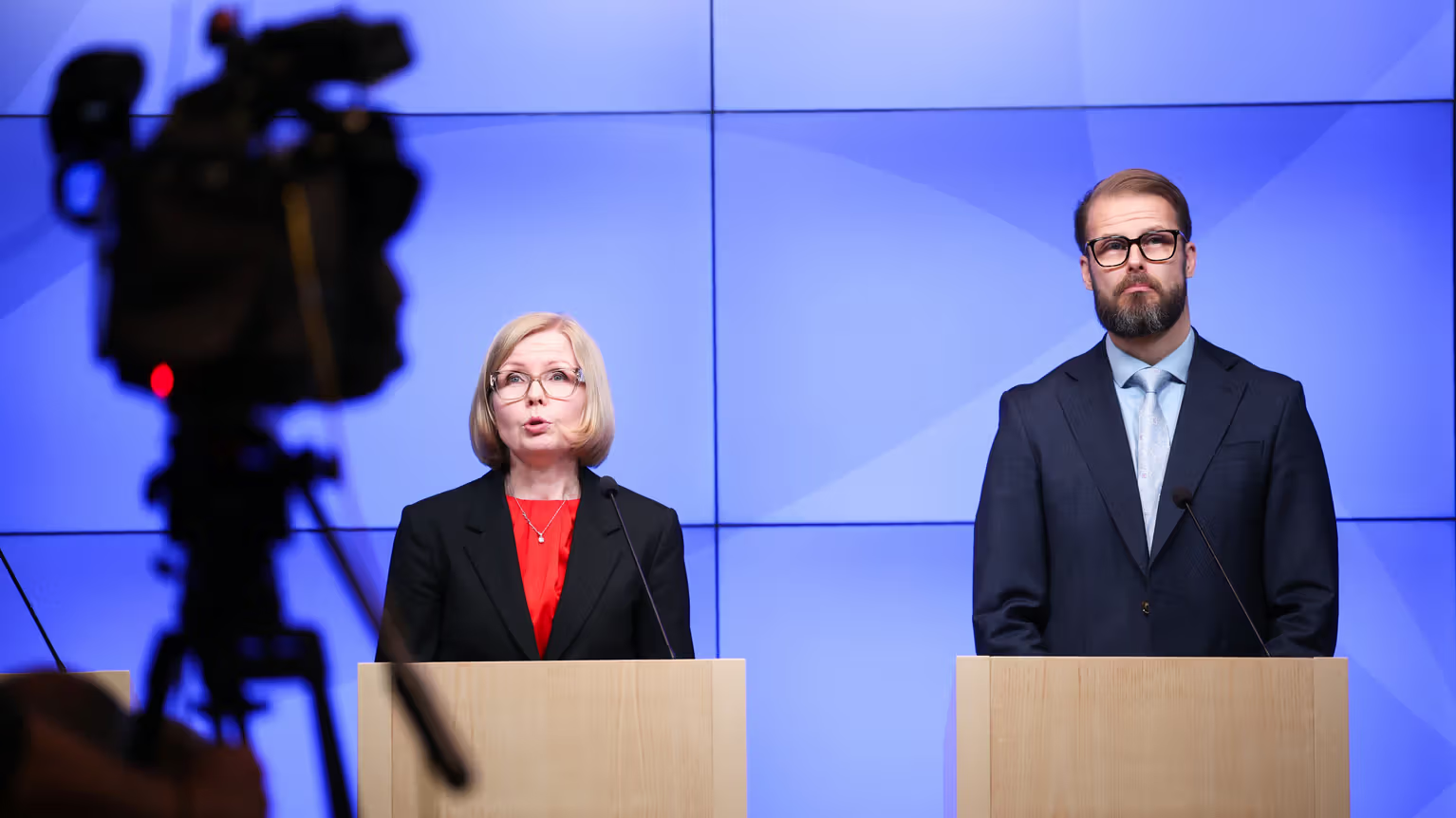
The proposals form part of a wider review of Finland’s public finances and are expected to inform negotiations when political parties seek to form a new government following the parliamentary elections scheduled for next April. They are options for policymakers to consider, rather than a package of measures the ministry has formally recommended for implementation.
The Ministry of Finance says Finland has faced a persistent imbalance between public spending and state revenue. General government expenditure has exceeded revenue as a share of gross domestic product every year since 2009, contributing to a prolonged increase in public debt.
“Public finances are in a weak state. We have not been bold enough over the past decades in making reforms and prioritising what we use our shared resources on,” said Mika Niemela, Director General of the ministry’s budget department.
He argued that reversing the trend would require politicians to take decisive action and make difficult choices about how public money is spent.
The proposals come as Finland prepares for a demanding period of fiscal adjustment. Earlier this year, all but one of the country’s major political parties agreed to a public finance adjustment target of between 8 billion and 11 billion euros for the next parliamentary term. The Left Alliance was the only major party to reject the agreement, which is commonly referred to as a debt brake and sets limits on the amount of additional debt a government can incur.
Although the ministry describes the scale of the required adjustments as significant, it maintains that Finland can still put its public finances on a more sustainable footing.
The possible abolition of child benefits is among the most consequential proposals for households. The ministry is also examining reductions to basic social assistance, which provides last-resort financial support, and the general housing allowance paid to eligible households. Other proposals would reduce certain state pension costs or remove some conditions attached to earnings-related pensions.
Another major area under review is the system of index-linked increases, which adjusts payments and spending in line with changes in prices or other measures. The ministry proposes considering whether these adjustments should be frozen temporarily, reduced or removed entirely.
Such changes could affect earnings-related pensions, social security benefits and services provided by municipalities and regional healthcare authorities. The ministry estimates that changes to index-linked spending could generate savings of around 2 billion euros over the next decade.
The review also raises questions about how Finland organises healthcare and social welfare services. The ministry proposes restructuring the network of wellbeing services counties, potentially reducing the current number of 21, and ending round-the-clock emergency care in some areas.
However, the ministry acknowledges that reducing the number of regions and reorganising their service networks would be politically difficult. Niemela said such a restructuring was unlikely to be completed during the next parliamentary term and would therefore not deliver immediate savings within that period.
Education is another area facing potential changes. The proposals include revising staffing ratios, ending additional funding for schools in disadvantaged areas and reversing Finland’s extension of compulsory education to age 18.
At the level of central government, the ministry also suggests reducing the number of ministries from 12 to nine as part of a broader effort to streamline state administration.
The spending proposals are accompanied by options for raising additional tax revenue. Terhi Jarvikare, Director General of the ministry’s Tax Department, said the report does not endorse a single package of tax increases or specify how much the overall tax burden should rise. Instead, it presents a range of measures for political parties to assess.
Among the options are higher income taxes, increased corporate taxation and changes to value-added tax (VAT) rates. Jarvikare argued that increasing VAT would generally be less damaging to the economy than raising taxes on employment and businesses. She also questioned the effectiveness of reduced VAT rates as a way to help lower-income households, saying more targeted support could achieve that goal more efficiently.
Changes to VAT could generate hundreds of millions of euros in additional revenue, according to Jarvikare. She added that tax decisions should be designed to limit negative effects on economic growth and employment.
Rather than introducing numerous small tax changes, she said, policymakers should consider a smaller number of larger measures whose overall effects would be easier to evaluate.
The ministry’s report brings together around 400 proposals covering areas including healthcare, social security, education, business and industry. Its stated purpose is to give political decision-makers a broad range of options, with estimates of their potential financial impact, ahead of the next government formation talks.
The proposals do not mean that child benefits will be abolished or that the other suggested cuts will automatically become policy. Any changes will depend on political negotiations and the decisions of the next government, which will have to weigh the need to control public debt against the effects of spending reductions and tax changes on households, public services and the wider economy.