Finland by rail offers a different way to understand the country, one where the journey between places is part of the experience rather than time lost between destinations.
The train does not ask travellers to keep checking how quickly they are getting there. Instead, it gives them a moving view of Finland that is difficult to appreciate from an airport departure lounge or behind the wheel of a car. Forests pass quietly beyond the window. Lakes appear and disappear. Small towns interrupt long stretches of woodland. Stations become part of the story, marking the transition from one part of the country to another.
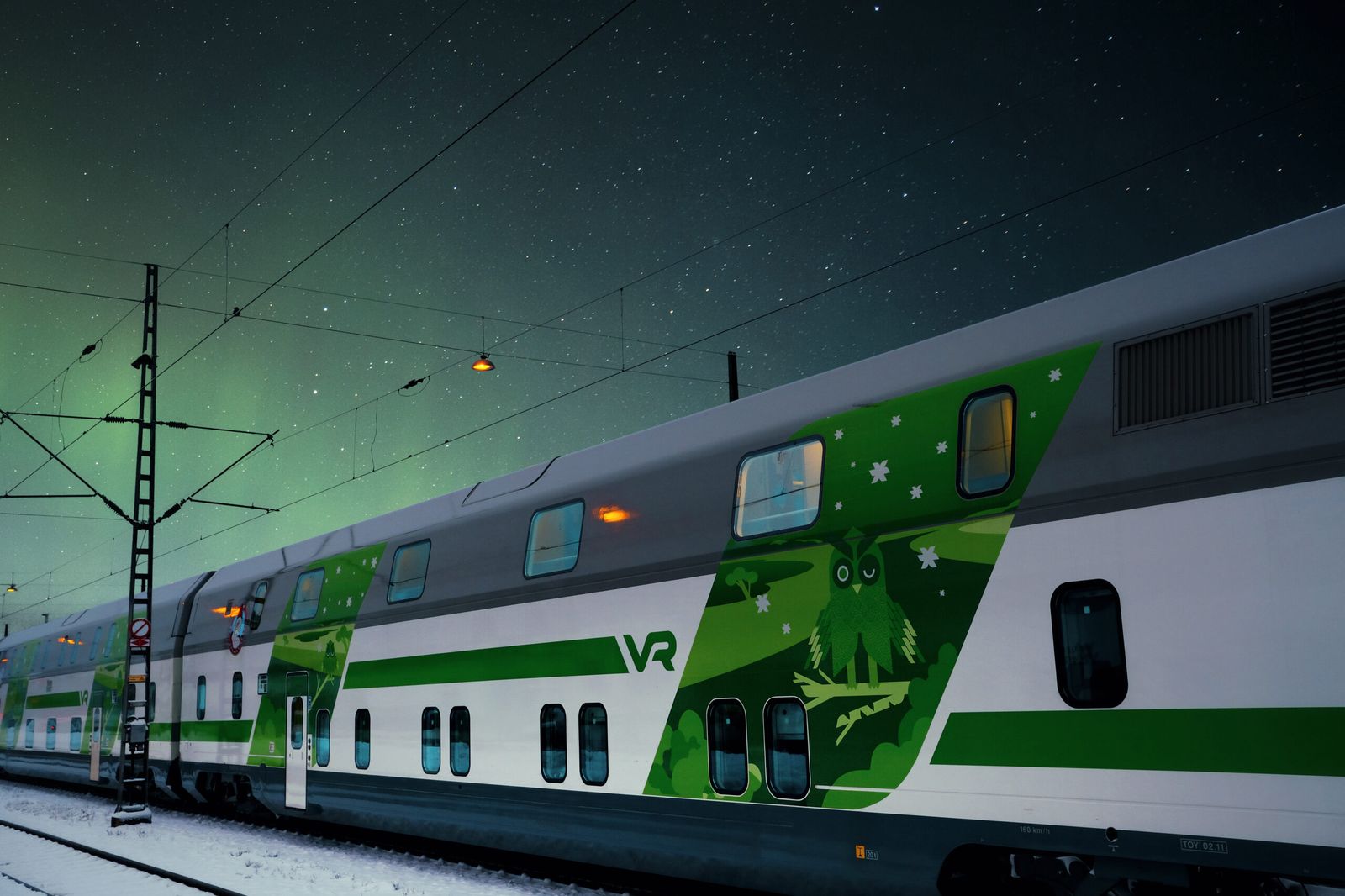
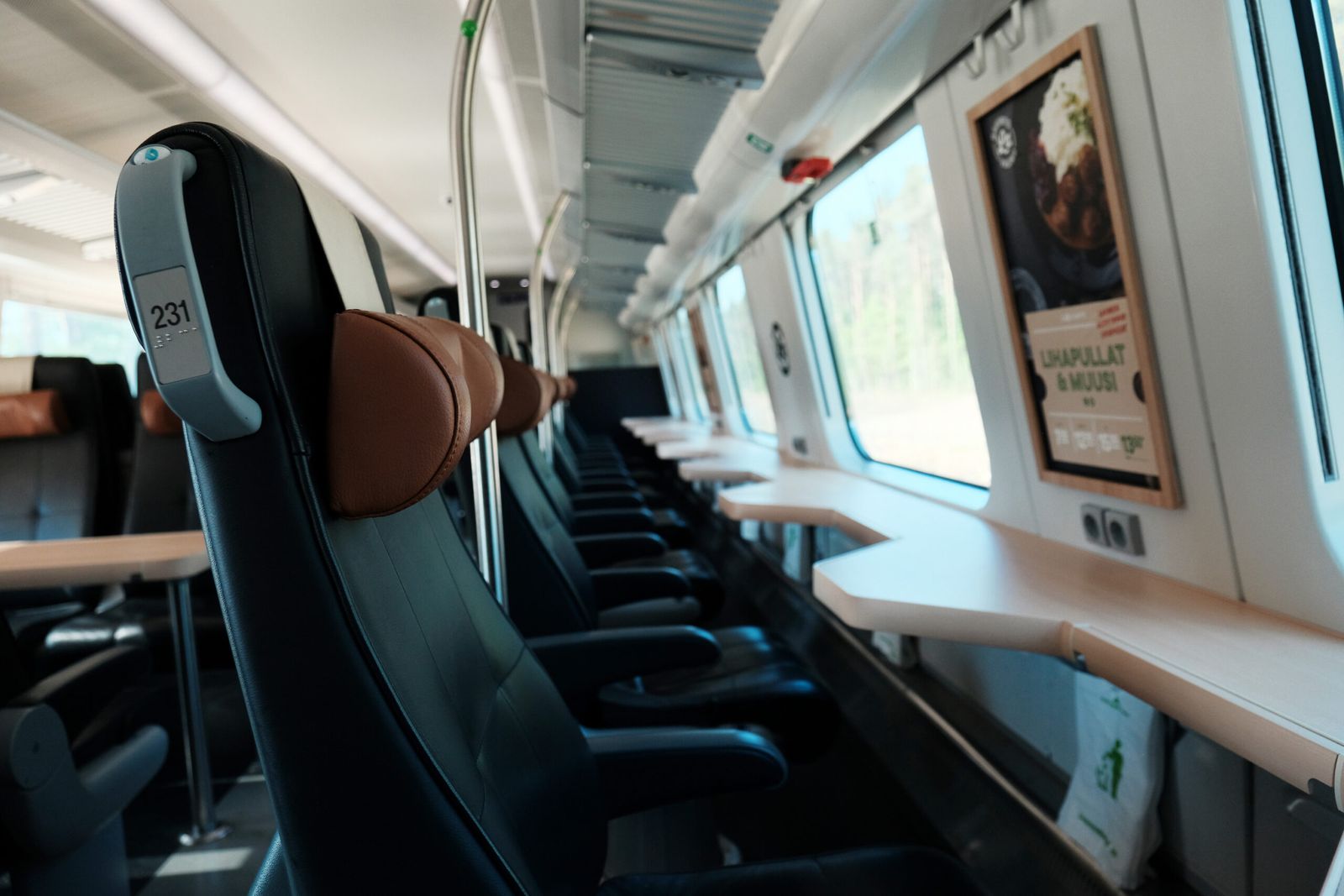
For travellers used to treating transport as a practical necessity, Finland by rail can feel almost like a return to an older idea of travel. You board, find your seat and watch the landscape change.
That is particularly interesting in a country where geography shapes so much of everyday life. Finland is large by European standards, yet much of its population is concentrated in a relatively small number of urban areas. Between those cities are vast stretches of forest, lakes, farmland and sparsely populated countryside. Rail travel creates a connection between these places without requiring the traveller to navigate every kilometre personally.
The experience begins before the train leaves the station. Helsinki is the country’s main international gateway, and its railway station is one of the most recognisable buildings in the capital. From there, the railway network opens towards cities and regions with very different identities.
Travelling north changes the rhythm of the journey. The urban landscape gradually gives way to quieter surroundings, and the further north the train travels, the more the landscape becomes part of the experience. Routes towards Lapland can turn a simple transfer into a long observation of Finland’s changing geography.
For visitors, this can be one of the most appealing aspects of travelling slowly. There is no need to manufacture an attraction at every stop. The landscape itself becomes something to pay attention to.
The view from a Finnish train window is not dramatic in the way that some famous European railway journeys are. There are no continuous mountain ranges or spectacular coastal cliffs competing for attention. Finland’s character is quieter. Its scenery often works through repetition: forest after forest, lakes appearing between trees, low horizons and long stretches of open space.
That repetition is precisely what makes rail travel here interesting.
It gives travellers time to notice the details that are easily missed when moving quickly. A village can appear for only a few minutes before disappearing behind the trees. A frozen landscape in winter can look completely different from the same route in summer. Autumn changes the colour of the forests, while spring gradually brings light and vegetation back after the long winter.
The seasons are not a backdrop to travelling through Finland. They change the journey itself.
Winter is perhaps the most distinctive example. Travelling north by train when daylight is limited can produce an experience that feels very different from travelling the same route in summer. Snow can transform the landscape into a quieter, almost monochrome scene, while the train continues steadily through it.
Summer tells another story. Finland’s long days allow travellers to see more of the countryside for longer, and the landscape feels more open. In the north, the unusual light of the season adds another dimension to a journey that might otherwise be considered simply a means of getting from one city to another.
Slow travel does not necessarily mean travelling slowly in the literal sense. It is more about changing the relationship between the traveller and the journey. A train can still cover long distances efficiently, but the traveller is not required to spend the entire trip focused on the destination.
That distinction matters in Finland.
A visitor travelling between Helsinki and another Finnish city may be tempted to think of the journey only in terms of arrival time. But rail travel allows the distance itself to become part of the trip. A laptop can be put away. A book can be opened. A conversation can happen. Or nothing can happen at all.
There is value in that last option.
Travel has become increasingly associated with filling every available hour. Itineraries are built around attractions, restaurants, viewpoints and experiences, often leaving little room for simply being somewhere. Finland lends itself naturally to a different approach.
A railway journey can create that space without requiring a traveller to make a dramatic lifestyle change. It is simply a different way of moving.
The country’s cities also make rail travel particularly useful for travellers interested in seeing more than Helsinki. Tampere, Turku, Oulu, Kuopio and other urban centres offer different perspectives on Finnish life, while smaller destinations provide opportunities to experience places that rarely feature in international travel coverage.
The result is a form of travel that moves beyond the usual image of Finland as Helsinki, Lapland and Santa Claus.
That image has become powerful internationally, but it represents only part of the country. Rail travel makes it easier to look at Finland as a collection of places connected by landscape, distance and everyday life rather than as a handful of isolated tourist attractions.
For a travel writer, that distinction is particularly valuable. Some of the strongest stories are not necessarily found at the country’s most famous sights. They can emerge from the spaces between them: a station platform in the early morning, a quiet town viewed from a train window, the changing landscape outside a carriage or the small details of how people move through the country.
There is also something revealing about travelling through Finland by public transport. It places the visitor closer to ordinary movement. The journey is shared with people going to work, visiting family, studying or travelling for reasons that have nothing to do with tourism.
That can make a destination feel less like a product and more like a place where people actually live.
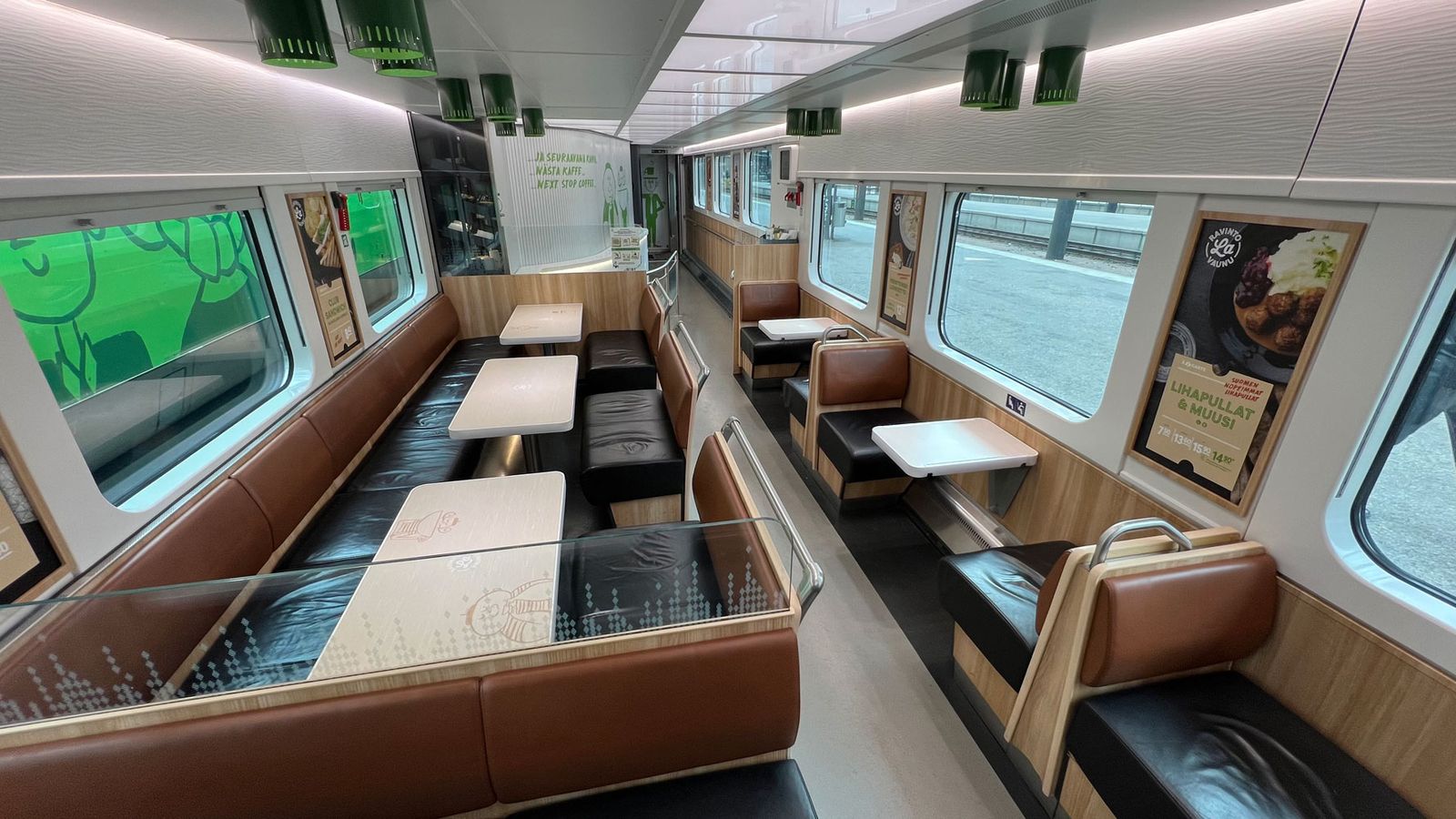
The appeal of Finland by rail, then, is not simply that trains are convenient. It is that the railway offers a way of seeing the country at a human pace. The traveller remains connected to the geography rather than being lifted above it or sealed away from it.
There are, of course, practical considerations. Long journeys require planning, and some destinations are easier to reach by car or by combining different forms of transport. Rail travel is not a solution for every Finnish itinerary. But that is not really the point.
The point is what happens when the journey is allowed to take up some space in the trip.
Finland is a country that rewards patience. Its landscapes rarely demand attention. They invite it. A train travelling through the country provides exactly that opportunity, carrying travellers past forests, lakes and settlements while the view changes almost imperceptibly outside the window.
For someone visiting Finland for the first time, that can offer something a conventional sightseeing itinerary cannot: a sense of the distance between places and of the landscape that connects them.
And perhaps that is the most interesting thing about Finland by rail. The journey does not compete with the destination. It quietly becomes part of it.