The European Union’s Arctic strategy is taking a sharper security focus as rising geopolitical tensions, expanding Russian military activity and China’s growing strategic interests reshape the region’s importance to Europe.
Presented on Tuesday, the EU’s revised strategy sets out plans to strengthen European security capabilities, improve military mobility with NATO, expand icebreaker capacity, increase satellite surveillance and develop new systems to protect critical maritime and telecommunications infrastructure.

The shift reflects how quickly the Arctic has moved up Europe’s political agenda. Once viewed primarily as a region for international cooperation, scientific research and environmental protection, the Far North is increasingly important to defence, energy security, global trade and access to critical raw materials.
Climate change is adding to these pressures. As Arctic ice melts, previously difficult shipping routes become more accessible, mineral deposits attract greater attention and military operations in the region become more feasible. These changes are creating new economic opportunities while intensifying competition among countries seeking greater influence.
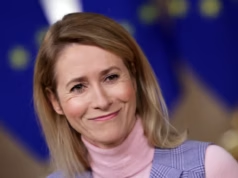
“Since our previous Arctic strategy in 2021, we face a much harsher security environment. The Arctic is no longer insulated from the world’s geopolitical tensions. Our updated Arctic strategy reflects this new reality by putting security firmly at its core,” EU foreign policy chief Kaja Kallas said when presenting the initiative.
The revised approach marks a significant change in Brussels’ thinking. The EU still considers international cooperation essential, but it no longer believes cooperation alone can provide the foundation for its Arctic policy. The bloc wants to work with partners while also improving its ability to protect European interests, infrastructure and territory.
The new strategy creates a framework called the Northern Neighbourhood, intended to strengthen political cooperation between the EU and partners including Norway, Iceland, Canada, the United Kingdom and the United States. Regular high-level meetings are planned to discuss shared priorities and coordinate projects. The framework is intended to complement existing arrangements, including the Arctic Council, rather than replace them.
The EU’s concerns extend beyond Russia’s military presence. Kallas said China was expanding its strategic ambitions in the High North, with investments in ports, minerals and critical infrastructure requiring closer scrutiny. Brussels is concerned that commercial projects and infrastructure investments could also carry strategic implications as competition over the region intensifies.
The European Parliament had already called for a more security-focused Arctic policy in a recommendation adopted in November 2025, including closer cooperation between the EU and NATO. The revised strategy also comes amid tensions over Greenland, following US President Donald Trump’s stated ambition to take control of the island, an autonomous territory within the Kingdom of Denmark.
European Commission President Ursula von der Leyen said the changing security environment meant the EU could no longer take the region’s sovereignty, territorial integrity and established rules for granted. She argued that Europe needed to adjust its strategic posture and work with partners to protect those principles.
Practical measures form a central part of the new approach. The EU plans to improve satellite monitoring through its Copernicus and Galileo systems, explore joint procurement to expand Europe’s icebreaker capacity and strengthen its ability to operate in Arctic conditions. Icebreakers are particularly important because they allow vessels to navigate waters covered by sea ice, supporting transport, research and operations in remote areas.
The strategy also calls for closer coordination with NATO to improve military mobility across the European Arctic. That includes making it easier to move troops and equipment rapidly across the region, strengthening transport links between western and eastern parts of the European Arctic, and improving connections with the Baltic Sea area.
These plans reflect the relationship between civilian infrastructure and defence. Ports, airports, railways and roads that carry passengers and commercial goods can also support military movements during a crisis. Better connections across northern Europe could therefore serve both economic and security purposes.
Shipping is another reason the Arctic has become more important to Brussels. New and increasingly accessible routes could offer alternatives for trade between Europe and Asia, reducing dependence on established passages such as the Suez Canal and the Red Sea. However, Arctic navigation remains challenging, and the commercial value of individual routes depends on conditions including sea ice, infrastructure, safety requirements and operating costs.
Russia has invested in infrastructure along the Northern Sea Route, which follows its Arctic coastline, while China has promoted a so-called Polar Silk Road as part of its wider international connectivity ambitions. The EU wants to ensure that emerging shipping corridors remain open to lawful navigation and are not used to undermine the rights or security of countries in the region.
To improve oversight, the bloc plans to develop a maritime security hub with partner countries. The proposed system would help authorities share information about suspicious vessels, Russia’s so-called shadow fleet, illegal fishing and marine pollution. It would also strengthen awareness of activity across Arctic waters, where long distances and difficult conditions can make monitoring and enforcement more complicated.
The EU also intends to uphold international shipping safety and environmental rules under the International Maritime Organization’s Polar Code, which sets requirements for vessels operating in polar waters. Inspections and enforcement measures are expected to support compliance. A separate study will examine future Arctic shipping patterns, potential maritime corridors and the types of vessels the region may need.
Energy policy presents a more complicated picture. The EU says it remains opposed to Arctic fossil fuel development and wants to keep oil, coal and gas in the ground. Energy Commissioner Dan Jorgensen reiterated that position as the bloc presented its revised strategy.
However, the updated approach places less emphasis on securing a multilateral agreement to prohibit new Arctic oil and gas development than the EU’s 2021 policy did. The distinction matters because opposing new drilling remains the bloc’s stated position, but securing a binding international prohibition is a separate diplomatic objective. Norway, which has its own interests in Arctic energy production, has opposed the EU’s earlier push for a moratorium.
European Commission officials have also argued that new Arctic oil and gas projects would take years to deliver significant supplies and would not provide a convincing answer to the EU’s future energy needs. Instead, Brussels wants to develop renewable energy in the region, including wind, hydropower, geothermal power and renewable hydrogen.
Expanding renewable generation will require adequate connections to electricity markets. The strategy therefore points to closer energy cooperation between Finland and Sweden, where cross-border electricity links can help move power to areas where it is needed. The Aurora Line, inaugurated in January 2026, has strengthened the connection between the two countries’ electricity systems, while further work is intended to improve market integration and address grid constraints.
Digital connectivity has also become a security priority. Submarine cables carry much of the world’s international data traffic, linking communities, businesses and public institutions across long distances. Damage to these systems can disrupt communications and expose weaknesses in infrastructure that is difficult to monitor and repair.
The EU is supporting plans for a Pan-Arctic Cable linking Greenland directly with Europe, with the wider ambition of improving connectivity across the North Atlantic and potentially towards Asia. Such infrastructure could provide faster and more reliable internet access for remote communities while giving Europe additional routes for data transmission. The EU has also identified the need for more secure satellite communications in the Arctic.
Concerns about undersea infrastructure have grown amid reports of suspicious activity and damage to cables in European waters. The EU’s strategy envisages an Arctic cable hub to help monitor, protect and repair submarine connections, building on efforts to strengthen infrastructure resilience in the Baltic and Mediterranean regions.
Transport links across northern Europe are part of the same effort. The strategy highlights Rail Nordica and other projects intended to improve connections between Finland, Sweden and Norway. Better rail links could make it easier to move people and goods across the region while supporting military mobility and access to European markets.
The Arctic’s mineral resources are another important consideration. Greenland and parts of northern Europe contain deposits of materials such as rare earth elements, graphite and lithium, which are used in batteries, clean-energy technologies and defence equipment. Europe wants to reduce vulnerabilities in its supply chains by developing reliable sources of critical raw materials.
Projects in Finland, Sweden and Norway are already part of Europe’s wider effort to strengthen access to these resources. The EU can support strategically important developments through financing and measures designed to accelerate permitting, although individual projects must still meet applicable legal and environmental requirements.
That interest does not extend to unrestricted extraction. The EU strategy maintains opposition to deep-sea mining until scientific gaps concerning deep-sea ecosystems have been addressed and it can be demonstrated that the activity would not cause harmful environmental effects.
Despite the stronger security focus, the strategy is not limited to military capabilities, shipping and resources. The European Commission says the Arctic’s residents, including Indigenous Peoples, must remain central to decisions about the region’s future. More than half a million EU citizens live in the Arctic areas of Denmark, Finland and Sweden, giving the bloc a direct stake in the region’s economic, environmental and social development.
The revised strategy therefore combines security with climate action, research, sustainable economic development and support for local communities. Its success will depend on whether the EU and its partners can turn the proposals into practical projects while respecting the sovereignty of Arctic countries and the interests of people who live there.
For Brussels, the central change is clear: the Arctic is no longer treated primarily as a distant region where cooperation and environmental protection define Europe’s role. It is now a direct part of the EU’s security and economic planning, with transport links, energy networks, digital infrastructure and access to resources all tied to the bloc’s wider strategic interests.