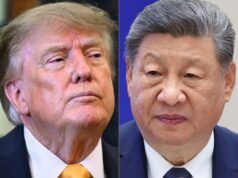
China-US strategic stability took a more practical turn in Washington this week as Chinese President Xi Jinping urged US President Donald Trump to translate their shared political vision into regular government-to-government communication, economic negotiations and mechanisms for managing disputes.
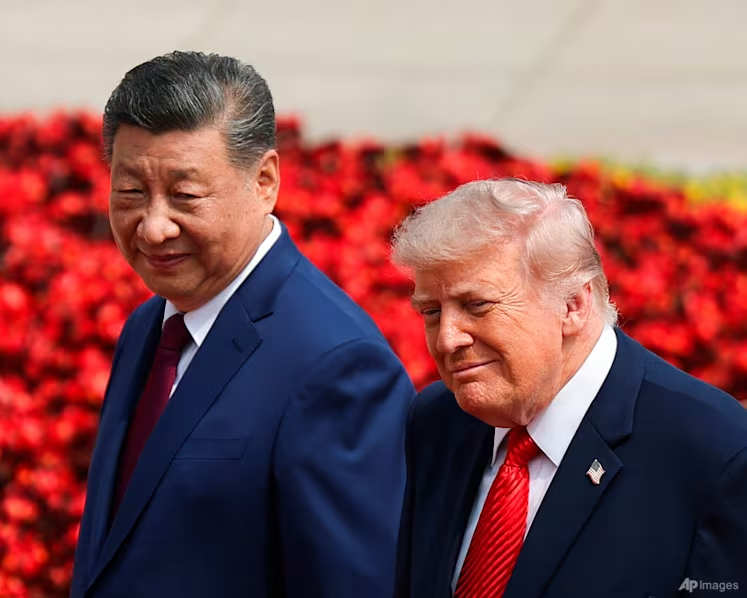
Xi made the appeal during his state visit to Washington, where the White House hosted him on September 24 following Trump’s welcome at Joint Base Andrews a day earlier. The visit was Xi’s first White House state visit in more than a decade and followed Trump’s trip to Beijing earlier in 2026.
At the arrival ceremony, Xi returned to a framework the two leaders had discussed during their earlier meeting in Beijing. He described it through four principles: cooperation as the mainstay of the relationship, competition kept within limits, differences that remain manageable and peace as a shared objective.
But Xi’s message in Washington was not simply about maintaining contact between the two presidents. He called for the framework to be carried into the day-to-day work of both governments, including foreign affairs, economic policy, finance, law enforcement and people-to-people exchanges.
He also called for regular military dialogue and stronger mechanisms for crisis communication and prevention. Such channels are particularly important in a relationship where disagreements can extend across trade, technology, security and international affairs. Xi presented them as part of the practical machinery needed to prevent competition from escalating into confrontation.
During talks at the White House, Xi said Beijing and Washington should pursue mutual benefit through practical cooperation, maintain healthy competition and handle differences through dialogue. He stressed that a constructive relationship based on strategic stability would not be an overnight achievement or a temporary arrangement.
Instead, he called on officials, industries and other sectors in both countries to participate in putting the framework into practice.
Trade provided one of the clearest examples of that approach. According to China’s readout of the talks, the two countries’ economic and trade teams held a new round of consultations and reached a new joint arrangement. Trump said the negotiations had produced new outcomes and called for continued discussions towards a broader agreement.
Reuters reported that US Treasury Secretary Scott Bessent said Washington and Beijing had extended their trade truce by two months from its November expiry. The extension keeps the lower tariff framework in place into January while negotiators continue discussions covering tariffs, Chinese purchases of US goods, rare-earth supplies and technology restrictions.
For companies operating between the two economies, the outcome carries significance beyond the negotiating rooms in Washington and Beijing. The US-China Business Council’s 2026 member survey, based on responses from 175 US companies, found that 95 per cent considered their China operations important to their global competitiveness. At the same time, the survey reflected the continuing costs of the trade dispute, with 72 per cent of respondents reporting tariff effects and 42 per cent saying they were passing some tariff costs downstream.
Artificial intelligence was another area where Xi sought to turn the broader strategic framework into a working channel between the two countries.
China and the United States are leading players in AI, Xi said, giving both sides reasons to cooperate even as they compete. He proposed continued dialogue over the risks and benefits of the technology, measures to prevent misuse and abuse, and a commitment to keeping AI under human control and directed towards public welfare. China’s account of the White House talks said Trump also supported continued US-China dialogue on AI.
The proposed agenda extended beyond economics and technology. Xi announced that China would invite 100,000 young Americans to visit the country for exchanges and study over the next five years. He also called for more direct flights between China and the United States, linking greater travel access to broader economic and social ties.
People-to-people exchanges have already been part of the relationship’s efforts to rebuild contact. CGTN reported that nearly 100 students from 10 US universities had recently participated in exchanges in China. Among them were Marlon Forrester of Harvard and Columbia University student Joey Zhang, who spoke to CGTN after receiving a response from Xi to a letter they had sent following their trip.
Xi also called for closer cooperation on counternarcotics and law enforcement, adding another area where communication between agencies could form part of the wider effort to manage tensions.
Investment and market access featured in Xi’s message as well. He said China remained open to US companies seeking investment and business opportunities and called on Washington to treat Chinese companies fairly. The argument reflected his broader call for expanding areas of cooperation while containing disagreements rather than allowing disputes to dominate the relationship.
The presidents also discussed international security issues, including the Middle East, Ukraine and the Korean Peninsula. Xi again raised the need for regular military communication and stronger crisis-prevention mechanisms, pointing to the risks that can arise when the two governments lack reliable channels during periods of heightened tension.
The two leaders also confirmed support for each other’s hosting of the 2026 APEC Economic Leaders’ Meeting and the G20 Leaders’ Summit, adding multilateral cooperation to the list of areas where Beijing and Washington are seeking continued engagement.
Xi’s message therefore went beyond the familiar disputes that have defined much of the China-US relationship in recent years. Trade, artificial intelligence, investment, flights, student exchanges, law enforcement and military communication were presented as connected parts of a broader effort to establish a more predictable relationship.
Trump publicly described the encounter as a “great meeting”. China’s foreign ministry said he supported continued dialogue on trade and AI. The two governments nevertheless remain engaged in negotiations over significant economic and strategic disagreements, meaning that the new emphasis on stability will be tested through implementation rather than presidential statements alone.
The focus on implementation reflects months of leader-level contact. Xinhua reported that Xi and Trump had earlier agreed in 2026 on the vision of a constructive China-US relationship based on strategic stability. Xi has since argued that the framework should not remain a political slogan but should guide concrete work across both governments.
The Washington programme gave that message a highly public setting, with an arrival ceremony, presidential talks and a state dinner. White House records show that Trump and Xi delivered remarks during the visit and held smaller-group discussions in the Oval Office.
At the state dinner on September 24, Xi said the visit had produced common understandings that gave the strategic stability vision greater substance. He referred to more than two centuries of trade between China and the United States, cooperation during the Second World War and the importance of exchanges between the two societies.
For now, the trade truce is set to continue into January under the extension reported by Reuters, while officials have a broader programme of negotiations and dialogue covering trade, AI, military communication, law enforcement, aviation and public exchanges.
Xi’s message in Washington was ultimately about turning an agreed political concept into a working system. He told Trump that implementation should proceed with the “spirit of driving the nail”, a phrase that captured the central challenge facing the relationship: whether repeated presidential understandings can be converted into durable channels that allow the world’s two largest economies to compete without allowing their differences to overwhelm cooperation.