A patient being taken to hospital in an ambulance that was stopped to allow the convoy of Assam Chief Minister Himanta Biswa Sarma to pass through Silchar, India, died the following morning, prompting public criticism, the suspension of four police personnel and new instructions on how VIP convoys should handle emergency vehicles.
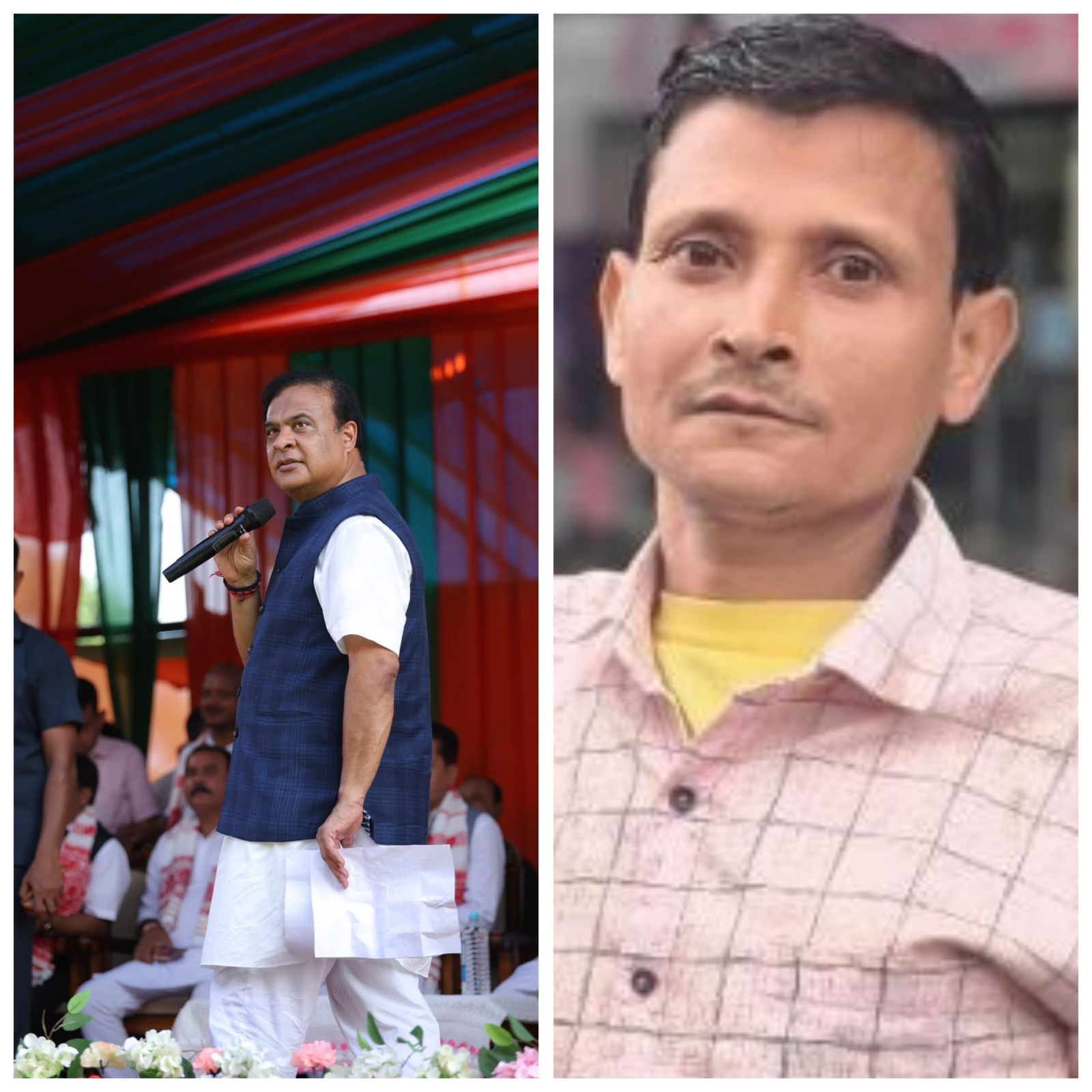
The patient, identified as Rasaraj Chakraborty from Sribhumi district, was being transported to Silchar Medical College and Hospital on Wednesday, September 30, for advanced treatment after his condition deteriorated because of a serious liver-related illness. His ambulance was stopped near the Ramnagar ISBT point in Silchar while police cleared the road for Sarma’s convoy. Footage showing the ambulance waiting as the convoy passed was later circulated widely on social media.
Chakraborty died at the hospital early on Thursday, October 1, while receiving treatment. The Silchar Medical College and Hospital principal, Abhijit Swami, said the patient had cirrhosis and described the condition as a chronic case. Reports said he died during treatment at about 6 a.m.
The timing of the death, coming less than a day after the ambulance was halted, intensified criticism of the traffic arrangements. However, there is no established evidence that the brief stoppage caused Chakraborty’s death. Sarma said the patient’s underlying liver condition and the ambulance delay were not connected. The hospital also described his illness as a serious, chronic condition.
The chief minister had already apologised after the video of the incident emerged, calling the decision to stop the ambulance unacceptable. He said no chief minister’s convoy should take precedence over a person requiring urgent medical care and ordered an inquiry into why existing instructions had not been followed.
Four police personnel involved in traffic management during the convoy movement were subsequently suspended pending a departmental inquiry. The Times of India reported that the ambulance had been held for several minutes near Ramnagar ISBT, while other reports described the stoppage as lasting only a short period.
Sarma said emergency medical care must take priority over VIP movement and warned that instructions governing the chief minister’s convoy had to be followed. He also said that anyone occupying the chief minister’s office was “merely a chief servant” and argued that there should be no place for VIP culture in a “new Assam.”
The incident has since led to a broader change in the state’s convoy instructions. The Assam government directed district commissioners and senior police officials to ensure that ambulances and other emergency vehicles are not obstructed for VIP movements. The directive also states that the chief minister’s convoy can be stopped when necessary to allow an emergency vehicle to pass.
The government also issued fresh guidelines covering the movement of the chief minister’s convoy, including instructions that the convoy should be kept to the minimum number of vehicles required for security and essential operational purposes.
For Chakraborty’s family, the controversy has come alongside a personal loss. His wife said he was the family’s main breadwinner and appealed to the chief minister for assistance. She said he had left behind two children and asked for help to support the family after his death.
The episode has therefore raised two separate questions that should not be confused. One concerns the medical cause of Chakraborty’s death, which officials and hospital authorities have linked to his serious liver disease. The other concerns the decision to stop an ambulance carrying a critically ill patient for a VIP convoy, an action the chief minister himself described as unacceptable and which resulted in disciplinary action against four police personnel.
The subsequent government directive makes clear that emergency vehicles are not to be held up for the movement of the chief minister’s convoy. In Silchar, the controversy has turned a brief traffic stoppage into a wider examination of how VIP security arrangements are managed when they meet an emergency on the road.