Al Fahidi Fort, Dubai’s oldest standing building, is set to reopen to visitors after five years of restoration, bringing one of the city’s most important pieces of history back into the heart of its rapidly changing tourism landscape.
Dubai is usually presented through its modern skyline. The Burj Khalifa, enormous shopping centres, luxury hotels and ambitious architectural projects have become shorthand for a city built around the future. Yet on the southern side of Dubai Creek, the story is considerably older.
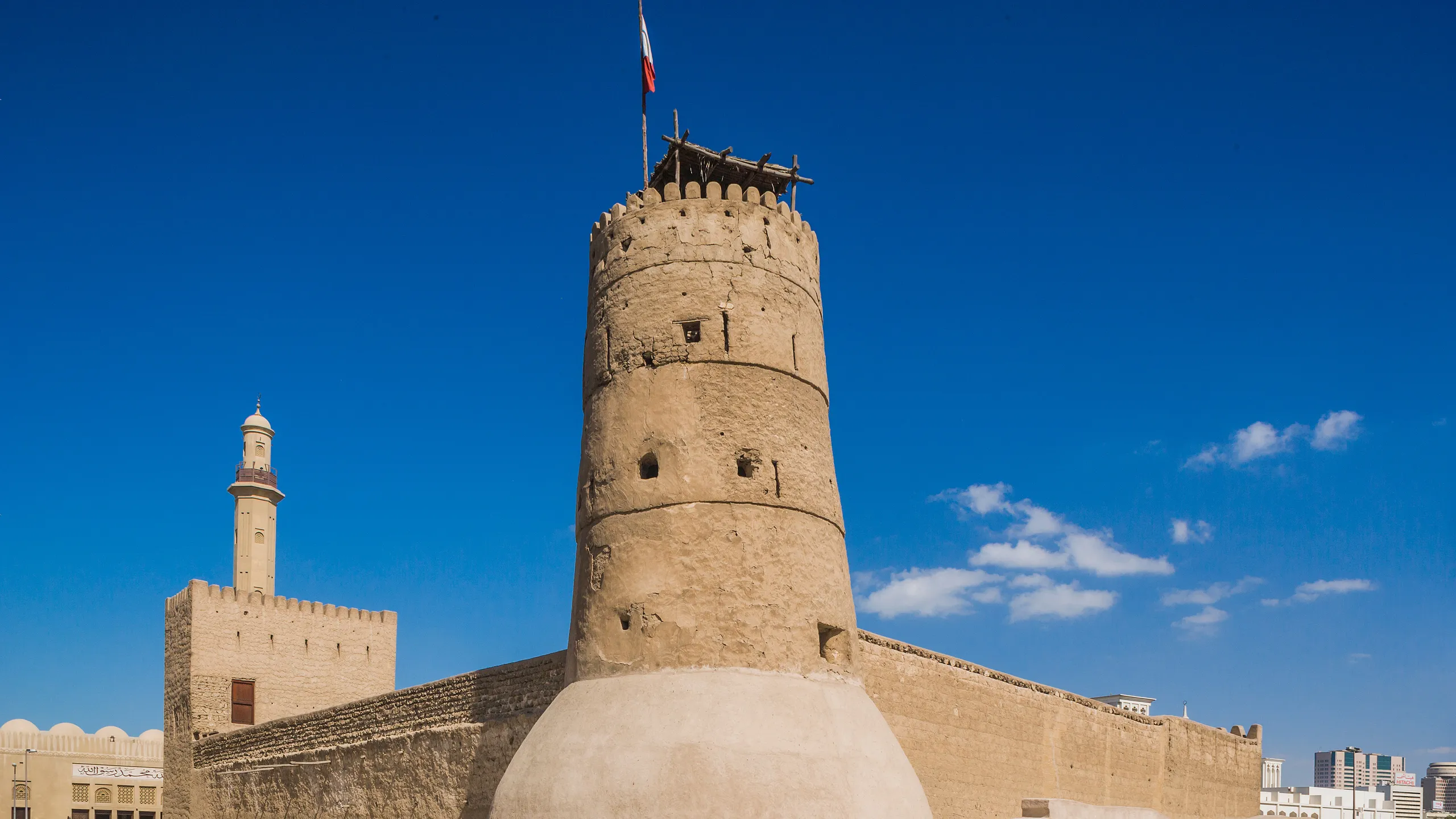
In the Al Fahidi Historical Neighbourhood, traditional homes, narrow lanes and cultural sites offer a very different view of the emirate. At the centre of that historic district stands Al Fahidi Fort, a structure more than 230 years old that has witnessed Dubai’s transformation from a small trading settlement into a global city.
The fort was originally built as a defensive stronghold around 1787. Its role changed repeatedly over the following centuries. It served as a residence for Dubai’s ruler, a centre of government and administration, and later as a prison. In 1971, the same year the United Arab Emirates was established, it became Dubai’s first museum.
Now, after closing in 2021 for an extensive restoration project, the fort is preparing to receive visitors again. Ayisha Khansaheb, Director of Al Fahidi Fort and Specialised Museums at the Dubai Culture & Arts Authority, said at Arabian Travel Market that the reopening is expected “in the coming weeks or months.”
The restoration is intended to do more than repair an old building. The project has created a new museum experience designed to place the fort within the broader story of Dubai and its development.
Khansaheb described the museum as a “gateway into the story of Dubai itself”, suggesting that the fort could become an important starting point for visitors who want to understand the city beyond its modern attractions.
That distinction matters in a destination where cultural heritage has often had less international visibility than luxury tourism, entertainment and futuristic architecture. Dubai’s rapid development can make its older history easy to overlook, even though that history is central to understanding how the city emerged.
Khansaheb said cultural heritage has a role not only in attracting tourists but also in giving residents and schools a way to engage with the city’s history.
“We need to have offerings for everyone,” she said, adding that there is a growing need to show that Dubai has “a soul”, as well as culture and history.
The redesigned museum combines the original fort with new exhibition spaces, archival material, artefacts and interactive technology. The visitor journey begins in a new underground extension, where contemporary galleries examine subjects including defence, leadership and craftsmanship before leading visitors into the historic structure.
One of the experiences, called “The Vault“, uses light and sound to trace the development of Dubai’s defensive capabilities. Another gallery, “A Landmark Across the Ages”, examines the changing role of Al Fahidi Fort over more than two centuries.
The museum will also display a significant collection of Islamic arms and armour, while interactive experiences have been developed with younger visitors in mind.
Yet the building itself remains one of the central attractions. Visitors will be able to move through the fort’s historic walls, watchtowers, gates and courtyard, experiencing the physical architecture rather than simply viewing objects inside a museum.
“You experience history through architecture,” Khansaheb said.
That may be particularly significant in a city where so much of the built environment is associated with what is new. Al Fahidi Fort offers a rare opportunity to see a physical link to an earlier Dubai, before the towers, artificial islands and global tourism economy reshaped the city’s image.
Its reopening also gives visitors another reason to spend time in Old Dubai rather than treating the historic district as a brief contrast to the city’s modern attractions. For travellers interested in understanding how Dubai became what it is today, the fort provides a starting point that exists on a very different timescale from the city’s newer landmarks.
After five years behind closed doors, Al Fahidi Fort is therefore returning not simply as an old building restored for tourists, but as part of a broader effort to put Dubai’s history back into the way the city presents itself to visitors. The skyline may continue to define Dubai from a distance, but in the lanes around the Creek, the city’s older story remains visible.