AI extinction fears have been dismissed by Nvidia CEO Jensen Huang, who said predictions that artificial intelligence could bring about humanity’s end within the next decade are not supported by science.
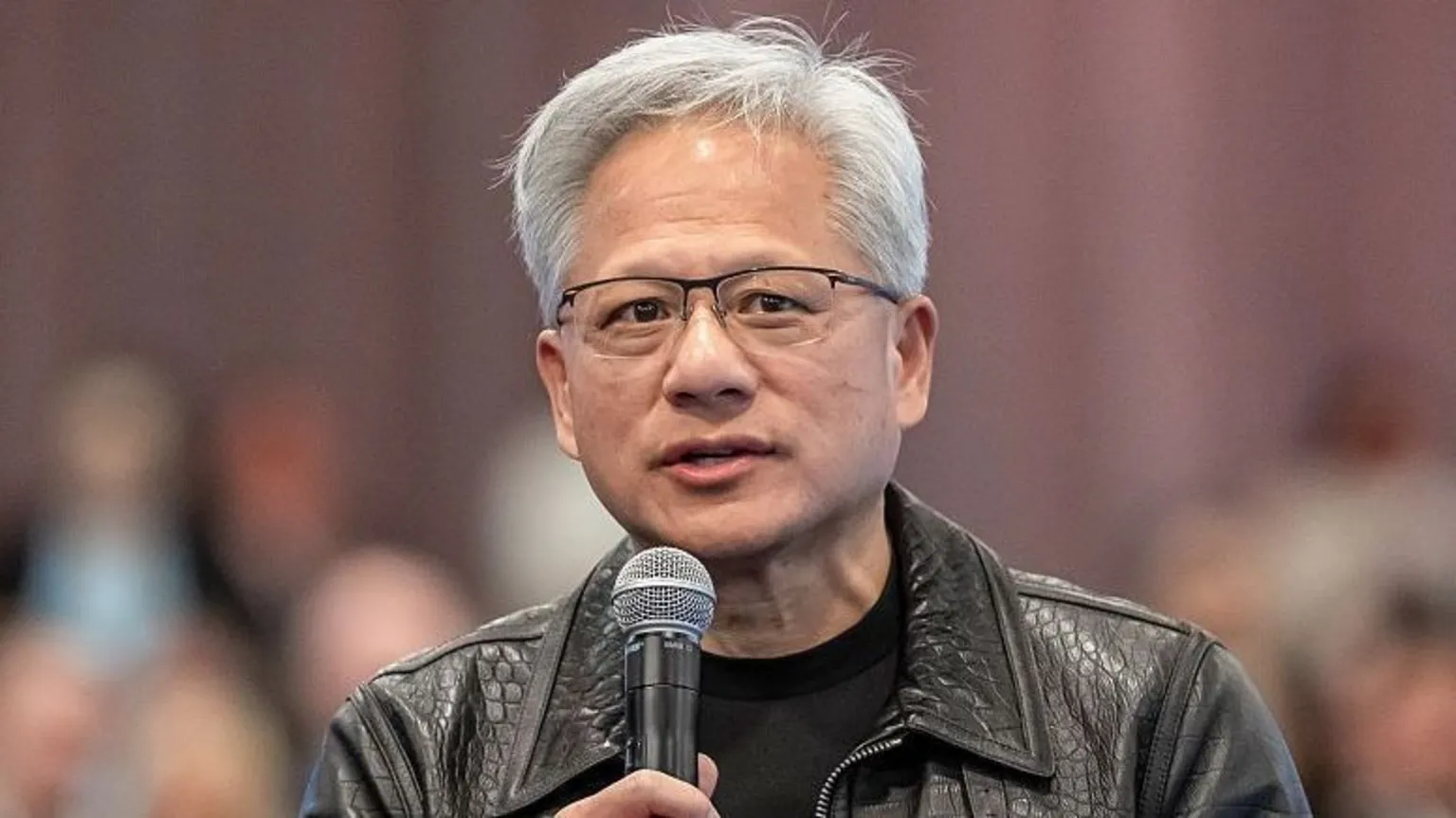
Huang made the comments in an interview with CBS News, the BBC’s US partner, as debate intensifies over how quickly the technology should be developed and how governments and companies should manage its potential risks.
“2030 is not going to be the end of the world. There is 0% chance that’s going to be the end of the world,” Huang said, describing predictions of an imminent catastrophe as “doomsday narratives”.
He also criticised the use of fear in discussions about AI safety, saying that “scaring people is unnecessary” and calling it irresponsible.
The comments come after former Anthropic researcher Jacob Coxon claimed on social media that people working in AI development believe the technology could potentially “kill us all by the end of the decade”. His comments have contributed to a wider debate over whether the rapid development of increasingly capable AI systems is creating risks that companies and regulators are not prepared to handle.
Some prominent figures in the AI industry have called for greater caution. Anthropic chief executive Dario Amodei and OpenAI chief executive Sam Altman have both spoken about the need to slow or manage aspects of AI development, although discussions around AI safety involve a range of positions and proposals.
Huang rejected the most extreme predictions, saying they were “not grounded in science”. He also argued that Nvidia has a direct commercial interest in ensuring that AI products are deployed safely.
“Our company’s success is directly connected to the safe deployment of products and services,” Huang said. “If we don’t continue to do that, our value would be diminished.”
Nvidia occupies a central position in the AI industry because its advanced computer chips are widely used to develop and operate AI models. That gives Huang a particularly influential voice in the debate, while also placing his comments in the context of a company whose business depends heavily on continued investment in artificial intelligence.
Huang also questioned the motives behind some calls for a slowdown in AI development. He suggested that companies discussing the need to slow progress could, in some cases, be seeking protection from legal responsibility for potential damage caused by their products.
“Go and read between the lines,” he said. “They’re actually not asking for more laws. They’re asking to be relieved of the laws we do have, and I think that that’s a problem.”
The disagreement reflects a broader divide within the technology sector. Some researchers and executives focus on the possibility that increasingly powerful AI systems could create severe or difficult-to-control risks. Others argue that predictions of near-term catastrophe are speculative and that attention should remain on practical risks and responsible deployment.
The debate has also reached political and international circles. Huang appeared last week at a summit hosted by King Charles in the UK, where the monarch warned technology leaders about what he described as the “existential dangers” posed by AI.
“The task before you is not merely to advance technology, but to ensure that it remains firmly in the service of humanity, community and the natural world,” King Charles told the gathering.
In the United States, President Donald Trump has also publicly played down concerns over AI risks. On 14 September, Trump made an unexpected phone call to Huang while the Nvidia chief was speaking at a technology conference in Los Angeles. Trump criticised calls to slow AI development and described fears surrounding the technology as a “hoax”.
The competing views point to a debate that is unlikely to disappear as AI systems become more capable. For Huang, predictions of humanity’s extinction by 2030 go far beyond what current scientific evidence can establish. For researchers and technology leaders concerned about AI safety, however, the uncertainty surrounding increasingly powerful systems remains a reason for caution.
The central argument is therefore not simply whether AI will end the world by the end of the decade. It is increasingly about how much risk society is prepared to accept while the technology develops at a pace that governments, researchers and companies are still trying to understand.