Poland and the United Kingdom have signed a three-year defence cooperation plan aimed at strengthening military capabilities, developing new technologies and improving their response to security threats from Russia.
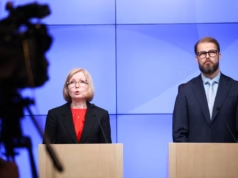
The agreement was discussed during a bilateral meeting in Warsaw on Tuesday between Polish Deputy Prime Minister and Defence Minister Wladyslaw Kosiniak-Kamysz and UK Defence Secretary Wes Streeting. According to Poland’s Ministry of National Defence, the plan follows a Polish-British treaty adopted several months earlier and sets out priorities for closer military cooperation.

Kosiniak-Kamysz said the partnership would focus on emerging defence technologies, artificial intelligence, drones, counter-drone systems and modern deterrence measures. It will also include conventional military exercises designed to improve operational readiness and strengthen cooperation between the two countries’ armed forces in different conditions.
The plan builds on existing joint defence projects, including Poland’s Miecznik programme to develop modern frigates, the expansion of its integrated air defence capabilities through the Narew, Pilica and Pilica+ programmes, and plans to establish an independent production line for 155 mm artillery ammunition.
“The Miecznik programme, whose successive stages are progressing according to plan, the construction of an integrated air defence system, including the Narew, Pilica and Pilica+ programmes, and the project to build an independent production line for 155 mm ammunition: these are only part of our joint initiatives,” Kosiniak-Kamysz said at the press conference.
The discussions also highlighted the countries’ shared concerns about Russian activity and their commitment to supporting Ukraine. Both ministers stressed that their governments remain aligned on assistance to Kyiv as Russia’s war against Ukraine continues to shape Europe’s security priorities.
Streeting drew particular attention to what he described as Russian state-sponsored terrorism, referring to hybrid attacks and drone incursions that have increased pressure on Poland’s security services and air defences.
“We hear very clearly what Poland is experiencing every day in the form of what some describe as hybrid threats from Russia. I personally prefer to call this quite simply terrorism sponsored by a state,” Streeting said, referring to the daily mobilisation of Polish forces and air defence units in response to drone incursions.
The UK defence secretary also underscored the political significance of the new agreement, saying it reflected a shared assessment of current threats and a determination to defend democratic freedoms.
He said the agreement “sets our joint assessment of current threats and our resolve that, in the clash between freedom and tyranny, the UK and Poland will not stand aside”.
The ministers also discussed the future of the transatlantic alliance and Europe’s role in its own defence. Kosiniak-Kamysz said Poland and the United Kingdom supported strengthening European military capabilities while maintaining close security ties with the United States.
“We are in favour of reinforcing it and building our own capabilities, of greater independence for Europe, but not independence from the United States,” Kosiniak-Kamysz said.
The comments reflect a shared position that Europe should become better equipped to respond to security challenges without weakening its longstanding military partnership with Washington. For Poland and the UK, closer defence coordination is intended to complement NATO’s collective security framework rather than replace it.
The ministers’ meeting also took place against the backdrop of renewed diplomatic efforts to end Russia’s war against Ukraine. The United States, representatives of President Donald Trump and European leaders have continued exploring possible ways to restart negotiations, although territorial disputes and security guarantees remain major obstacles to a settlement.
According to the original report, another round of talks was expected to be the fourth organised by the Trump administration, following negotiations in Geneva in February. Kremlin spokesman Dmitry Peskov indicated that the next discussions could take place in Abu Dhabi, the capital of the United Arab Emirates, around the middle of November.
European governments supporting diplomatic efforts have continued searching for a way to overcome the deadlock while addressing the unresolved questions surrounding Ukraine’s territory and future security. The European Commission and the European Council are also working to establish a joint team to represent the European Union’s position in the process.
Against this uncertain diplomatic backdrop, the new Polish-British defence plan sets out a parallel priority: strengthening military readiness, investing in defence production and ensuring that both countries can respond more effectively to emerging threats. Its three-year timeframe provides a framework for cooperation across established military programmes and newer areas such as artificial intelligence and counter-drone technology.