Abu Dhabi-Dubai train travel became a reality on 30 September, when Etihad Rail launched regular passenger services linking the UAE capital with Dubai for the first time. The new service cuts the journey to about an hour and gives residents and visitors another way to travel between two of the country’s busiest cities.
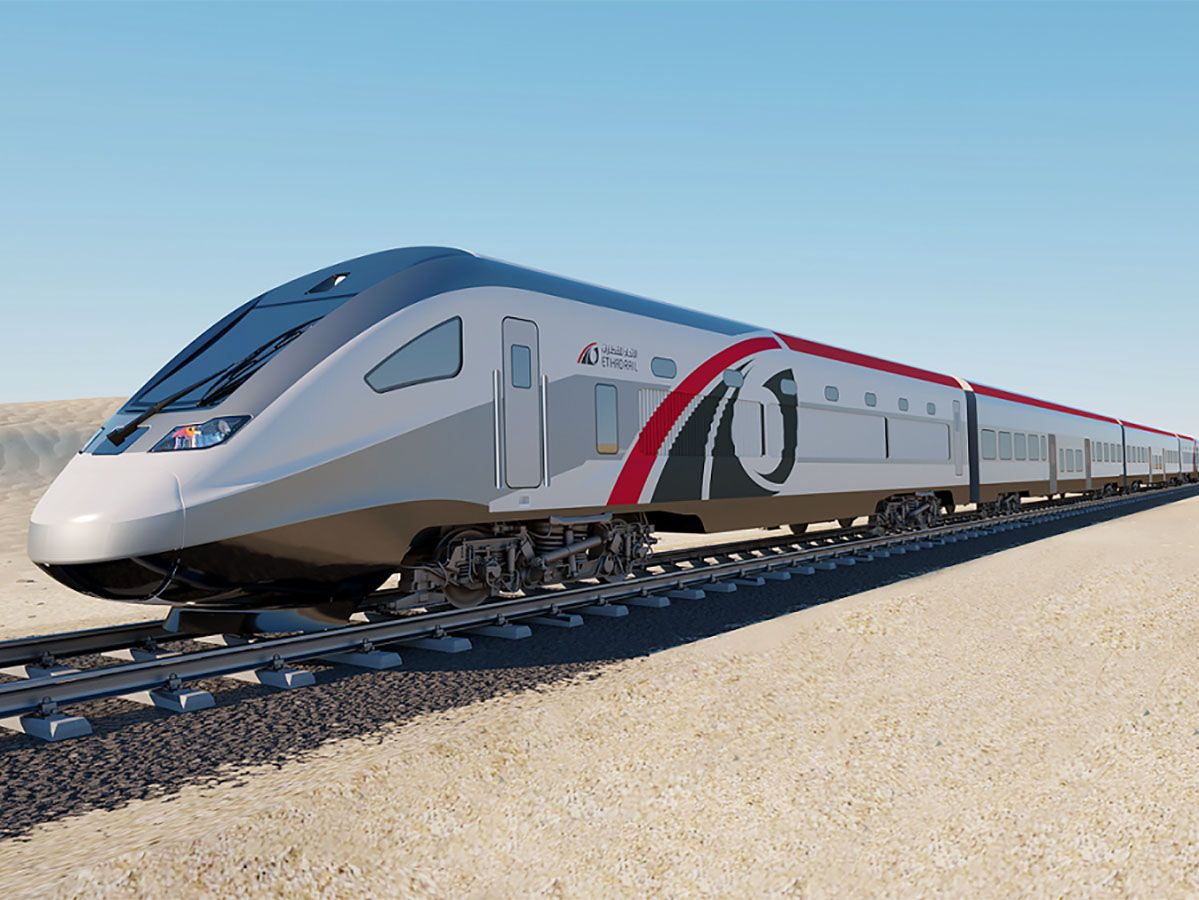
The service connects Mohamed Bin Zayed City Passenger Station in Abu Dhabi with Al Yalayis Station in Dubai, located in Jumeirah Golf Estates. The journey takes roughly 57 to 64 minutes, depending on the service, with trains capable of reaching speeds of up to 200 kilometres per hour. Etihad Rail is operating 10 daily services between Abu Dhabi and Dubai.
Tickets start at AED39 (about EUR9.35) for Comfort Class, while Premium Class tickets cost AED109 (about EUR26.13). The fares make the train a new option for people who regularly travel between the two emirates, as well as visitors moving between Abu Dhabi and Dubai during a trip to the UAE.
Dubai’s Al Yalayis Station has been designed to connect the national rail network with the city’s existing public transport system. A 400-metre pedestrian bridge links the station directly with Jumeirah Golf Estates Metro Station on the Dubai Metro Red Line. Passengers can therefore continue their journey into Dubai after arriving by train rather than relying entirely on a car or taxi.
The Abu Dhabi end of the journey presents a different challenge because the passenger station is outside the city’s central areas. Etihad Rail is providing shuttle services connecting Mohamed Bin Zayed City Station with several important locations in Abu Dhabi, including the Corniche, Reem Mall and the ADNEC Centre. These shuttle journeys cost AED10, or about EUR2.40.
The Dubai service is the latest stage in the UAE’s gradual expansion of passenger rail. Etihad Rail began passenger operations on 30 June with services between Abu Dhabi and Fujairah. The journey between the two emirates takes about one hour and 45 minutes.
The network is continuing to expand. Al Dhaid Station in Sharjah opened alongside the Dubai service on 30 September. Zayed City and Liwa stations in the Al Dhafra region are scheduled to open on 30 November, followed by Al Sila, Al Dhannah and Mirfa on 30 December. Sharjah’s University City Station is scheduled to open on 30 March 2027.
The planned stations will extend passenger rail well beyond the country’s largest cities. Liwa, for example, provides access to the desert region of Al Dhafra, while Al Sila is located close to the Saudi Arabian border. Mirfa and other Al Dhafra stations will also bring rail services closer to communities and destinations in the western part of Abu Dhabi.
The expansion comes as the UAE works to build a broader national rail system that links population centres, economic areas and tourism destinations. Etihad Rail says the passenger network is intended to work alongside existing transport rather than simply replace cars, buses or other forms of travel.
The UAE’s new passenger services are also part of a much larger rail story unfolding across the Gulf. The six Gulf Cooperation Council states, comprising the UAE, Saudi Arabia, Oman, Qatar, Bahrain and Kuwait, have been working for years on plans for a railway connecting the region. The project has faced delays, but Gulf governments continue to discuss its development and implementation. In 2026, the GCC General Secretariat again called for progress to be accelerated.
There are already signs of parts of that wider network taking shape. The UAE and Oman are developing a 238-kilometre rail connection between the two countries through Hafeet Rail. The project is intended to link Oman’s Sohar with the UAE’s national railway network and is being developed as part of the wider Gulf rail system. Construction had reached 40 per cent by April 2026, according to Hafeet Rail.
Saudi Arabia already operates an extensive passenger railway network, including services linking Riyadh with Dammam and routes connecting the holy cities of Mecca and Medina. The country is also involved in a planned high-speed electric rail link with Qatar. An agreement signed between Saudi Arabia and Qatar provides for a railway connecting Riyadh and Doha via Dammam and Al Hofuf, although the project remains separate from the UAE’s new domestic passenger service.
Rail remains less developed across the Gulf than road transport, although several cities have built modern metro systems. Dubai’s Metro opened in 2009, Doha’s in 2019 and Riyadh’s in 2024. The opening of the Abu Dhabi-Dubai passenger railway adds an intercity rail option to that growing urban transport network.
For travellers, the immediate change is straightforward: Abu Dhabi and Dubai can now be reached by train without having to make the journey entirely by road. But the significance of the new service extends beyond the 57-minute trip. As more UAE stations open and connections with neighbouring Gulf railway projects develop, the country’s rail network could gradually become part of a much wider system for moving people across the region.