EU cabin baggage rules are set to change, giving passengers travelling under standard fares the right to take more hand luggage without paying an additional fee. The changes form part of a wider overhaul of European air passenger rights agreed by the European Parliament and EU member states in June 2026.
Under the agreed rules, passengers will be entitled to take a personal item and a cabin bag as part of a standard ticket. The personal item, such as a small handbag or backpack, must fit under the seat in front of the passenger. The additional cabin bag can weigh up to 7kg and have combined dimensions of up to 100cm.
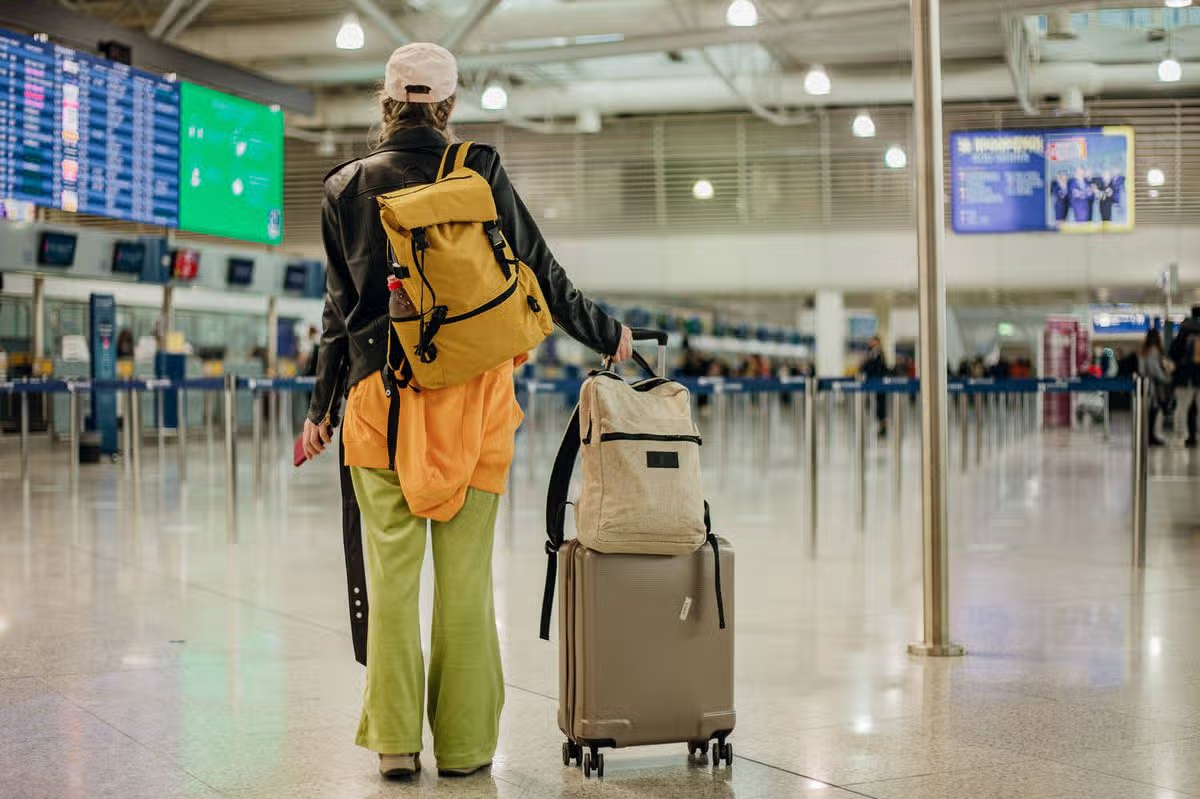
That represents a significant change for travellers who currently have to pay extra for an overhead locker bag on some airlines. Many low-cost carriers have increasingly separated baggage from the basic ticket price, leaving passengers with only a small under-seat bag unless they pay more.
The new rules are not expected to apply immediately. The legislation is expected to take effect in late 2027, with October 2027 currently regarded as the earliest possible starting point. The exact date will depend on the remaining legislative and implementation process.
The agreement is part of the first major overhaul of the EU’s air passenger rights framework since 2004. The wider package covers issues beyond baggage, including flight delays, cancellations, rerouting and other passenger protections.
There is also an important detail for passengers who prefer to travel light. Airlines will still be allowed to sell cheaper fares to people who voluntarily choose to travel without hand luggage. How airlines will structure those fares once the new system takes effect has not yet been fully established.
The rules also leave airlines some flexibility over the precise size of the larger cabin bag. The agreed limit is based on a combined dimension of 100cm and a maximum weight of 7kg, while the under-seat personal item is expected to be around 40cm x 30cm x 15cm.
For passengers, the practical difference is straightforward. A standard fare will have to cover both an under-seat personal item and an additional cabin bag, rather than requiring passengers to purchase the larger bag separately.
But the change will not affect everyone flying to or from Europe in the same way. UK passengers departing from British airports are unlikely to receive the new allowance automatically because the EU rules apply within the EU aviation framework. This means a traveller flying from the UK to an EU destination could face different baggage conditions on the outbound and return legs.
easyJet UK has already indicated how it intends to approach the change. The airline told Which? that any increase in its free hand luggage allowance would apply to passengers returning from EU countries, but not to those departing from the UK. Most easyJet flights from UK airports are operated by easyJet UK, which is not an EU airline. easyJet also operates an EU-based arm, easyJet Europe, which will be subject to EU requirements when they take effect.
That means a UK traveller flying easyJet from Britain to Spain, for example, could have one baggage allowance on the journey to Spain and a different entitlement on the flight back. easyJet says it is reviewing its baggage policies ahead of the new rules coming into force.
Other airlines are taking different approaches. Ryanair has told Which? that it intends to introduce the changes from October 2027 and plans to apply them to its passengers across its network, including flights departing from the UK. Its proposed second cabin bag allowance would be larger than the minimum EU requirement, although the airline has said its existing 55cm x 40cm x 20cm and 10kg limit would remain.
Wizz Air has also said it will comply with the new requirements once they become law, although it has not yet confirmed the precise changes to its baggage policy. The airline said the legislation had not yet been formally published when it responded to Which? and that it would use the transition period to prepare for implementation.
The difference between airlines means passengers should not assume that every flight involving the UK will have identical baggage rules when the EU changes take effect. The airline operating the flight, the airport of departure and the direction of travel can all matter.
For travellers flying within the EU, however, the central change is clear. From the introduction of the new rules, a standard ticket will include an under-seat personal item and a cabin bag without a separate baggage charge, subject to the agreed size and weight limits.
Until the legislation takes effect, existing airline baggage policies remain in force. Travellers booking flights before the new rules start should therefore continue to check the baggage allowance attached to their specific fare rather than assuming the future EU entitlement already applies.
The new system is intended to make basic air travel rights clearer across Europe, but the transition will not be completely uniform. For passengers, the most important question when booking after the rules come into force may be not simply where they are flying, but which airline is operating the flight and from which airport they are departing.