Saudi Arabia has shut a major oil pipeline after drone attacks launched from Iraqi territory, adding fresh pressure to Gulf energy exports as Iran-aligned Houthi forces expand their control along Yemen’s Red Sea coast.
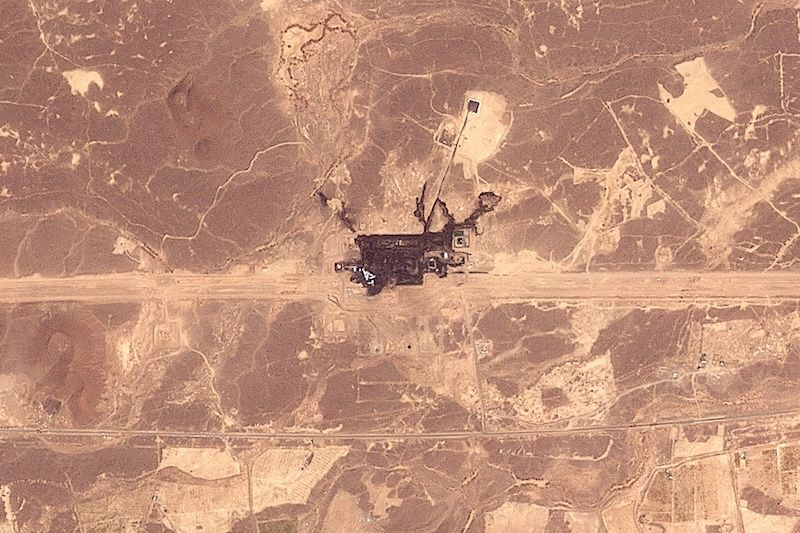
The Saudi Energy Ministry said the East-West pipeline was suspended as a precaution after several drones struck targets in the Riyadh and Medina regions. Saudi authorities reported injuries and damage from the attacks, while satellite imagery showed smoke rising near the pipeline route south of Medina.
The 1,200-kilometre pipeline links the giant Abqaiq oil facilities in eastern Saudi Arabia with Yanbu on the Red Sea. The route has become increasingly important to Riyadh as tanker traffic through the Strait of Hormuz has declined during the six-month US-Iran war.
Ship-tracking firms and energy analysts estimate that the pipeline has transported between four million and five million barrels of crude a day in recent months, according to Reuters. At that level, the pipeline has been carrying the equivalent of roughly 4 to 5 per cent of global oil supply, making any prolonged shutdown potentially significant for international energy markets.
Saudi Arabia and Iraq have both said the drones originated in Iraqi territory. Baghdad condemned the attacks and dismissed the military commander responsible for operations in Maysan province, which borders Iran.
Iraqi authorities also moved to prevent the situation from escalating. Reuters, citing Iraqi security sources, reported that the Shalamcheh border crossing with Iran was closed as a precaution while Iraqi forces launched an operation to identify those responsible for the drone attacks.
Riyadh has so far avoided direct military retaliation against Iraq. Saudi officials said they had accepted an Iraqi request to give Baghdad time to prevent further attacks, while making clear that Saudi Arabia reserved the right to defend its territory and critical infrastructure.
The pipeline disruption comes as the security situation around Yemen’s Red Sea coastline deteriorates rapidly.
Iran-aligned Houthi forces have captured the strategic port of Mocha and pushed further along the coast before taking control of Perim, also known as Mayun, an island positioned in the Bab al-Mandab strait. Four Yemeni government sources confirmed the seizure to Reuters.
The Bab al-Mandab is one of the world’s important maritime chokepoints, connecting the Red Sea with the Gulf of Aden and forming part of the major shipping corridor between Asia and Europe. Any prolonged threat to the waterway could therefore affect not only regional trade but also the movement of energy and other goods between some of the world’s largest markets.
The Houthis have said commercial shipping remains open, with the exception of Saudi vessels. The group imposed a maritime blockade on Saudi shipping in July.
Yemen’s internationally recognised government has responded with air strikes against Houthi positions. The government news agency Saba reported attacks on Houthi vehicles, weapons and personnel near Mocha and along the road linking Mocha with Dhubab.
The latest offensive has already taken a heavy human toll. Sources on both sides say more than 500 people have been killed since the fighting intensified, while the International Organization for Migration said around 46,000 people had been forced from their homes in Taiz and Hodeidah.
For many families, the latest displacement is not their first. Some have now been driven from their homes for a second or third time, adding another layer of uncertainty to a humanitarian crisis that has persisted throughout Yemen’s long-running conflict.
The impact has also reached across the Red Sea. Djibouti’s government said about 500 Yemenis had arrived in the country, including women and children who were rescued from boats left stranded after running out of fuel.
The new fighting is unfolding against a humanitarian crisis that was already among the world’s most severe. Around 5.2 million people were internally displaced in Yemen before the latest escalation, according to UN figures, while more than 22 million people were already in need of humanitarian assistance.
The deteriorating situation prompted UN Special Envoy for Yemen Hans Grundberg to warn the Security Council that the country had entered “a new and more dangerous phase of war”. He said the renewed fighting had ended more than four years of relative calm that followed the UN-brokered truce of 2022.
For Saudi Arabia, the immediate concern is the security of critical infrastructure and the routes that allow its oil to reach international markets. The East-West pipeline was designed to provide an alternative route for Saudi crude that avoids the Strait of Hormuz, but the latest attacks show the vulnerability of infrastructure far from the main Gulf shipping lanes.
The combination of attacks on Saudi energy infrastructure, heightened tensions around the Bab al-Mandab and renewed fighting inside Yemen has created a wider regional risk. What began as a new escalation in Yemen is now putting pressure on two strategically important routes for Gulf energy exports, while civilians inside Yemen continue to bear much of the cost of the conflict.