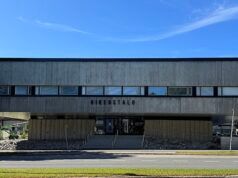
McDonald’s has opened a heated waiting room for Wolt couriers at its Autotalo restaurant in central Helsinki, offering delivery riders a place to sit and charge their phones while waiting for their next orders.
The new space is located near Kamppi and includes heating, a bench, a collection counter and an electrical socket. There is no toilet. Couriers who spoke to Helsingin Sanomat said the room can be useful when there is a long gap between deliveries, particularly during Finland’s cold winter months.
For delivery riders, finding a suitable place to wait can be a practical problem. Much of their working time is spent travelling between restaurants and customers, which means they often need somewhere indoors to sit when orders are delayed or there is a break between assignments.
Wolt courier Jamiu Dauda told Helsingin Sanomat that relatively few restaurants have spaces specifically intended for delivery workers. Some restaurants allow couriers to sit at customer tables, while shopping centres can also provide places where riders take short breaks.
Dauda said he had mainly come across dedicated courier rooms at McDonald’s restaurants.
The need for such spaces becomes more apparent during winter, when couriers can spend long periods outdoors between deliveries. Unlike customers who can leave a restaurant after collecting an order, riders may remain in the area while waiting for another assignment, making access to a warm indoor space particularly useful.
Wolt does not provide dedicated break facilities for its couriers because the company considers them entrepreneurs under its platform model, according to Helsingin Sanomat. Wolt Finland country manager Anna Klaile told the newspaper in January that the company had not found permanent rest facilities for couriers. She said riders could use toilets at Wolt’s headquarters opposite the Autotalo restaurant.
None of the couriers interviewed by Helsingin Sanomat said they used the headquarters as a place to take breaks.
The question of where Wolt couriers fit within Finnish employment law has also been the subject of a wider dispute. Wolt has continued to treat couriers working through its platform model as entrepreneurs, while the Supreme Administrative Court ruled in May 2025 that couriers working under the model met the legal criteria for employees.
Wolt sought to challenge that decision, but the Supreme Administrative Court rejected the company’s application in March 2026. Despite the court decisions, most Wolt couriers continue to work as entrepreneurs, according to the Service Union United PAM.
The issue has also attracted the attention of Finnish trade unions. In September, PAM and the Finnish Transport Workers’ Union AKT asked the Parliamentary Ombudsman to examine whether occupational safety and health authorities had properly supervised Wolt after the court rulings.
The unions argued that authorities should take action where couriers continue to work under arrangements that the court had found to have the characteristics of an employment relationship.
The dispute is relevant to more than the legal status of couriers. Employment status can affect the responsibilities placed on a company and the protections available to workers. Employees are covered by employment legislation and receive related rights and protections, while Wolt’s classification of its couriers as entrepreneurs means the company does not consider itself responsible for providing dedicated break facilities.
Against that backdrop, the heated room at the Autotalo McDonald’s offers a small but practical change for couriers working in central Helsinki. It does not resolve the broader debate over the conditions under which platform couriers work, but it gives riders somewhere warm to wait between deliveries.