
What to know before renting a car in Europe starts with a simple fact that is easy to overlook: renting a vehicle in one European country does not mean the same thing as driving it across the continent. The rules, insurance arrangements, road systems, parking restrictions, tolls and even the documents required can change as soon as a journey crosses a border.
For travelers, that can turn an apparently straightforward car rental into an expensive lesson. A vehicle that costs relatively little to hire can become much more expensive once insurance, fuel, tolls, parking and additional charges are added. In some cities, the biggest problem is not driving at all but finding somewhere legal to leave the car.
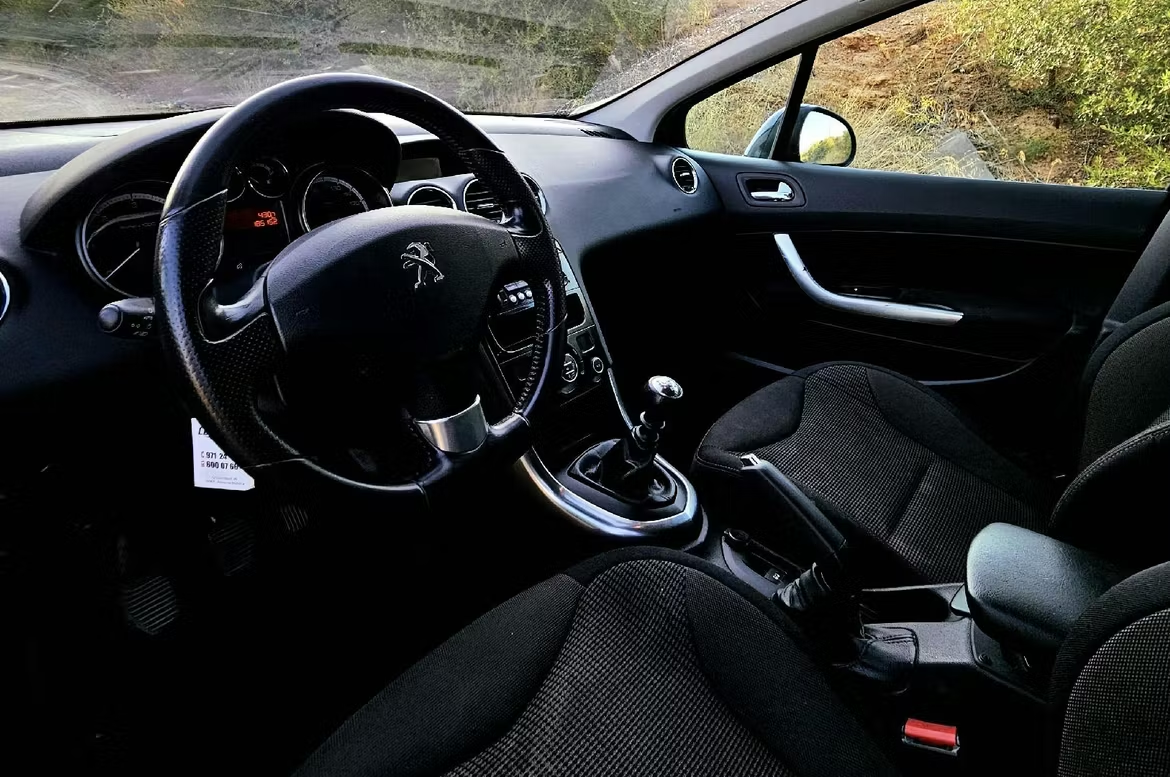
The attraction of renting a car is obvious. Europe has a dense rail and public transport network, but there are places where a car offers a freedom that trains and buses cannot. Small towns, rural areas, mountain regions, coastal roads and remote accommodation can be considerably easier to reach by car. A road trip can also allow travelers to move at their own pace rather than building an itinerary around departure boards.
But the rental counter is not the place to discover the rules.
The first thing travelers should establish is whether they are legally entitled to drive in the countries they plan to visit. A valid driving licence from one country may be accepted in another, but requirements can vary depending on where the licence was issued and where the traveler intends to drive. International driving permits may also be required or recommended in some circumstances. The safest approach is to check the requirements for every country on the planned route before booking the vehicle, rather than assuming that a licence accepted at the rental desk will automatically cover an entire cross-border journey.
The same caution applies to the rental company’s own rules. Some companies allow vehicles to be driven across national borders, while others restrict certain countries or charge additional fees for international travel. A customer who books a car in one country and casually plans to drive through several others should tell the rental company about the complete itinerary.
That matters because the contract is often more important than the headline rental price.
The cheapest daily rate can look attractive when compared with a more expensive competitor, but the final bill may include insurance-related charges, additional driver fees, young driver fees, airport or station surcharges, equipment charges and other costs. The amount shown during the initial search is therefore not always a reliable indication of what the trip will ultimately cost.
Insurance deserves particular attention. Travelers should understand what is included in the rental agreement and what financial responsibility remains with them if the vehicle is damaged or stolen. Terms such as excess or deductible can determine how much a customer could have to pay following an incident. Some travelers may already have coverage through a separate insurance policy, credit card or travel product, but those policies can come with conditions and exclusions. Assuming that another policy will automatically cover a rental car is a risky way to approach a European road trip.
The condition of the vehicle should also be treated seriously. Before leaving the rental location, travelers should inspect the car and make sure existing scratches, dents and other damage are properly recorded. Taking photographs or video of the vehicle before departure can provide useful evidence about its condition at the start of the rental. The same process should be followed when the vehicle is returned.
Fuel is another detail that can quietly change the cost of a rental. Companies may have different fuel policies, and travelers should understand whether the car is expected to be returned with the same fuel level, whether fuel is prepaid or whether the rental company will charge for refueling. Returning a car without following the agreed fuel policy can result in additional charges.
Then there are the roads themselves.
European driving can be remarkably different from one country to another. Speed limits, priority rules, road signs, parking regulations and toll arrangements are not identical across the continent. Even travelers who are comfortable driving at home can find unfamiliar road markings or local restrictions confusing.
The issue becomes particularly important in historic city centers. Many European cities have restricted traffic zones, pedestrian areas or other systems designed to limit private vehicles. A hotel may be located inside such an area, yet the most obvious route to its entrance may not be legally accessible by car. Following a navigation app without checking local restrictions can leave a driver facing a fine or searching for an alternative route after entering a restricted area.
Parking can be equally frustrating. In central areas, spaces may be limited, expensive or subject to strict time restrictions. Some locations require payment through meters or mobile applications, while others use resident-only permits or different rules at different times of the day. A parking sign that seems straightforward can contain several conditions that are easy to miss when a traveler is in a hurry.
For that reason, a car that makes sense for a countryside itinerary may make very little sense for a city break.
Tolls are another cost that should be considered before departure. Several European countries operate toll roads, while others use different road-charging systems. Some rental vehicles may be equipped for electronic toll collection, but the way charges are passed on to customers can vary between rental companies. Travelers should find out how tolls are handled before driving onto a toll road rather than waiting for an unfamiliar charge to appear later.
The vehicle itself also deserves some thought. A large car may feel comfortable on a motorway, but it can become an inconvenience on narrow streets, older village roads or crowded city parking areas. A smaller vehicle can be easier to handle in those environments, while luggage requirements may point in the opposite direction. Travelers should choose a car based on the route rather than simply selecting the largest or cheapest option.
Manual transmission is another consideration, particularly for travelers accustomed to automatic cars. Rental fleets differ, and automatic vehicles can be more expensive or less widely available in some locations. Anyone who needs an automatic should make sure the reservation specifically confirms an automatic vehicle rather than assuming that one will be available.
Cross-border travel introduces another layer of planning. Europe may make international travel between neighboring countries feel effortless, but a rental vehicle still belongs to a company operating under a contract. The permission to cross a border, any associated fee and the insurance conditions should all be clear before the journey begins.
Travelers should also pay attention to where and when they collect the vehicle. Airport and major railway station locations can be convenient, but convenience may come with additional charges. Opening hours matter too, particularly for late-night arrivals. A flight delay that pushes a pickup beyond the rental office’s normal hours can create complications if after-hours collection has not been arranged.
Returning the vehicle can be just as important as collecting it. Drivers should know the exact return location, opening hours, fuel requirement and procedure for returning the keys. Airport rental facilities can sometimes require a journey to a specific car park or terminal area rather than simply dropping the vehicle outside the main entrance.
There is also the question of driving habits. European roads are not inherently difficult, but unfamiliar drivers should resist the temptation to treat a road trip as a race between destinations. Mountain roads, winter conditions, rural routes and unfamiliar traffic systems require more attention than a familiar commute at home. Weather can also change driving conditions quickly, particularly in northern and mountainous parts of Europe.
For travelers planning a winter journey, the vehicle’s equipment becomes especially important. Depending on the country and conditions, requirements concerning winter tyres or other equipment may apply. These are not details that should be left until the day of pickup. The route, season and local regulations should influence the rental choice from the beginning.
One of the most useful things a traveler can do is calculate the real cost of the trip before booking. The rental price is only one part of the equation. Fuel, tolls, parking, insurance, border charges and additional rental fees can all affect the final figure. Once those costs are considered, public transport may sometimes be cheaper and less stressful, particularly when the itinerary is concentrated around major cities.
That does not make car rental a bad choice. Quite the opposite. For the right journey, having a car can completely change the experience of traveling through Europe. It can open up rural destinations, make flexible itineraries possible and allow travelers to spend more time in places that are poorly connected by public transport.
The mistake is treating the rental car as the trip itself rather than one part of the trip.
A good European road trip begins before the engine starts. The traveler knows which countries are on the route, understands the rental agreement, checks the driving requirements, confirms insurance arrangements, researches tolls and parking, and chooses a vehicle that actually suits the journey. Once those details are settled, the car becomes what it should be: a tool for exploring Europe, rather than an unexpected source of expense and frustration.


