What It Is Like Living in Lahti becomes clearer after you stop looking at the city as a smaller version of Helsinki and start paying attention to how everyday life actually works here. Lahti is not a city that tries particularly hard to impress you. It does not have the constant movement of Finland’s capital, nor does it carry the tourist profile of Lapland. Instead, life here is shaped by a quieter rhythm, easy access to nature and the practical habits of a Finnish city where people largely get on with their day.
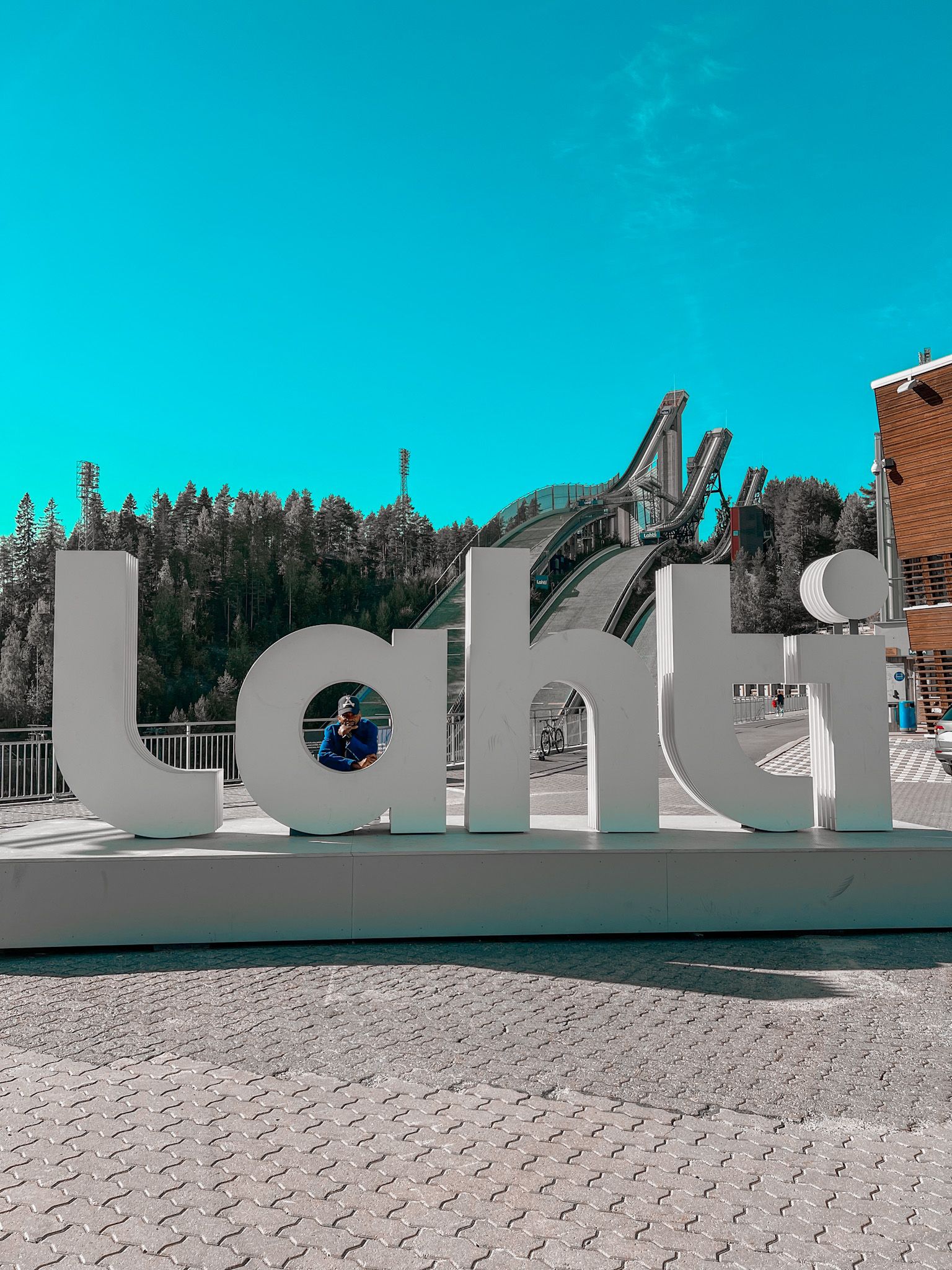
For someone arriving from another country, that quietness can be one of the first things that stands out. The streets can feel calm, particularly outside the busiest parts of the centre. People generally do not appear to be in a hurry unless they have somewhere specific to be. Public spaces can be quiet. Conversations on buses are often subdued. A person can sit alone in a cafe, walk through the city or spend an afternoon by the lake without feeling that they need to be surrounded by activity.
That does not necessarily mean Lahti is boring. It means the city asks you to change your expectations of what a city is supposed to feel like.
Lahti sits in southern Finland, within relatively easy reach of Helsinki, but daily life here has a character of its own. The city is surrounded by landscapes that make nature feel close rather than something reserved for weekends away. Water, forests, walking routes and outdoor spaces are part of the environment residents move through as they go about ordinary life.
For a newcomer, that can be one of the more noticeable differences. In many cities, getting away from buildings means making a deliberate trip outside the urban area. In Lahti, the transition can be much less dramatic. A normal day can involve the city centre in the morning and a walk beside water or through a green area later without feeling as though you have left the city behind.
The relationship between the city and nature is particularly important to understanding what living in Lahti feels like. Outdoor life is not necessarily presented as a special event. It can simply be part of the routine. People walk, cycle, run and spend time outside because there is space to do it and because Finnish life generally gives outdoor activities a place in everyday routines.
For a foreign resident, however, adapting to Lahti is not only about discovering its pleasant surroundings. Some of the more interesting parts of living here are much less visible to a visitor.
Language is one of them.
English can make many everyday situations easier, particularly in places where people regularly deal with international residents or visitors. But living somewhere is different from visiting. Shopping, dealing with public services, reading local information, understanding notices and becoming part of ordinary social life can require a different level of confidence.
Learning Finnish therefore changes the experience of living in Lahti. Even basic Finnish can make everyday interactions feel less distant, although becoming comfortable in the language takes time. There is also a cultural adjustment involved. Communication in Finland can be direct and restrained, and people may not immediately begin conversations with strangers simply to fill silence.
For someone coming from a culture where friendliness is often expressed through spontaneous conversation, this can initially feel cold. Over time, it can be understood differently. Silence is not necessarily a sign that something is wrong. People can share the same space without feeling obliged to talk.
That is one of the small cultural adjustments that can make life in Lahti interesting for foreigners. The city gives you plenty of opportunities to observe Finnish habits because there is less of the international noise found in larger capitals. Everyday routines become more visible.
The pace of life can also take some getting used to. Lahti has the services, shops, restaurants, transport connections and cultural activities expected in a Finnish city, but the scale is different from Helsinki. You do not have the same sense of endless choice that exists in a capital city. For some residents, that can be frustrating. For others, it is precisely the attraction.
There is a practical side to this. Living in Lahti can feel manageable because many parts of ordinary life do not require crossing a huge metropolitan area. The city is large enough to have its own identity but compact enough for residents to become familiar with its neighbourhoods and routines.
That familiarity can change how a place feels. A visitor may see Lahti as a stop between other destinations. Someone who lives here notices different things: the same streets in different seasons, the changing light, the quiet mornings, the rush around certain parts of the city at particular times and the way winter alters the appearance and rhythm of everyday life.
The seasons are impossible to separate from the experience.
Summer can make Finland feel almost like a different country. Longer days encourage people to stay outside, and the relationship with water and green spaces becomes even more noticeable. Autumn brings darker evenings and changing colours, while winter changes not only the weather but also how people move through the city.
For someone from a warmer country, Finnish winter can be one of the biggest adjustments to living in Lahti. The cold is only part of it. Darkness, snow, clothing, transport and the simple decision to go outside all become part of a different routine. You learn quickly that winter is not something that can simply be ignored until spring.
But winter also reveals something about Finnish life. People continue working, studying, travelling and exercising. The weather affects daily life, but it does not stop it. Residents adapt their routines rather than waiting for perfect conditions.
There is another side to Lahti that becomes apparent when you live here: the city does not constantly demand your attention.
That can be a strange experience for someone used to cities where there is always another event, another crowd, another restaurant or another place competing for your time. In Lahti, there are moments when very little appears to be happening. At first, that can feel like a lack of energy. Eventually, it can also feel like freedom.
You can have an ordinary day without feeling that you are missing something.
That is perhaps one of the most difficult qualities of Lahti to explain to someone who has never lived here. The city is not built around spectacle. Its appeal is found in the accumulation of ordinary experiences: walking home in the cold, taking public transport, buying groceries, meeting someone for coffee, spending time outdoors and returning to a relatively quiet neighbourhood.
For foreigners, the experience can also involve negotiating two identities at once. You are living in Finland, but you are not automatically Finnish. You are learning how local life works while bringing your own expectations, habits and ways of communicating with you. Lahti provides plenty of space for that adjustment, but it does not necessarily make it happen quickly.
Building a social life can take effort. Finnish reserve can sometimes make the first connection feel harder to establish, especially for someone accustomed to highly social environments. Once relationships develop, however, the difference between first impressions and longer-term familiarity can become significant.
This is also why living in Lahti is different from spending a few days here. A visitor sees the city through attractions, accommodation, restaurants and planned activities. A resident experiences it through repetition. You learn which routes you prefer, where you shop, which places feel comfortable and how the city changes throughout the year.
The longer you stay, the more Lahti stops being a destination and becomes simply the place where your life is happening.
That may be the most honest way to describe living here. Lahti is not trying to be Finland’s most glamorous city, and it does not need to be. Its character comes from the balance between urban life and nature, between independence and community, and between the quietness of Finnish culture and the ordinary activity of a functioning city.
For anyone considering moving to Lahti, the most important adjustment may not be practical at all. It may be learning to appreciate a city that does not constantly announce itself.
Once you do, Lahti can begin to feel less like a place you are trying to understand and more like a place you are actually living in.