
Visiting Iceland in winter offers travellers a chance to see the country’s waterfalls framed by snow, watch the Northern Lights sweep across dark skies and experience landscapes that look entirely different from their summer appearance. But the season also brings icy roads, powerful winds, limited daylight and rapidly changing weather that can turn an ambitious sightseeing itinerary into a dangerous undertaking. The difference between a memorable winter holiday and a difficult one often comes down to preparation, flexibility and knowing when to change plans.

From November through March, Iceland’s winter conditions demand a different approach to travel. Snow and ice can affect driving, storms can force temporary road closures, and the short daylight hours leave less time for sightseeing than many first-time visitors expect. Even the country’s most popular attractions can be challenging to reach when weather conditions deteriorate. Travellers who plan around these realities, rather than attempting to follow a summer itinerary in winter, are better positioned to enjoy what Iceland has to offer.
The weather deserves attention before anything else. Iceland’s climate is influenced by its North Atlantic location, and winter conditions can vary considerably between regions and from one day to the next. Temperatures alone do not tell the full story. Strong winds, freezing rain, blowing snow and slippery surfaces can make outdoor activities uncomfortable or dangerous even when the thermometer does not register extreme cold. A journey that appears straightforward on a map may take considerably longer when roads are icy or visibility deteriorates.
Daylight is another important consideration. Around the December solstice, Reykjavik receives only about four hours of daylight, although the precise amount of usable light varies with location and date. By February, daylight hours have increased noticeably, giving visitors more room to explore. This seasonal difference affects more than photography. It determines how many attractions can reasonably be visited in one day, when drivers should begin their journeys and whether a long excursion can be completed before darkness falls.
For anyone planning to drive, checking official road and weather information should become part of the daily routine. Iceland’s SafeTravel service, operated by the Icelandic Association for Search and Rescue, provides travel safety advice and alerts, while the Icelandic Meteorological Office publishes forecasts and weather warnings. The Icelandic Road and Coastal Administration provides current information on road conditions and closures through its road information service, umferdin.is. These resources are more useful than relying on yesterday’s forecast, a general weather app or the assumption that a major road will remain open because it was accessible the previous day.
The Ring Road, also known as Route 1, connects many of Iceland’s major towns and attractions, and it is a natural choice for travellers hoping to see several parts of the country. However, winter conditions can cause temporary closures even on this principal route. A complete circuit may be possible during a suitable period, but it should not be treated as a guaranteed itinerary, particularly for visitors with limited time or little experience driving on snow and ice. The interior Highland roads, many of which are designated F-roads, are not suitable for an ordinary winter self-drive holiday and are generally closed to regular traffic during the season.
Choosing an appropriate rental vehicle is important, but a four-wheel-drive car is not a substitute for good judgement. It can help with traction in certain conditions, yet it does not prevent a vehicle from sliding on ice or shorten braking distances on a slippery road. Travellers should confirm that their rental car is equipped for winter conditions, including suitable tyres, and make sure they understand the vehicle’s controls before leaving the rental office. Headlights and rear lights must be switched on while driving, and snow and ice should be cleared from the windows, mirrors, lights and roof before setting off.
Speed should be determined by the actual conditions rather than the posted limit. Drivers unfamiliar with Iceland’s winter roads should leave generous distances between vehicles, brake gently and avoid sudden steering movements. Strong crosswinds can make driving difficult, especially on exposed stretches of road, bridges and routes near the coast. If weather warnings indicate dangerous conditions, postponing a journey is often the safest option. Visitors should also resist the temptation to drive long distances after dark simply to keep to a packed schedule. A shorter day with a safe return is preferable to reaching an unfamiliar destination in deteriorating conditions.

Those who are uncomfortable driving on snow, ice or in strong winds have another option: guided excursions. Reykjavik-based operators run trips to several of the country’s best-known natural attractions, while organised tours can remove the need for visitors to navigate unfamiliar roads themselves. Travellers should still check whether a tour is operating as planned, since excursions can be cancelled or rerouted when conditions become unsafe. Booking flexibility into the itinerary is therefore just as important as choosing the right activity.
The Golden Circle is among the most practical sightseeing routes for visitors staying in Reykjavik. Its best-known stops include Thingvellir National Park, the Geysir geothermal area and Gullfoss waterfall. The route combines geological features, Icelandic history and dramatic scenery without requiring a complete journey around the island. In winter, however, walking paths and viewing areas may be icy, and some facilities or access routes can be affected by weather. Visitors should follow marked paths, obey barriers and avoid approaching the edges of waterfalls or other exposed areas for photographs.
Gullfoss is particularly striking when ice and snow transform the surrounding landscape, while the Geysir area offers a chance to see geothermal activity against a cold winter backdrop. Thingvellir, where the landscape reflects the movement of the North American and Eurasian tectonic plates, provides a different experience, with its fissures and broad open spaces often appearing especially dramatic in low winter light. The appeal of these places does not depend on ideal weather, but visibility, access and walking conditions can change, so travellers should check local information before setting out.
Further along the south coast, Seljalandsfoss and Skogafoss are among Iceland’s most recognisable waterfalls. Their scale makes them impressive throughout the year, but winter brings additional hazards. Ice can accumulate on paths and viewing areas, while spray from the falls may freeze on nearby surfaces. Routes that allow visitors to walk behind or close to waterfalls may be unsuitable when conditions are icy or access is restricted. Appropriate footwear with good grip is essential, and visitors should be prepared to admire a waterfall from a safer distance rather than attempting to reach every viewpoint.
Reynisfjara, the black-sand beach near Vik, requires a different kind of caution. Its dark volcanic sand, basalt columns and offshore rock formations make it a popular stop, but the Atlantic waves can be unpredictable and dangerous. Sneaker waves can surge much farther up the beach than expected, catching visitors who are standing close to the water or looking away to take photographs. Travellers should remain well back from the water’s edge, pay attention to local warnings and never assume that a period of calm means the beach is safe. Winter clothing will not protect someone swept into the sea, where cold water adds another serious danger.
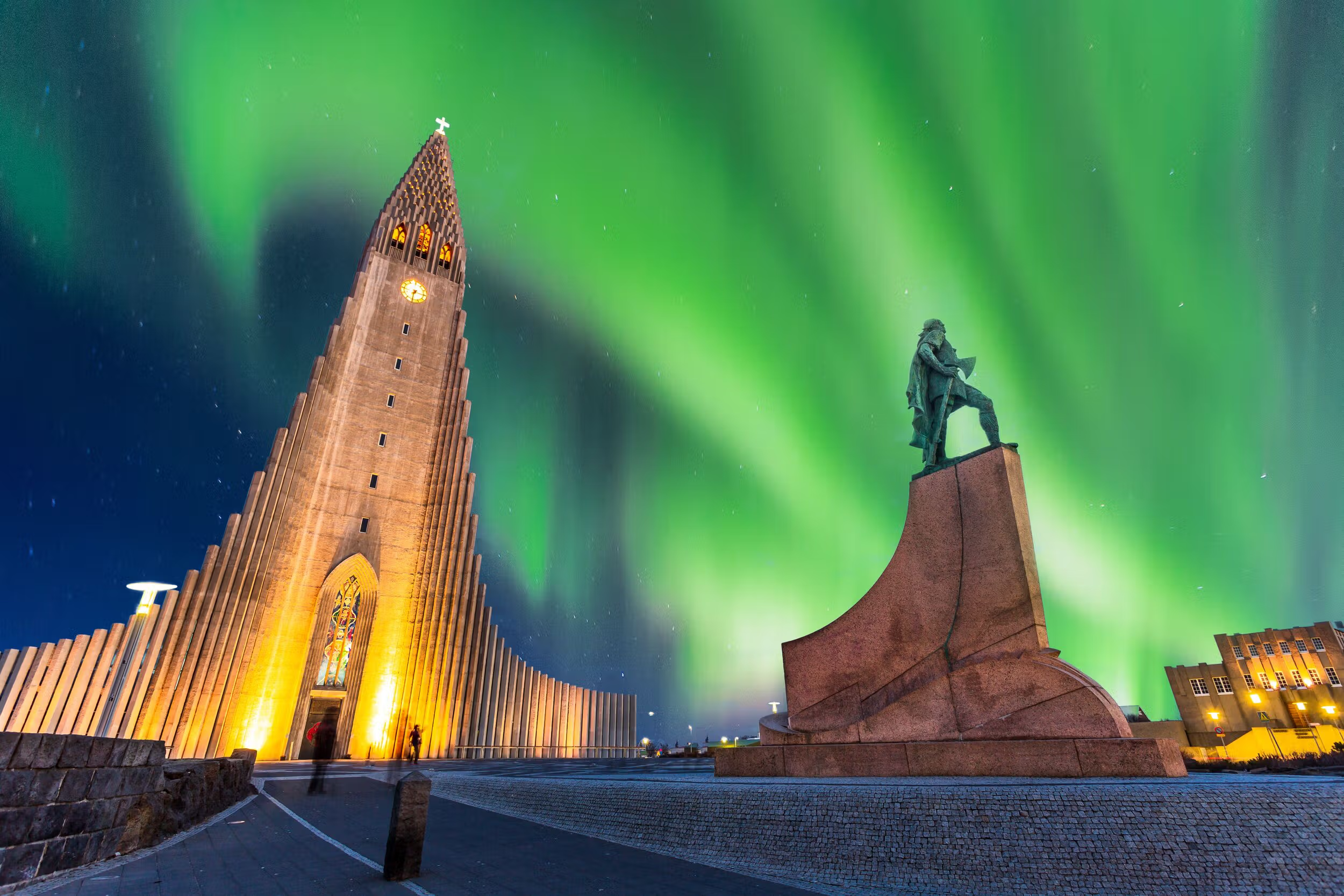
The northern lights are another major attraction during Iceland’s darker months. The aurora season generally runs from late summer into spring, with winter providing long nights that create more opportunities for viewing. Yet darkness alone is not enough. Clear skies or breaks in cloud cover, together with favourable solar activity, are needed for a display to be visible. A trip booked specifically for the Northern Lights cannot guarantee a sighting, even when advertised as a winter highlight. Visitors who stay for several nights have more opportunities to find suitable conditions than those relying on a single evening.
The lights can sometimes be seen from Reykjavik, but getting away from artificial light can improve the experience when the sky is clear. Travellers do not necessarily need to drive into remote areas to find a viewing location. A guided Northern Lights excursion can be a sensible alternative for anyone unfamiliar with Icelandic roads, especially when the search involves travelling at night. Those who go independently should choose a safe place to stop, park entirely off the road where permitted and avoid standing in traffic lanes or on narrow road shoulders to take photographs.
Winter visitors should also be selective about glacier and ice-cave experiences. These environments can be spectacular, but conditions inside caves and across glacier surfaces can change, and access requires specialist knowledge and equipment. Travellers should use qualified guides for glacier walks and ice-cave visits rather than attempting to enter formations independently. A cave seen in a photograph may no longer be accessible or safe by the time a visitor arrives. The same principle applies to other remote outdoor activities: official warnings and the advice of local professionals should take precedence over social media recommendations.
Geothermal bathing offers a more relaxed way to experience Iceland in winter. Warm water, steam and cold air create a distinctive contrast, and facilities around Reykjavik and elsewhere in the country can provide a welcome break from long hours outdoors. Visitors should check opening times, reservations and transport arrangements in advance, particularly during busy holiday periods. Some attractions require advance booking, and weather-related disruptions can affect travel between locations. Bathing facilities are not all equally accessible, so travellers with mobility needs should check the arrangements at their chosen venue before visiting.
Packing for the season means preparing for wind and wet conditions as much as for low temperatures. Thermal base layers, an insulating mid-layer, a windproof and waterproof outer shell, warm gloves, a hat and waterproof footwear are useful essentials. Several adjustable layers are generally more practical than relying on one heavy coat, particularly when moving between outdoor attractions, heated buildings and vehicles. Visitors planning to spend time waiting for the Northern Lights should bring extra insulation, since standing still for extended periods can feel much colder than walking.
A charged mobile phone, a portable power bank and offline access to essential travel information can also prove useful. Travellers should share their plans with someone they trust, particularly when visiting remote areas, and know how to contact Iceland’s emergency services. The emergency number is 112. SafeTravel also provides travel planning and safety information, including an app designed to help people prepare for outdoor journeys. Visitors heading into isolated areas should not assume that mobile coverage will always be available.
Accommodation and transport bookings deserve the same attention as sightseeing plans. Staying in one area for several nights can reduce the pressure to cover long distances every day, while a centrally located base may allow visitors to take guided day trips without changing hotels. Those planning a longer road trip should leave spare days in the schedule and avoid non-refundable commitments that depend on reaching a distant destination at a precise time. Winter travel rewards flexibility: an extra night in Reykjavik or a postponed drive may be less exciting than a planned expedition, but it can preserve both safety and the quality of the trip.
Iceland’s winter landscapes can be extraordinary, from waterfalls edged with ice to geothermal pools steaming beneath dark skies. The season does not require visitors to avoid adventure; it requires them to judge risk realistically. Checking road conditions before departure, adjusting plans when warnings appear, respecting barriers and giving natural hazards a wide margin are not minor details. They are part of travelling responsibly in a country where the weather can change faster than an itinerary.
The best winter visit is rarely the one that covers the greatest distance. It is the one that allows enough time to experience the places that are accessible, enough flexibility to respond when conditions change and enough caution to leave a dangerous situation alone. In Iceland, knowing when not to continue can be as valuable as knowing where to go.


