
Virgin’s London to Europe train service is taking shape, with the company unveiling the first look at its planned black and red high-speed trains as it prepares to challenge Eurostar from 2030.
The UK-based company plans to operate 20 daily return services connecting London with Paris, Brussels and Amsterdam. The proposed service could add almost 7.5 million seats a year to cross-Channel rail travel, giving passengers another option for journeys between the UK and mainland Europe.
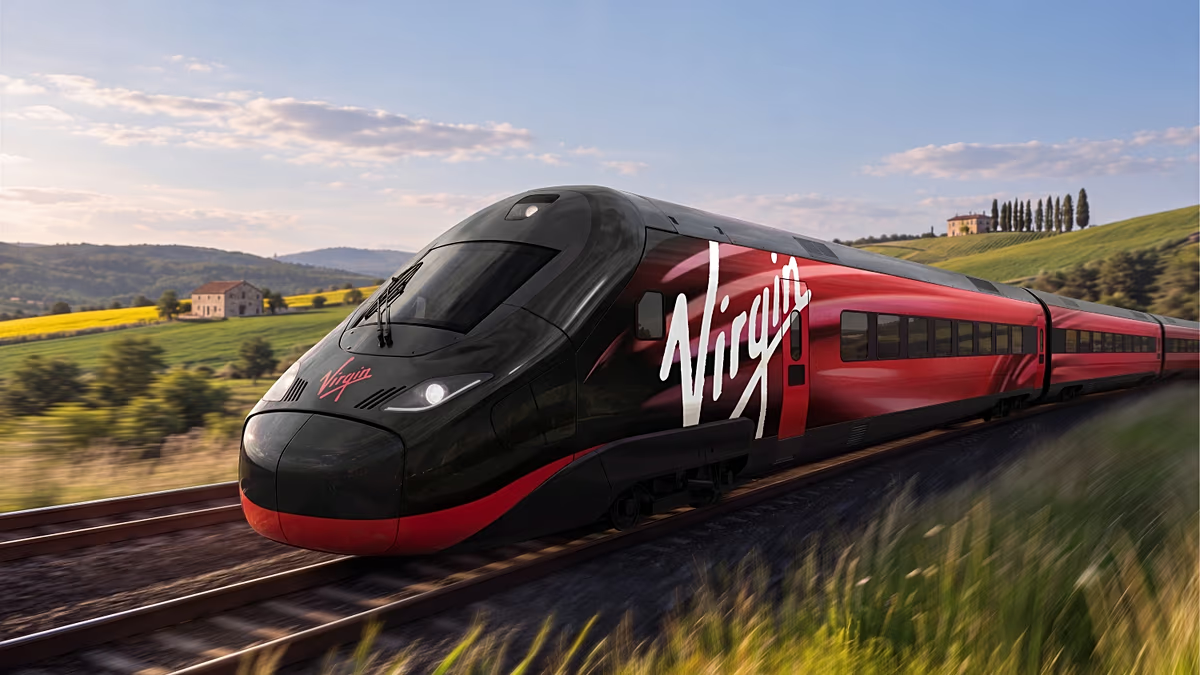
Virgin has signed an agreement with French rail manufacturer Alstom to supply 12 new high-speed trains. Designed to reach speeds of up to 300 kilometres per hour, the trains will form the centrepiece of the company’s planned entry into a market currently served by Eurostar.
The project has been in development for some time, but the newly released image offers the first public glimpse of the trains’ intended appearance. The black and red exterior reflects Virgin’s established branding, while the company says the interiors will be customised specifically for cross-Channel journeys.
The plans also include arrangements for maintaining the trains in London. An agreement published by the UK’s Office of Rail and Road confirms that Virgin will be able to use Eurostar’s Temple Mills International depot for train maintenance. Access to suitable maintenance facilities is an important part of establishing a new international rail service, particularly one operating at high speed across borders.
Virgin is positioning the proposed service around more than speed and additional capacity. The company wants to bring elements of its wider travel and hospitality businesses into the rail experience, drawing on its airline, hotel and cruise brands.
Before departure, passengers could have access to dedicated areas inspired by Virgin Atlantic’s airport Clubhouses. Onboard, the company plans to introduce social spaces, with seating and communal areas influenced by Virgin Hotels. Food and drink offerings are expected to draw inspiration from Virgin Voyages, although detailed menus and the full onboard arrangements have not yet been announced.
Accessibility is another stated priority. Virgin says it intends to make accessibility a central consideration across its trains, though further details about specific facilities and services have yet to be released.
The company also plans to connect rail travel with Virgin Red, its loyalty programme. Passengers who participate in the scheme are expected to have opportunities to earn points through train journeys and redeem them across participating Virgin businesses. This could appeal to travellers who already use other Virgin services, although the specific earning rates and redemption terms have not been disclosed.
“We’ll be connecting London with some of Europe’s greatest cities and giving passengers a distinctive new choice in cross-Channel travel,” said Josh Bayliss, chief executive of Virgin Group.
Bayliss said the company wanted to challenge existing expectations of international rail travel and make the journey itself an appealing part of the experience.
The planned launch in 2030 would give travellers another potential way to reach major European cities by train from London. However, the service still has several years of development ahead, and details such as ticket prices, timetables, booking arrangements and the final onboard offering have not yet been confirmed.
For Eurostar, Virgin’s plans signal the prospect of a new direct competitor on routes linking London with Paris, Brussels and Amsterdam. For passengers, the proposed additional capacity and alternative service could widen the choice of cross-Channel rail travel, provided the project proceeds as planned.


