An unemployment brake could give Finland a new way to tackle long-term joblessness, economist and former Ministry of Economic Affairs and Employment under-secretary of state Elina Pylkkanen says, arguing that the country needs a cross-party agreement on employment alongside its efforts to control public debt.
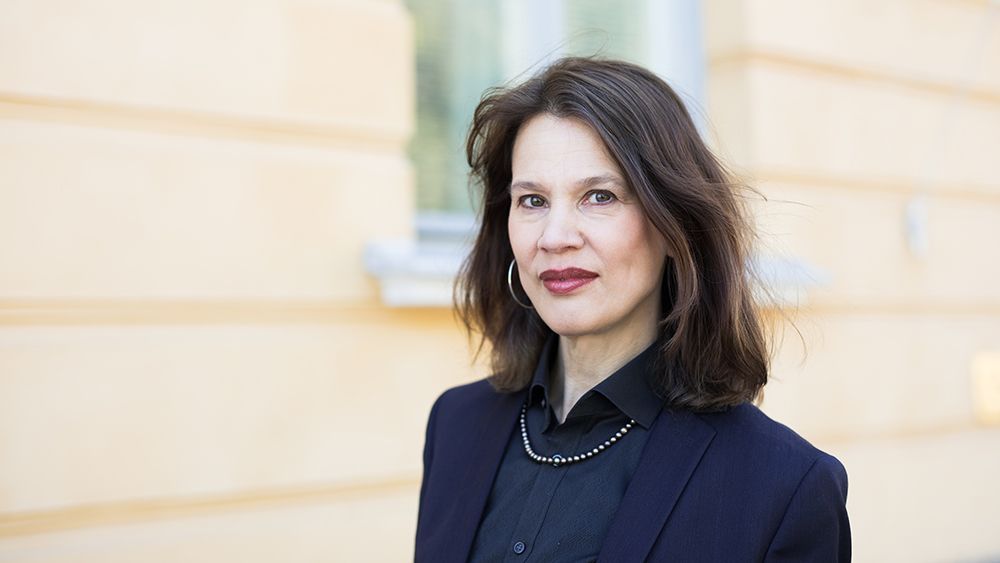
Pylkkanen made the proposal on Yle’s Politiikkaradio programme on Wednesday, suggesting that political parties should agree on long-term employment targets that would remain in place regardless of which parties form the government.
Her proposal is presented as an alternative to the so-called debt brake, under which political parties agree at the beginning of a parliamentary term on targets for reducing government debt. Pylkkanen argued that Finland’s debate over public finances should also take account of the long-term economic cost of people remaining outside working life.
She compared the estimated savings under the debt-brake approach, which she put at around 8 billion to 11 billion euros, with the potential cost of prolonged unemployment.
According to Pylkkanen, an individual who never completes a working career of roughly 40 years represents about 2 million euros in lost value and costs to the state. If 100,000 people were to remain outside working life for their entire careers, she said, the figure could reach 200 billion euros.
“Can we really afford this?” she asked.
Pylkkanen said Finland’s unemployment problem is larger and more deeply rooted than it is often presented. She estimated that as much as 80 percent of unemployment is structural, meaning that it cannot simply be resolved when economic conditions improve.
The issue has become particularly important as Finland has experienced a difficult period in its labour market. During Prime Minister Petteri Orpo’s coalition government, unemployment increased for several years and the number of people experiencing long-term unemployment rose substantially, according to the original Yle report.
The latest official figures show that the situation has since shown some signs of improvement, although unemployment remains high. Statistics Finland reported that 262,000 people aged 15 to 74 were unemployed in August 2026, 5,000 fewer than a year earlier. The trend unemployment rate was 10.1 percent, while the employment rate for people aged 20 to 64 was 75.9 percent.
Official employment-service statistics also continue to track long-term unemployment separately. In these statistics, a long-term unemployed jobseeker is someone who has been registered as unemployed for at least 12 consecutive months.
For Pylkkanen, however, the central problem is not simply the monthly unemployment rate. She argues that Finland has spent decades trying to increase the supply of labour and reduce the taxation of work without solving the deeper problems that keep people out of employment.
She also pointed to the other Nordic countries, saying their labour markets are in considerably better shape than Finland’s. Her argument is that the country’s employment problems cannot be addressed through individual decisions made by separate ministries or through measures aimed only at short-term economic fluctuations.
Instead, Pylkkanen is calling for a broader policy framework that would bring different areas of government together and make reducing structural unemployment a long-term national objective.
That would also change the way Finland approaches the debate over public finances. In Pylkkanen’s view, reducing government debt while leaving a large group of working-age people outside employment does not address the full economic problem. The cost of unemployment includes not only benefits and public services but also income and tax revenue that are never generated when people remain outside working life.
Her proposed unemployment brake would therefore put employment on a similar long-term political footing to debt reduction, with parties agreeing on objectives that could survive changes in government.
The proposal comes as Finland continues to deal with a labour market in which unemployment remains elevated even though the latest figures show some improvement compared with a year earlier. Statistics Finland recorded 34,000 more employed people in August 2026 than in August 2025, while the number of unemployed people fell by 5,000.
Pylkkanen’s argument is that the country should look beyond these monthly movements and focus on the people who remain unemployed for years. She questioned whether Finland can afford to leave such people outside working life and urged decision makers to treat structural unemployment as a central economic and political issue.
“Do we really want to exclude these people? Can we afford to do that?” she asked.