Tokyo vs Seoul is a difficult choice for travellers planning an Asian city break. Japan’s capital and South Korea’s capital have become two of the region’s most sought-after destinations, but they offer very different experiences once you arrive.
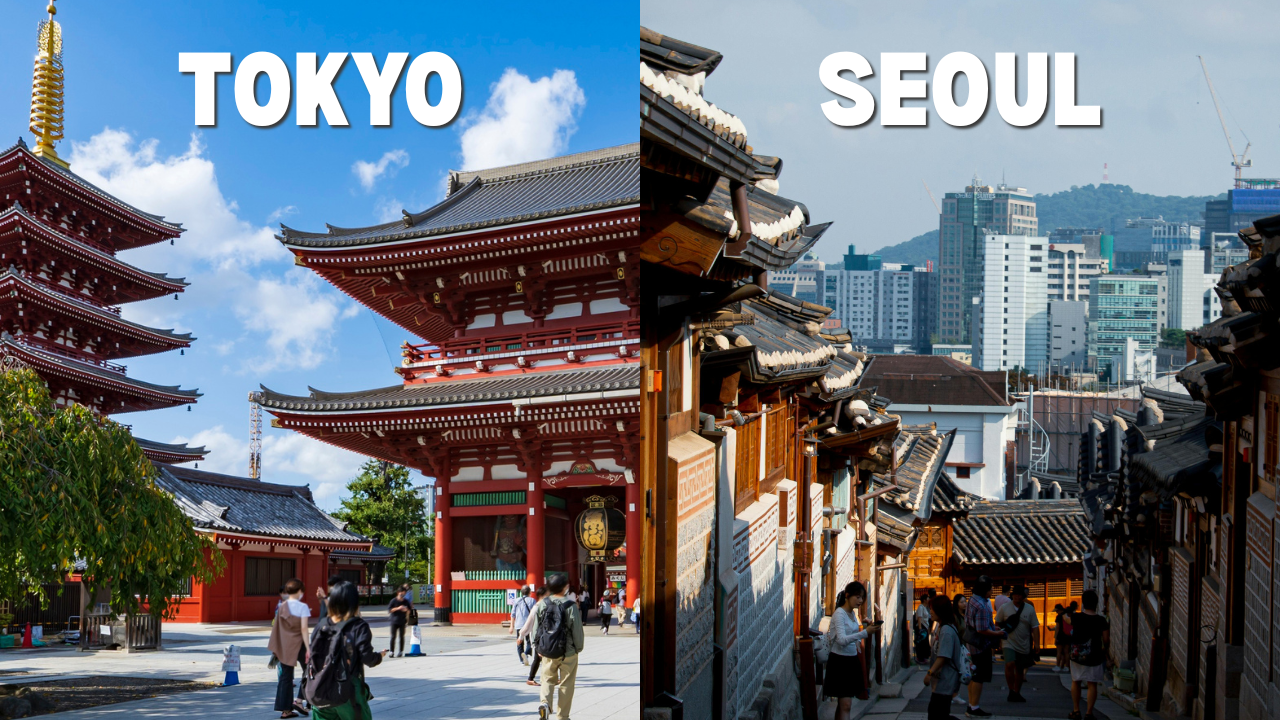
Both cities combine historic neighbourhoods with modern architecture, strong food cultures and busy nightlife. Yet Tokyo feels almost impossible to take in at once, while Seoul often feels more compact and easier to move between. The choice may ultimately depend on what kind of trip you want, although there is another option that makes the comparison much easier: visit both.
Tokyo has the scale to overwhelm even experienced travellers. In 2025, Japan’s capital welcomed a record 28.65 million international visitors, underlining its position as one of the world’s major urban tourism destinations.
For a first-time visitor, Tokyo can feel less like one city and more like a collection of very different cities connected by an enormous transport network. Your experience can change dramatically from one neighbourhood to the next.
Shinjuku is an obvious introduction to that scale. The district’s huge railway station is famous for its complexity, with more than 200 exits and millions of passengers passing through each day. Finding the correct way out can feel like an achievement in itself.
Once outside, the character of Shinjuku becomes clearer. Skyscrapers dominate the skyline, while shopping streets, restaurants, bars and cafes keep the area active well into the night. It is one of the places where Tokyo’s energy is difficult to miss.
Shibuya offers another version of the city. Its famous crossing has become one of Tokyo’s most recognisable scenes, surrounded by department stores, fashion outlets, restaurants and observation points. A short distance away, Harajuku brings a different atmosphere, with youth fashion, independent shops and the creative culture that has made the neighbourhood internationally known.
Then there is Akihabara, where electronics, anime, manga and Japanese pop culture dominate the streets. Roppongi brings a more international nightlife scene, while Ginza is associated with luxury shopping, department stores and high-end restaurants.
Tokyo’s appeal, however, is not limited to its modern side. The city also has centuries of history woven into its urban landscape.
In Asakusa, Senso-ji remains one of Tokyo’s most important historic landmarks. The Buddhist temple dates back centuries and provides a striking contrast with the high-rise districts elsewhere in the capital. Meiji Jingu, beside Yoyogi Park, offers another change of pace. The forested approach to the shrine feels remarkably removed from the traffic and buildings of central Tokyo, despite being within the city.
Food is another reason travellers can spend far longer in Tokyo than they initially expect. The capital has an extraordinary range of dining, from Michelin-starred restaurants to small neighbourhood establishments and inexpensive street food. According to the figures cited in the original source, Tokyo has 11 three-star and 26 two-star Michelin restaurants, although visitors do not need a large budget to eat well.
The difficulty is finding enough time. A few days can cover the major sights, but they leave little opportunity to explore beyond the most famous neighbourhoods. Even a week can feel short when temples, gardens, shopping districts, museums, nightlife and food are all competing for attention.
Tokyo also works well as a base for exploring beyond the city. With another day or two, travellers can head towards Mount Fuji and the Fuji Five Lakes region. Around Lake Kawaguchi, the pace changes considerably, with lakeside walks, hot springs and views towards Japan’s most recognisable mountain.
Seoul offers a different kind of urban experience. While Tokyo has spent decades established as a major international destination, Seoul’s global profile has accelerated alongside the rise of South Korean popular culture.
K-pop, Korean television dramas, food, fashion and beauty have all played a role in bringing new visitors to the city. Seoul’s appeal is no longer limited to travellers already familiar with Korea. Its influence has spread well beyond the country, particularly among younger international audiences.
The numbers reflect that growing interest. According to the Seoul Metropolitan Government, 8.23 million international visitors arrived in the city during the first half of 2026, an increase of 21.3% compared with the same period a year earlier.
The city has also attracted attention from international travel publications. Time Out placed Seoul ninth in its 50 Best Cities in the World for 2026, while the Jongno 3-ga neighbourhood was named the publication’s coolest neighbourhood in the world.
Jongno 3-ga is a good example of what makes Seoul different from Tokyo. Its narrow streets, late-night food stalls, traditional drinking culture and older buildings sit close to some of the capital’s major modern attractions. The area feels lived-in rather than designed purely for visitors.
Seoul’s historic character becomes even clearer around Gyeongbokgung Palace, the largest of the city’s five grand palaces. The palace grounds contain courtyards, gardens and traditional buildings, and the changing of the guard ceremony adds another layer to the experience.
From there, it is an easy journey to Bukchon Hanok Village, where narrow streets pass between traditional Korean houses known as hanok. The neighbourhood has become one of Seoul’s most recognisable historic areas and offers a very different visual experience from the glass towers found elsewhere in the city.
Then the mood changes again. Gangnam, made globally famous by Psy’s 2012 hit “Gangnam Style”, represents the modern, commercial side of Seoul, with large shopping areas, restaurants, offices and nightlife.
Myeong-dong is another major stop for visitors, particularly those interested in shopping and street food. Hongdae is closely associated with music, nightlife and youth culture, while Seongsu has developed a reputation for its cafes, fashion stores and temporary pop-up spaces.
Food provides another reason to spend time in Seoul. Korean barbecue remains one of the city’s best-known dining experiences, while fried chicken and beer, known as chimaek, has become a popular combination. Soju is also closely associated with Korean dining culture. For travellers looking for more formal dining, Seoul had 42 Michelin-starred restaurants according to the figures cited in the source material.
Despite its size, Seoul also gives visitors plenty of opportunities to escape the intensity of the central districts. The Han River runs through the city, with waterfront parks that can be explored on foot or by bicycle. Evening river cruises offer another way to see the skyline.
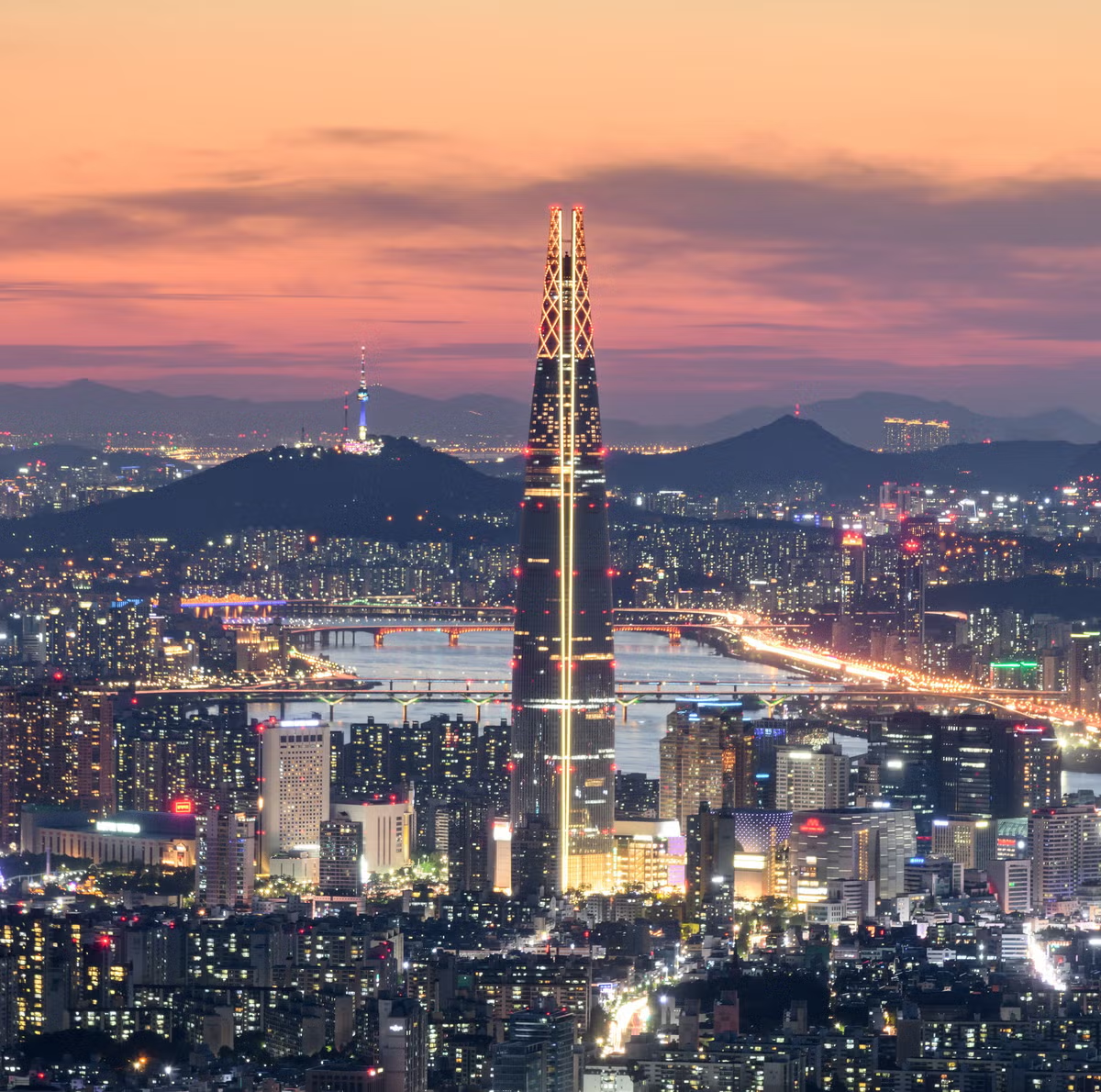
For something more active, Bukhansan National Park provides hiking trails and mountain scenery within easy reach of the capital. N Seoul Tower is another familiar landmark, particularly for visitors looking for a broad view across the city.
Cheonggyecheon offers yet another contrast. The 11-kilometre restored stream and public space runs through central Seoul, creating a long green corridor through one of the city’s busiest areas.
Travellers with more time can also visit the Demilitarized Zone between North and South Korea. Tours vary, but some include stops such as Dora Observatory, where visitors can look towards North Korea, and Dorasan Station, a railway station built as a symbol of the possibility of future connections between the two Koreas.
So, when it comes to Tokyo vs Seoul, the question is less about which city is universally better and more about what a traveller wants from the experience.
Tokyo offers enormous scale, constant movement and an almost endless list of neighbourhoods, restaurants, cultural attractions and day trips. Seoul combines contemporary Korean culture with royal palaces, traditional neighbourhoods, mountain landscapes and a nightlife scene that can continue long after the sun has gone down.
There is also little practical reason for travellers with enough time to treat the two destinations as mutually exclusive. Direct flights between Tokyo and Seoul take roughly two and a half hours, with multiple services operating between the cities each day.
That makes it possible to build both capitals into the same trip and experience two very different versions of contemporary Asian city life. Tokyo and Seoul may compete for the attention of the same international travellers, but they do not offer the same journey. For many visitors, that difference is precisely the reason to put both on the itinerary.