
The Christmas Peace Declaration in Turku is one of Finland’s oldest and most recognisable Christmas traditions, bringing the country to a symbolic standstill at midday on Christmas Eve. While Christmas celebrations take place across Finland, it is in the southwestern city of Turku that the holiday officially begins for many Finns.
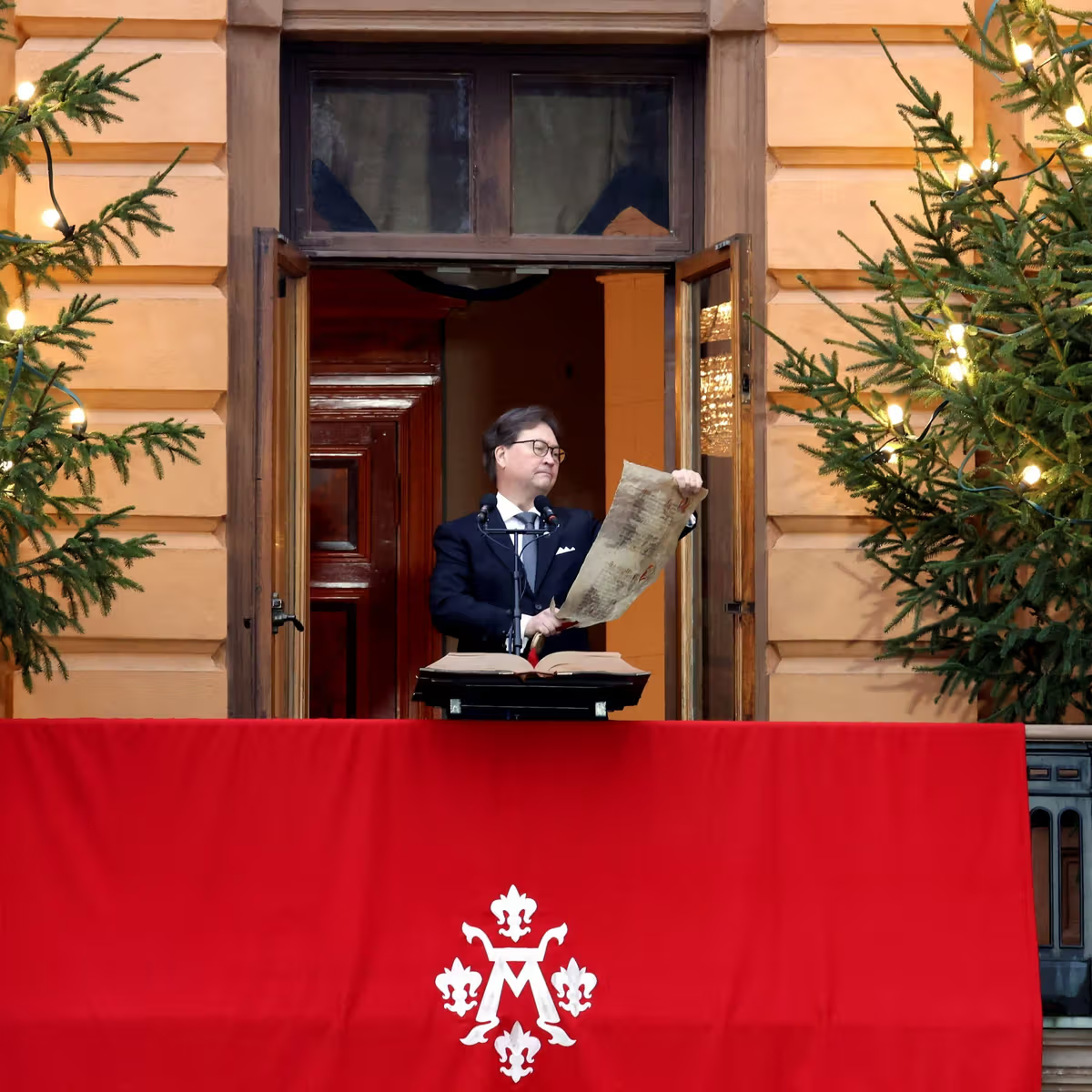
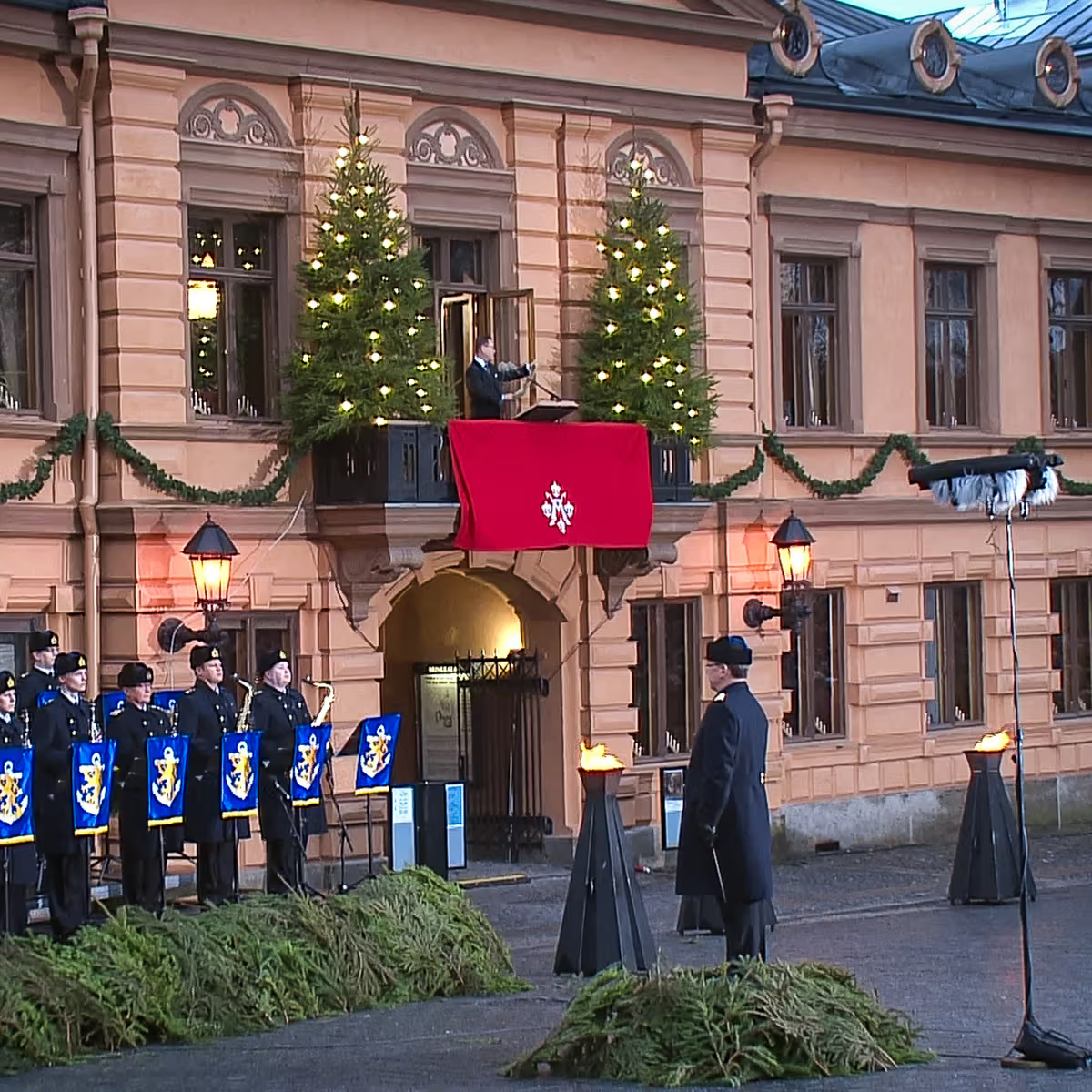
At noon on 24 December, attention turns to the Old Great Square (Vanha Suurtori), where the declaration is read from the balcony of Brinkkala House. The ceremony is short, but its significance reaches far beyond the historic square. Thousands gather in person, while others follow the annual event on television, radio and online. For many households, hearing the declaration is an established part of Christmas Eve, marking the moment when preparations give way to the celebration itself.
The tradition is believed to date back to the 1320s, when Finland was part of the Kingdom of Sweden. Its origins are associated with medieval laws intended to maintain public order during the Christmas period. The declaration was not simply a festive greeting. It reminded residents that a period of Christmas peace had begun and that disorderly behaviour could attract harsher punishment than at other times of the year.
In its earlier form, the custom reflected a society in which religious observance and public order were closely connected. Christmas was expected to be a period of restraint, and the declaration made that expectation clear to the population. Its language carried an authority that would be difficult to imagine in modern Finland, where the ceremony has no longer had legal force for more than a century. Yet the central message has survived: the Christmas period should be observed peacefully.
The choice of Turku as the location is closely connected to the city’s place in Finnish history. Before Helsinki became the country’s capital in 1812, Turku was Finland’s administrative and cultural centre. It was one of the most important cities in the region during the medieval period, making it a natural home for a tradition that has outlived the political structures in which it began.
The declaration is now delivered from Brinkkala House, a historic building overlooking the Old Great Square. It has been read from the building’s balcony since 1886, giving the ceremony the setting that has become familiar to generations of television viewers. The current form of the observance dates to 1903, although the wording and the historical document behind it have their own complicated history.
The original declaration was destroyed in the Great Fire of Turku in 1827, which devastated much of the city. The text was subsequently reconstructed from memory by a city official. The oldest surviving written copy identified in the city’s historical account dates from 1834. What is read today therefore carries a connection to medieval practice, but the surviving document is a product of a later period.
The ceremony follows a recognisable sequence. The bells of Turku Cathedral mark midday before the declaration is read in Finnish and Swedish. The city’s chief of protocol delivers the text from the balcony, accompanied by a ceremonial musical programme that traditionally involves the Finnish Navy Band. The Finnish national anthem has also formed part of the occasion.
The use of both Finnish and Swedish reflects the country’s two national languages and the history of a tradition that originated under Swedish rule. The declaration was originally made in Swedish, but it is now delivered in both languages. This gives the ceremony a significance beyond its Christmas message, connecting an old civic custom with Finland’s linguistic and cultural history.
Despite its long history, the declaration has not taken place without interruption. Political unrest and war have affected the ceremony at different points. It was cancelled in 1917 amid tensions surrounding Finland’s independence and the growing threat of civil conflict. In 1939, the Winter War and fears of air raids also prevented the public gathering from taking place. The COVID-19 pandemic brought another unusual change in 2020, when the declaration was read without the usual large crowd in the square.
These interruptions are part of what makes the tradition’s survival notable. It has continued through changes in government, national borders, language, technology and everyday life. What began as a medieval announcement about public conduct has become a familiar national ritual, even as the meaning of the words has changed.
Its reach also extends well beyond Turku. The Finnish Broadcasting Company, Yle, has transmitted the declaration on radio since 1935, while regular domestic television broadcasts began in 1983. The broadcast was extended to Sweden in 1986, and the ceremony can now be followed online by viewers outside Finland. A tradition once dependent on people gathering in a town square has become an event shared by Finns wherever they happen to spend Christmas.
That national audience helps explain why the declaration remains associated with the beginning of Christmas in Finland. The ceremony does not mark the start of the country’s Christmas shopping season or the arrival of its winter festivities. By Christmas Eve, many families have already completed their preparations, attended services, visited relatives or travelled to spend the holiday together. The declaration instead provides a shared moment when the pace of public life begins to change.
For people attending in person, the experience is also an opportunity to see Turku’s historic centre at one of its most important annual gatherings. The Old Great Square, close to Turku Cathedral, provides a setting that connects the present-day ceremony with the city’s medieval past. The surrounding streets and buildings become part of the occasion, while the balcony of Brinkkala House remains the focal point.
Turku’s wider Christmas programme adds to the city’s appeal during the festive season. The Old Great Square’s Christmas market, held on selected weekends before Christmas, brings local products, food, performances and seasonal activities to the historic area. It offers visitors a chance to experience the square before the more solemn Christmas Eve ceremony takes place.
For travellers planning to witness the declaration, Christmas Eve is the important date. The public reading takes place at 12 noon on 24 December at the Old Great Square. Those who want to attend should plan their journey in advance, as the ceremony attracts large crowds and Christmas Eve transport services operate on holiday schedules. Watching the broadcast is another option for those unable to travel to Turku.
Christmas in Finland 2026: The Markets, Light Displays and Events Worth Travelling For
The tradition also offers an interesting perspective on how Christmas is observed in Finland. Although the country has a strong association with Lapland, Santa Claus and winter tourism, the declaration in Turku represents a different part of its Christmas identity. It is rooted in civic history rather than commercial festivities, and its continued place in the national calendar demonstrates the importance many Finns attach to familiar customs.
There is something distinctive about a country marking the beginning of Christmas through a public declaration of peace. The ceremony does not require an elaborate performance or a lengthy programme to make its point. A historic building, a familiar text, the sound of cathedral bells and a gathering of people are enough to create a moment recognised across the country.
Nearly seven centuries after its presumed beginnings, the Christmas Peace Declaration remains one of the most enduring traditions in Finland. Its importance is no longer found in the medieval penalties once attached to breaking the peace, but in the shared sense of occasion it creates. Every Christmas Eve, Turku becomes the place where Finland pauses, listens and welcomes Christmas.
The ceremony’s historical interruptions include the pandemic years of 2020 and 2021, when the declaration continued without the usual public gathering in the square.


