
Soweto and Maboneng offer two distinctly different ways to experience Johannesburg, South Africa’s largest city, where the country’s history, urban transformation, creative culture and everyday life come together in neighbourhoods shaped by very different experiences. While Soweto provides an intimate connection to the country’s struggle against apartheid and the communities that helped shape modern South Africa, Maboneng introduces visitors to a different side of Johannesburg, one associated with contemporary art, independent businesses, restaurants and inner-city redevelopment.

Although both destinations are important parts of Johannesburg’s identity, visiting them offers contrasting perspectives on the city. One takes visitors through places that carry the weight of South Africa’s political history, while the other invites them to explore a changing urban landscape influenced by art, entrepreneurship and creative expression.
Located southwest of Johannesburg’s city centre, Soweto is far more than a collection of historical attractions. Its name comes from South Western Townships, and its development is closely connected to the racial segregation policies that shaped Johannesburg during the apartheid era. From the 1930s onwards, thousands of black South Africans were forcibly relocated from areas of the city designated for white residents. Migrant workers also settled in the townships as they sought employment in Johannesburg, often under difficult living and working conditions.
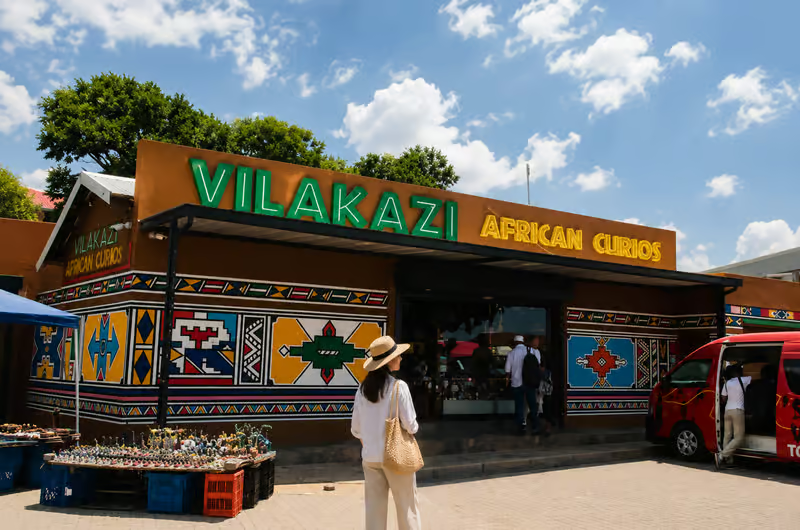
The history is visible throughout Soweto, but few places communicate it as directly as Vilakazi Street in Orlando West. The street is internationally recognised for having been home to two Nobel Peace Prize laureates, Nelson Mandela and Archbishop Desmond Tutu. Mandela’s former residence, now the Mandela House Museum, gives visitors an opportunity to learn about the personal life of one of the most influential figures in South African history. The nearby former residence of Tutu adds another important dimension to the street’s historical significance
A short distance away, the Hector Pieterson Memorial and Museum tells one of the most painful stories in South Africa’s history. The memorial commemorates the students who participated in the Soweto Uprising of 16 June 1976, when schoolchildren protested against the apartheid government’s decision to impose Afrikaans as a language of instruction in black schools. Police opened fire on the demonstrators, and the killing of young Hector Pieterson became one of the defining images of the uprising. The event helped bring international attention to the brutality of apartheid and the resistance movement that challenged it.
For visitors interested in understanding South Africa beyond its wildlife reserves, beaches and major cities, these sites offer historical context that cannot be gained simply by reading about the country’s past. They also demonstrate why guided tours have become an important way of exploring Soweto. Local guides can explain the significance of particular streets, buildings and neighbourhoods, while providing perspectives that historical displays alone cannot always communicate. Johannesburg Tourism itself recommends exploring the township through local knowledge and guided cultural experiences.
ALSO READ: Ngorongoro Conservation Area Offers a Different Kind of Safari in Tanzania
However, reducing Soweto to its apartheid history would give visitors an incomplete understanding of the area. It is a large, diverse urban community with its own restaurants, entertainment venues, cultural institutions, sporting traditions and social life. The township’s food culture, music and informal businesses are also part of the experience. Visitors can spend time at local restaurants, encounter different expressions of South African music and explore neighbourhoods that reflect the everyday lives of residents.
Orlando Towers, for example, provide a different attraction from the historical museums. The former power station cooling towers have become one of Soweto’s recognisable landmarks, with colourful artwork and adventure activities attracting visitors. Soweto Theatre in Jabulani also represents the township’s contribution to contemporary performing arts. These places show that the area is not simply preserving its past; it continues to develop its own cultural identity.

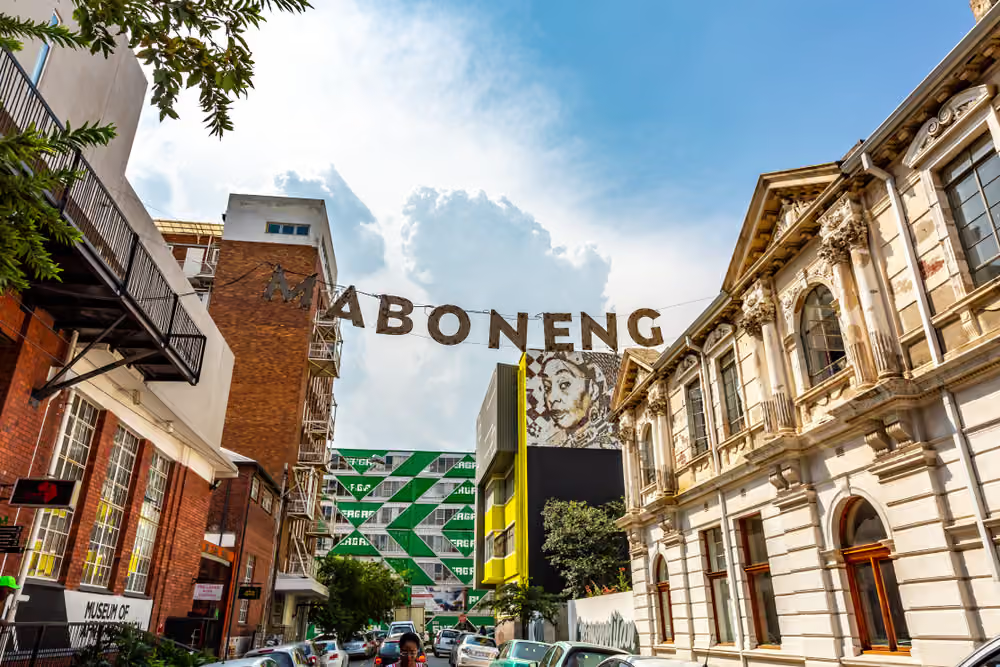
Maboneng, on the other hand, presents a different picture of Johannesburg. Situated in the inner city, the neighbourhood is associated with street art, creative businesses, restaurants, galleries, independent retail and urban redevelopment. Its name, which means “place of light” in Sesotho, reflects the vision behind its transformation from an industrial area into a creative and commercial district.
The redevelopment of Maboneng began around 2008, when property developer Propertuity started acquiring and transforming former industrial buildings. Arts on Main, a converted warehouse that opened in 2009, became an important starting point for the area’s cultural development. The project introduced spaces for artists, creative businesses and public activities, helping establish the identity that would attract further investment and visitors.
Today, Maboneng is known for its mixture of contemporary urban experiences. Its streets feature large murals, independent businesses, restaurants, entertainment venues and creative spaces. Arts on Main remains an important reference point for understanding the neighbourhood’s artistic identity, while nearby developments such as Jewel City have added further retail and pedestrian spaces to the inner-city landscape.
For visitors, the attraction of Maboneng is partly in the experience of walking through an area where Johannesburg’s industrial past meets newer forms of urban life. Former warehouses and commercial buildings have been adapted for different purposes, while public artwork has given parts of the neighbourhood a recognisable visual character. It is a destination that may appeal particularly to travellers interested in contemporary African art, photography, independent design, food and the changing identity of African cities.
But Maboneng should not be mistaken for a uniformly polished entertainment district. Like other parts of Johannesburg’s inner city, its streets and businesses do not all offer the same experience, and the character of the area can vary depending on the particular location and time of day. Its history of redevelopment has also involved changing ownership and management arrangements. A 2019 urban regeneration study documented how the original developer stepped away from managing the neighbourhood in 2018, with responsibility transitioning to the Maboneng Civic Association. This history is a reminder that urban regeneration is an ongoing process rather than a completed transformation.
The difference between Soweto and Maboneng is therefore not simply a matter of historical attractions versus modern entertainment. Both neighbourhoods have cultural significance, but they communicate different aspects of Johannesburg’s identity. Soweto offers a deeper understanding of the country’s political history, the consequences of apartheid and the communities that continue to shape South Africa. Maboneng provides an opportunity to explore the city’s creative economy, changing architecture and contemporary urban culture.
There are also differences in how visitors should approach the two destinations. In Soweto, a guided excursion can help connect historical landmarks with the wider township experience. Rather than limiting a visit to Vilakazi Street and the museums, travellers can explore other parts of the area, learn about local businesses and gain a better understanding of life beyond the established tourist attractions.
In Maboneng, visitors may prefer to spend time exploring its galleries, restaurants, street art and independent businesses. Checking which venues are operating and planning a visit around specific places of interest can make the experience more worthwhile. The neighbourhood is not a single attraction with a defined entrance and exit; it is an urban area whose appeal lies in the different spaces and activities found within it.

Safety also deserves consideration when exploring Johannesburg. Visitors should plan their movements, use reputable transport providers and avoid assuming that every street is suitable for casual walking, particularly after dark. The UK Foreign, Commonwealth and Development Office advises travellers to remain alert, use reliable transport and avoid walking alone in isolated areas. South Africa’s Department of Tourism also recommends using registered guides and operators when exploring destinations where local knowledge and assistance are important.
Travellers with limited time in Johannesburg do not necessarily have to choose between the two. Visiting both can provide a more rounded understanding of a city that is difficult to describe through a single neighbourhood or attraction. A day spent learning about Soweto’s history followed by time exploring Maboneng’s contemporary creative spaces can reveal how different generations, communities and urban influences have contributed to Johannesburg’s character.
The two destinations also challenge some of the assumptions international visitors bring to South Africa’s largest city. Johannesburg is sometimes approached primarily as a commercial centre or a gateway to other destinations, but its neighbourhoods tell stories that deserve more attention. Its history is not confined to museums, and its contemporary culture is not limited to fashionable restaurants or art galleries.
Soweto and Maboneng make that particularly clear. One connects visitors to the struggles, achievements and everyday experiences that shaped modern South Africa, while the other reflects the possibilities and complications of reinventing an inner-city neighbourhood. Neither represents the whole of Johannesburg, but together they offer two valuable perspectives on a city whose identity continues to evolve.


