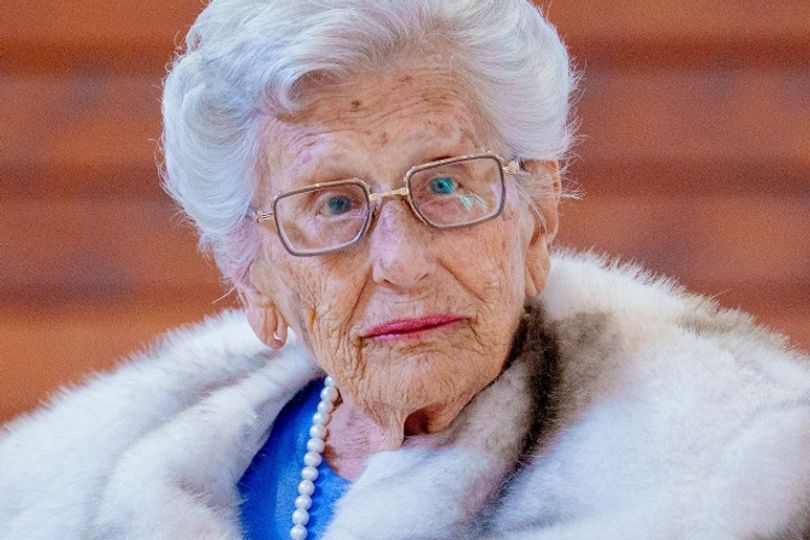
Norway’s Princess Astrid has died at the age of 94, just two days after attending the funeral of her younger brother, King Harald V, bringing another loss to the Norwegian royal family within a matter of weeks.
The Norwegian Royal House announced her death on Friday, saying Astrid had died on 11 September. Her brother Harald died at Rikshospitalet in Oslo on 28 August, meaning her death came exactly two weeks after his.
“His Majesty the King has received with great sorrow the news that Princess Astrid has passed away,” the Royal House said.
The Norwegian royal family had gathered only days earlier for Harald’s funeral at Oslo Cathedral. Astrid, who had been in a wheelchair, attended the service and was also present at the Palace Chapel before the funeral, where she spent time beside her brother’s coffin.
A wreath sent in her name carried a personal message of thanks to Harald for the life they had shared. After the funeral, she watched from the area outside the Royal Palace as mourners gathered among the flowers left in memory of the late king.
King Haakon, Astrid’s nephew, paid tribute to a woman who had played a significant public role in Norway long before he became king. Following the death of his grandmother, Crown Princess Märtha, in 1954, Astrid stepped into an important position within the royal household at only 22 years old.
She effectively became Norway’s first lady, a role she carried out for 14 years. During that period, she represented the country at official events at home and abroad and frequently accompanied her father, King Olav V.
The position later passed to Sonja Haraldsen after she married Crown Prince Harald in 1968 and became Crown Princess Sonja.
Astrid remained a visible member of the Norwegian royal family for decades after leaving that formal public role. Even well into her 90s, she continued to attend engagements and support organisations and causes connected to her 12 patronages.
Her public life was not simply ceremonial. Astrid once told NRK that continuing to work and be useful to other people gave her a sense of purpose, an attitude that helped define her long relationship with public service.
Her final year was marked by serious health difficulties. According to Norwegian newspaper VG, she was hospitalised with pneumonia in March and returned to hospital in May after developing heart failure. She was fitted with a temporary pacemaker during that treatment.
Astrid was born in 1932 to King Olav V and Crown Princess Märtha. She was the middle child in the family, with an older sister, Princess Ragnhild, who died in 2012, and a younger brother, Harald, who would become king in 1991.
She married businessman and competitive sailor Johan Martin Ferner in 1961. The couple had five children, Cathrine, Benedikte, Alexander, Elisabeth and Carl-Christian. Ferner died in 2015.
Her children paid tribute to their mother following her death, thanking her for the support she had given them throughout their lives and for the care she showed towards people in need.
Astrid’s death also prompted tributes beyond Norway. Sweden’s King Carl XVI Gustaf said he and Queen Silvia had spoken with her during events surrounding Harald’s funeral only days before she died.
The Swedish king recalled Astrid with warmth and sent condolences to her children, their families and the wider Norwegian royal family.
Flags at the Royal Palace in Oslo were ordered to fly at half-mast following the announcement of her death. They will also be lowered on the day of her funeral, while Prime Minister Jonas Gahr Støre said the Norwegian state would cover the cost of the funeral.
For Norway’s royal family, Astrid’s death comes at an unusually painful moment. She had stood beside her brother at the end of his life and attended the ceremony that marked his passing, only to die days later.
King Haakon described his aunt as someone the family could rely on, recalling not only her long public service but also the advice and support she offered behind the scenes.
“We learned a lot from her, and she was not afraid to speak up,” he said. “Her passing is a great loss to us. We will miss her.”
With Astrid’s death, Norway loses one of the last direct links to an earlier generation of its modern monarchy, a princess who spent more than nine decades within the royal family and whose public service began when she was still a young woman.