
Nordic cities such as Turku, Tampere, Oulu, Aarhus and Trondheim offer a different perspective on Northern Europe, yet international visitors planning their first trip to the region often concentrate on its best-known capitals. Stockholm, Copenhagen, Oslo and Helsinki have established themselves as major destinations, attracting travellers with their architecture, museums, waterfronts and reputation for Scandinavian design. But the Nordic experience does not end in these capital cities.

Beyond the familiar tourist routes, a collection of regional cities offers historic neighbourhoods, thriving cultural scenes, distinctive food traditions and access to landscapes that are closely connected to everyday life. Some have centuries of history, while others have developed identities around technology, education, music and contemporary art. They may not have the same international recognition as the capitals, but they provide compelling reasons to extend a Nordic holiday beyond the usual destinations.
Part of the appeal is the opportunity to experience cities that have not built their entire identity around international tourism. Visitors can encounter local markets, independent restaurants, public saunas, university communities and waterfront neighbourhoods without necessarily following the same sightseeing routine found in more heavily promoted destinations. This does not mean these cities are undiscovered or without established visitor attractions. Rather, they tend to receive less attention in international travel conversations than their national capitals.
In Finland, Turku offers a particularly strong alternative to Helsinki. Located on the country’s southwest coast, it is widely recognised as Finland’s oldest city, with a history dating back to the 13th century. Its position along the Aura River gives the city much of its character, with restaurants, cafes, museums and historic buildings creating an attractive route through the centre.

Turku Castle and Turku Cathedral provide important links to the country’s past, while the Luostarinmaki Handicrafts Museum offers a glimpse of traditional urban life. The city also has a contemporary cultural identity, with art institutions, independent businesses and a growing food scene. Its maritime location adds another dimension to a visit, particularly for travellers interested in exploring the Finnish Archipelago, where islands, coastal villages and ferry connections make it possible to continue the journey beyond the city itself.
Further inland, Tampere presents a different side of Finnish urban life. Positioned between Lakes Nasijarvi and Pyhajarvi, the city developed around an industrial economy, and evidence of that history remains visible in its red-brick factory buildings and the Tammerkoski rapids running through the centre.

Former industrial spaces have found new uses as cultural venues, museums and places to spend time. The Vapriikki Museum Centre, located in a former factory complex, brings together exhibitions covering different aspects of Finnish history and society. Tampere is also closely associated with sauna culture. Public saunas are an important part of its identity, offering visitors an opportunity to experience a Finnish tradition in a setting that is part of ordinary city life rather than an isolated tourist attraction.
Food provides another reason to visit. The local speciality mustamakkara, a Finnish blood sausage traditionally served with lingonberry jam, is one of the dishes associated with the city. For visitors looking to understand Finnish culture beyond its capital, Tampere offers a combination of industrial heritage, lakeside scenery, food and contemporary city life. Its selection as the European Capital of Smart Tourism for 2026 has also brought additional international attention to its tourism development.
Oulu, further north, is another city that deserves more attention from international travellers. Located on the Gulf of Bothnia, it combines a coastal setting with a reputation for technology, education and creative culture. It is not the typical image many visitors have of northern Finland, which is often associated more strongly with Lapland, winter resorts and the Northern Lights.

Oulu has developed an identity that extends beyond its geographical position. The city is associated with technology and innovation, but its cultural life is equally important to its appeal. The annual Air Guitar World Championships have given it an unusual place on the international events calendar, while its connection to music, public spaces and northern Finnish culture offers visitors something different from the more familiar Arctic tourism experience.
Its position as European Capital of Culture 2026, alongside 39 municipalities in the surrounding region, has placed Oulu and northern Finland in a wider European cultural spotlight. The programme provides another reason for travellers to consider the city, particularly those interested in contemporary culture and experiences outside the conventional capital-city itinerary.
Across the Baltic Sea in Denmark, Aarhus offers a strong case for travellers willing to look beyond Copenhagen. As the country’s second-largest city, it has a substantial cultural identity of its own, supported by museums, architecture, restaurants and a sizeable university community.

One of its most recognisable attractions is ARoS Aarhus Art Museum, known for its circular rooftop installation, Your rainbow panorama, which offers colourful views across the city. Den Gamle By, an open-air museum, takes visitors through different periods of Danish urban history using historic buildings and recreated environments. The Moesgaard Museum, located outside the city centre, offers another perspective on archaeology and human history.
Aarhus also has a more contemporary side, with modern architecture, independent cafes, restaurants and neighbourhoods that reflect its position as an important Danish cultural and educational centre. For travellers who have already experienced Copenhagen, the city offers an opportunity to explore a different rhythm of Danish life without losing access to major cultural attractions.
Odense, on the island of Funen, provides a different reason to travel beyond Denmark’s capital. Its international identity is closely connected to the writer Hans Christian Andersen, who was born there in 1805. The city has preserved several locations associated with his early life, including his childhood home, while the H.C. Andersen House offers a modern museum experience built around his stories, imagination and literary legacy.

However, Odense is more than the birthplace of a celebrated writer. Its historic centre contains old streets, traditional buildings and public spaces that reflect its long history. The city also has a contemporary cultural scene, museums, restaurants and a strong cycling culture. For visitors interested in literature, architecture and Danish history, Odense offers a destination where cultural heritage is closely connected to the identity of the city rather than confined to a single museum.
Norway’s Trondheim is another destination that can easily be overlooked by visitors whose plans are centred on Oslo, Bergen or the country’s famous fjord landscapes. Yet the city has a history that reaches back to 997, when it was founded by Viking king Olav Tryggvason.
Its most significant historical landmark is Nidaros Cathedral, a major Gothic building constructed over the burial site of Saint Olav. The cathedral became an important centre for Christian pilgrimage in medieval Europe and remains one of Norway’s most recognisable religious and historical sites.
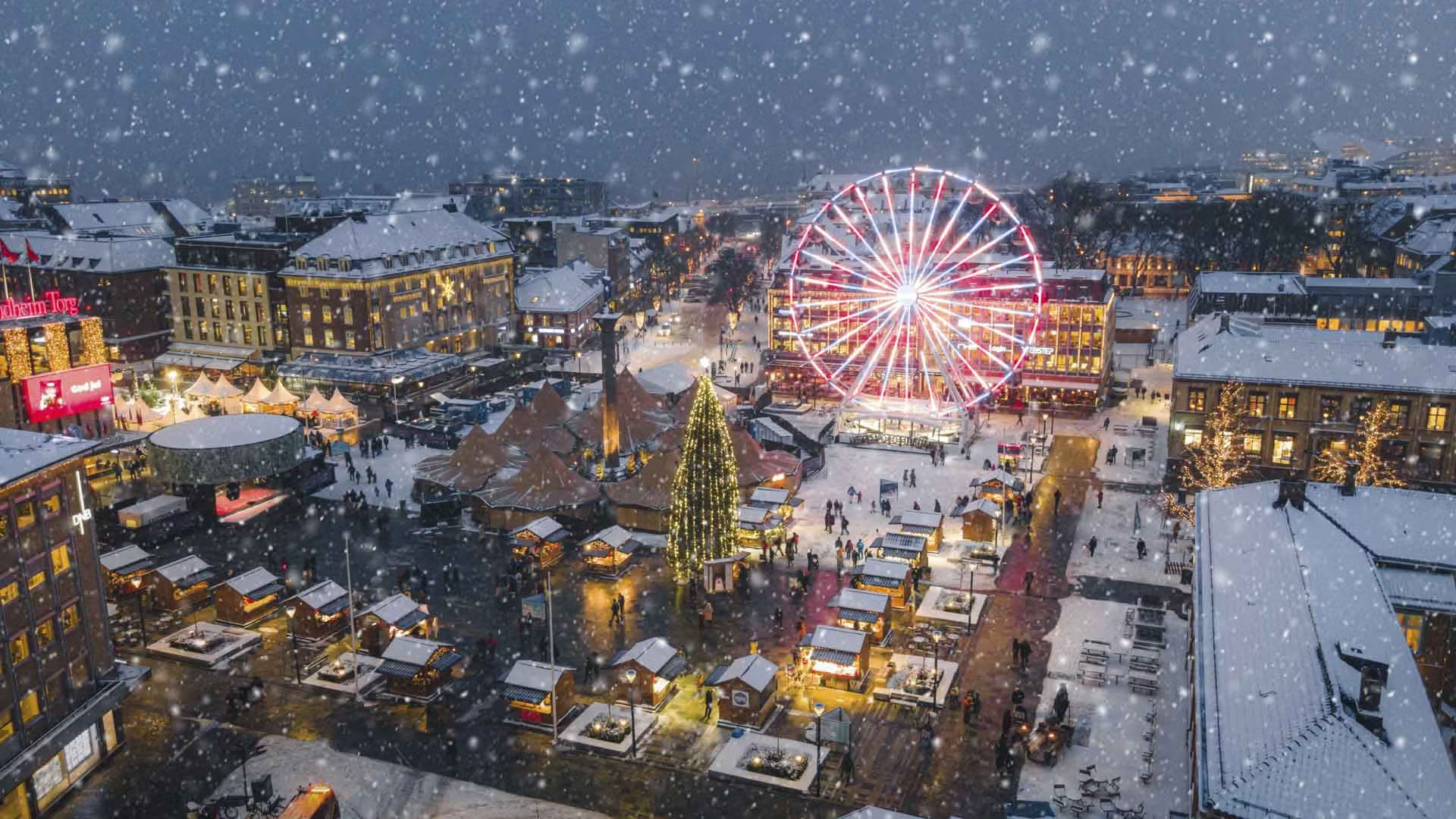
Trondheim has also developed a reputation as a university and technology centre. Its combination of historic architecture, student life, restaurants and a setting along the Trondheimsfjord gives it a character distinct from Norway’s larger tourist destinations. The old neighbourhoods around the river, including Bakklandet, add to its appeal, with traditional wooden buildings and streets that encourage visitors to explore on foot.
Sweden also has cities that deserve more consideration from international visitors. Gothenburg, the country’s second-largest city, is not exactly an unknown destination, but it often receives less attention in international travel discussions than Stockholm. Its location on the west coast gives it a different atmosphere from the Swedish capital, with a strong maritime identity and easy access to coastal communities and islands.
ALSO READ: Cheapest Ski Resorts in Europe for Winter 2026-2027 Revealed, With France Dominating the Top 10
The historic Haga neighbourhood, with its wooden buildings, independent shops and cafes, provides a glimpse of an older side of the city. Gothenburg is also known for its seafood, restaurants, cultural institutions and live music scene. Beyond the city centre, ferries connect visitors to the Gothenburg Archipelago, a collection of islands and coastal landscapes that can turn a city break into a wider coastal experience.

The appeal of these cities is not that they offer a cheaper or necessarily quieter version of the Nordic capitals. Each has its own history, identity and reasons for attracting visitors. Their value lies in the range of experiences they bring to a region that is sometimes presented internationally through a relatively narrow selection of famous destinations.
There is also a practical argument for including them in a wider Nordic itinerary. Travelling beyond the capitals can create opportunities to see how different parts of the region have developed, from Finland’s industrial and technological centres to Denmark’s literary heritage and Norway’s medieval history. These cities also offer a closer look at the relationship between urban life and the natural environment, whether through lakeside settings, coastal communities, rivers or public outdoor spaces.
For travellers planning a first visit to the Nordic countries, the capitals remain worthwhile starting points. But a trip that ends in Stockholm, Copenhagen, Oslo or Helsinki leaves much of the region unexplored. A few additional days in Turku, Tampere, Aarhus, Odense, Oulu or Trondheim can change the character of the journey.
The Nordic countries are not defined by their capitals alone. Some of the most interesting experiences may come from the cities that travellers have not yet considered adding to their plans.


