Europe’s most beautiful new train stations include three recently completed transport hubs in France and Italy, according to the 2026 Prix Versailles selection, which highlights architecture that combines transport, public space and local history.
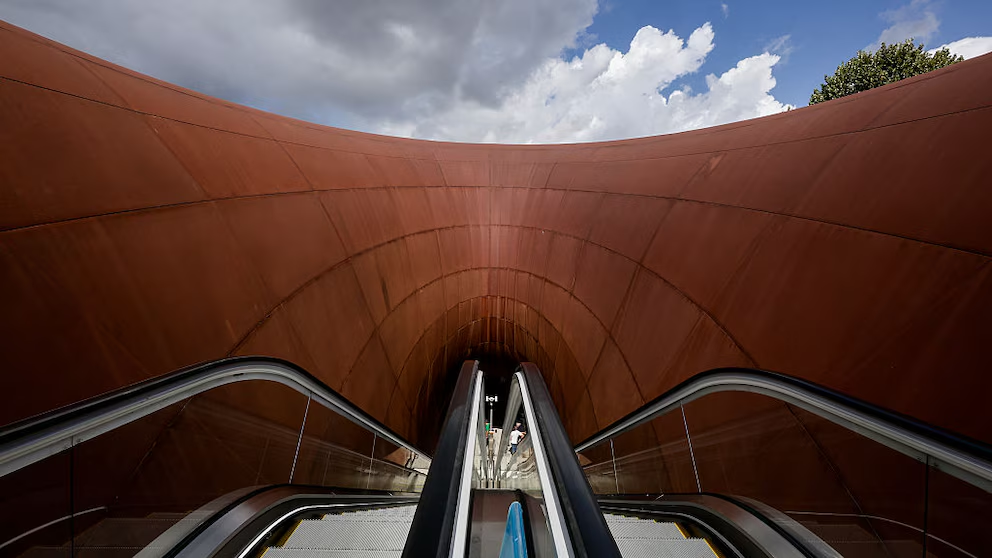
The annual Prix Versailles awards have previously recognised new museums, hotels, restaurants and shopping destinations for their architectural design. This year, the organisation has turned its attention to train stations, selecting seven new stations around the world for its 2026 list. Three of them are in Europe: Lyon Part-Dieu Station in France, Colosseo – Fori Imperiali Station in Rome and Monte Sant’Angelo Station in Naples.
The selection reflects a broader approach to station design. Prix Versailles says modern transport hubs can do more than move passengers through a city. They can also create public spaces, connect neighbourhoods and respond to the architectural character and history of their surroundings.
Jérôme Gouadain, secretary general of Prix Versailles, said transport stations face a particular challenge because their designs need to balance beauty and sustainability with the practical demands of passenger movement and urban development. He also pointed to the importance of integrating new projects with existing architecture and strengthening connections between stations and the communities around them.
In Lyon, the transformation of Lyon Part-Dieu Station has taken about a decade and was led by architectural firms AREP and L’AUC. The project has expanded the role of the station beyond a place where passengers arrive and depart, creating what Prix Versailles describes as a community space within one of the city’s major transport areas.
The redesigned station forms part of a large multimodal hub used not only by rail passengers but also by people moving between different parts of Lyon. Its inclusion on the Prix Versailles list reflects the scale of the redevelopment and its role in reshaping the area around Part-Dieu.
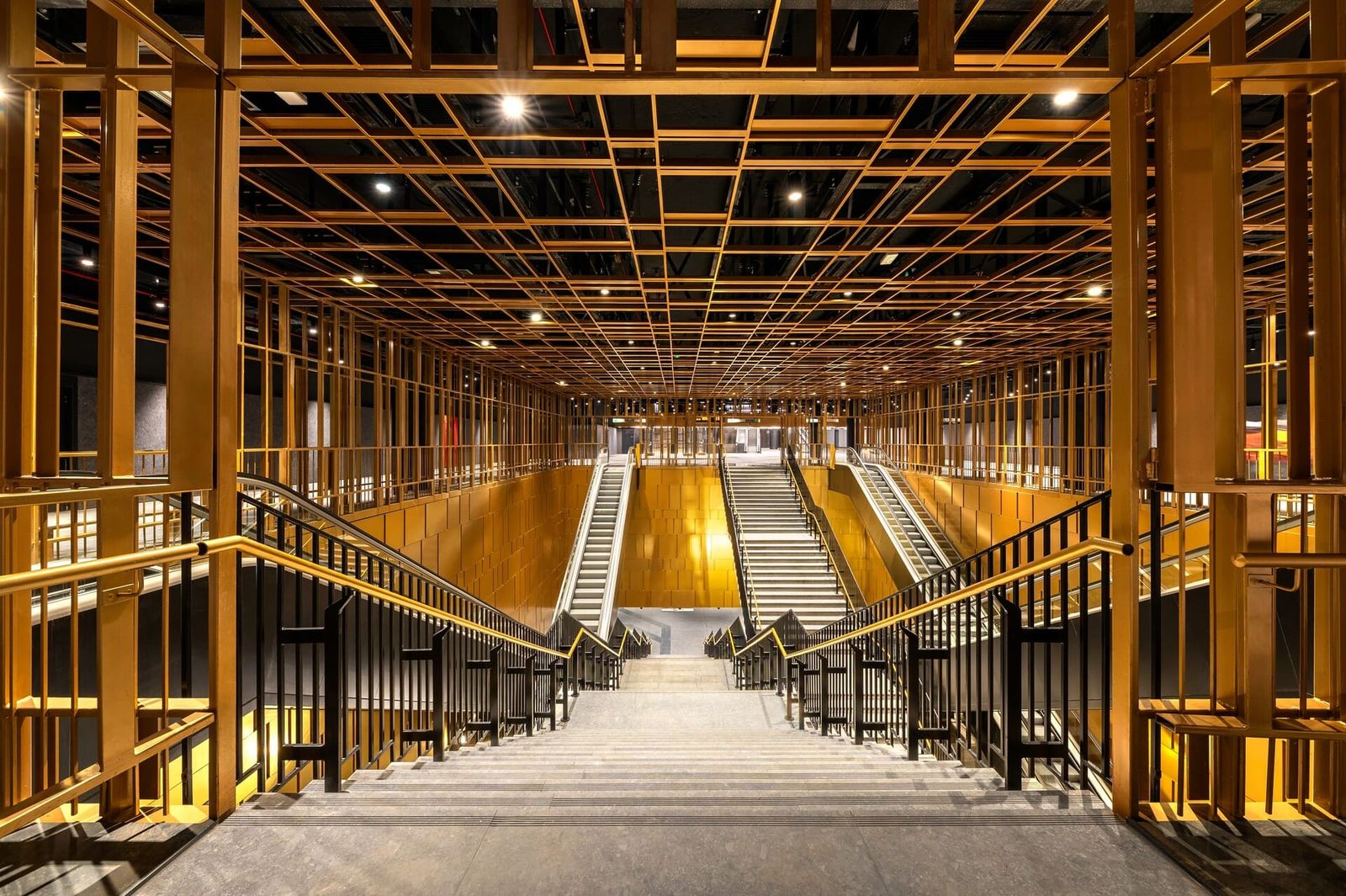
Rome’s Colosseo – Fori Imperiali Station takes a very different approach. The Metro C station is closely connected to the archaeological history of the city, with discoveries made during construction becoming part of the experience for passengers.
The station attracted attention when it opened in late 2025 because of the archaeological remains uncovered during the work. Rather than treating those discoveries simply as obstacles to construction, the project incorporated them into the station environment.
Prix Versailles describes the result as a place where the journey through the station becomes an encounter with Rome’s past. Passengers descending towards the platforms move through a space that connects the modern metro system with the archaeological layers of the city. An oculus also provides passengers with a view towards the Colosseum.
The station was developed with architectural input from the project team behind Rome’s Metro C, while its design incorporates the archaeological setting that surrounds it. It is an example of how transport infrastructure can become part of a city’s cultural experience without being separated from its practical purpose.
In Naples, Monte Sant’Angelo Station takes an even more sculptural approach. Artist Anish Kapoor collaborated with architectural firms Future Systems and AL_A on the design of the subterranean station.
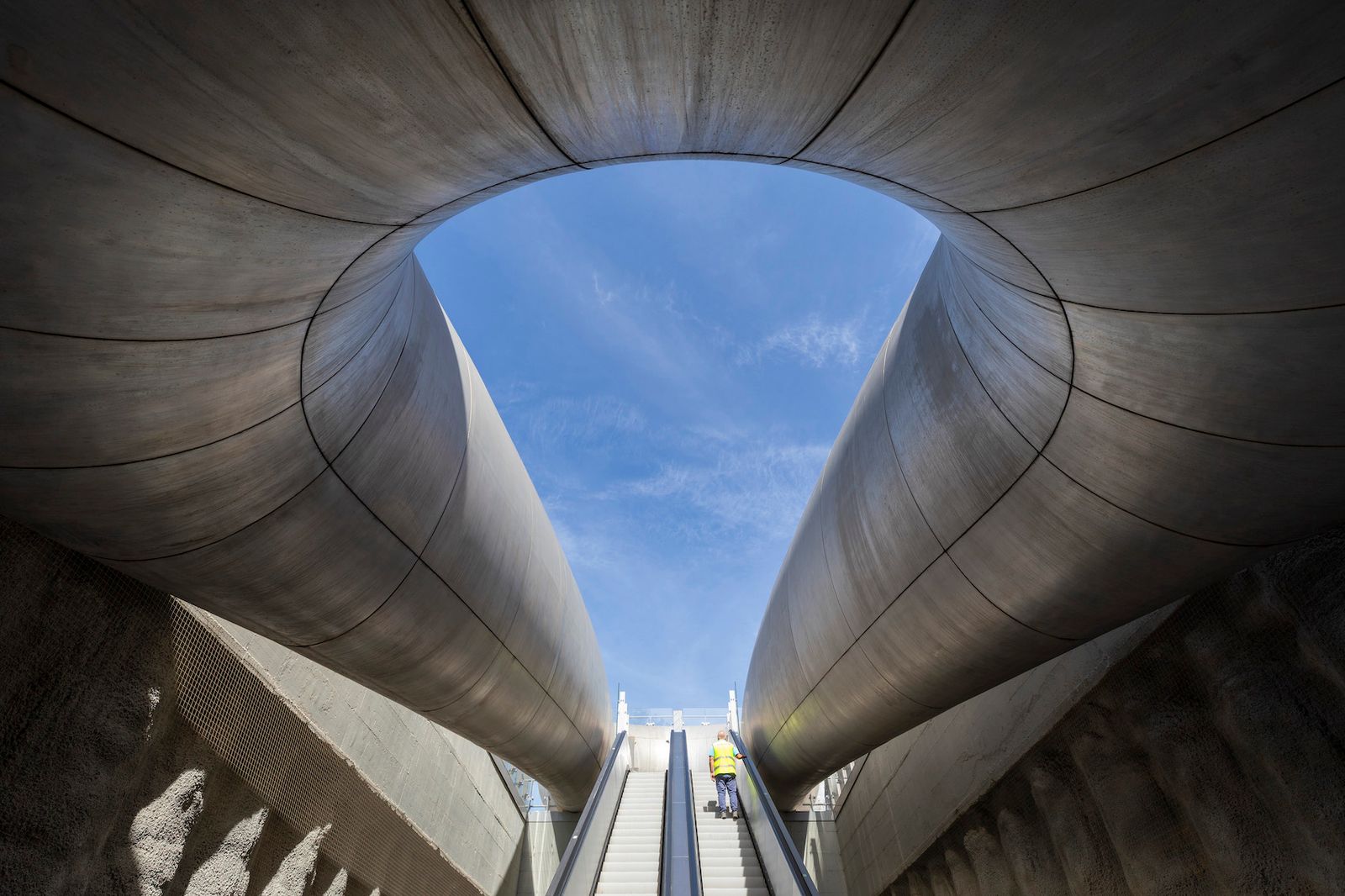
The station’s forms are intended to evoke Mount Vesuvius, a cave and the legend of the Cumaean Sibyl, linking the underground structure to the landscape and mythology of the Campania region. Prix Versailles describes the result as a sculpture that people can enter, turning the station itself into part of the journey.
Together, the three European stations demonstrate very different approaches to contemporary transport architecture. Lyon focuses on the relationship between a major station and the surrounding city, Rome places archaeology at the centre of the passenger experience, while Naples uses art, architecture and local references to shape an underground public space.
The seven stations selected by Prix Versailles for 2026 are Town Hall Station in Melbourne, Australia; Lyon Part-Dieu Station in Lyon, France; Colosseo – Fori Imperiali Station in Rome, Italy; Monte Sant’Angelo Station in Naples, Italy; National Museum Station in Riyadh, Saudi Arabia; Western Station in Riyadh, Saudi Arabia; and LAX/Metro Transit Center in Los Angeles, United States.
The selection places three European stations alongside projects in Australia, Saudi Arabia and the United States, showing how major transport infrastructure is increasingly being designed as part of the architectural identity of the cities it serves.