Italy and Spain have taken a step towards easing their border dispute after Italian Prime Minister Giorgia Meloni and Spanish Prime Minister Pedro Sanchez agreed to align the expiry dates of their temporary border controls, although disagreements over migration policy remain unresolved.
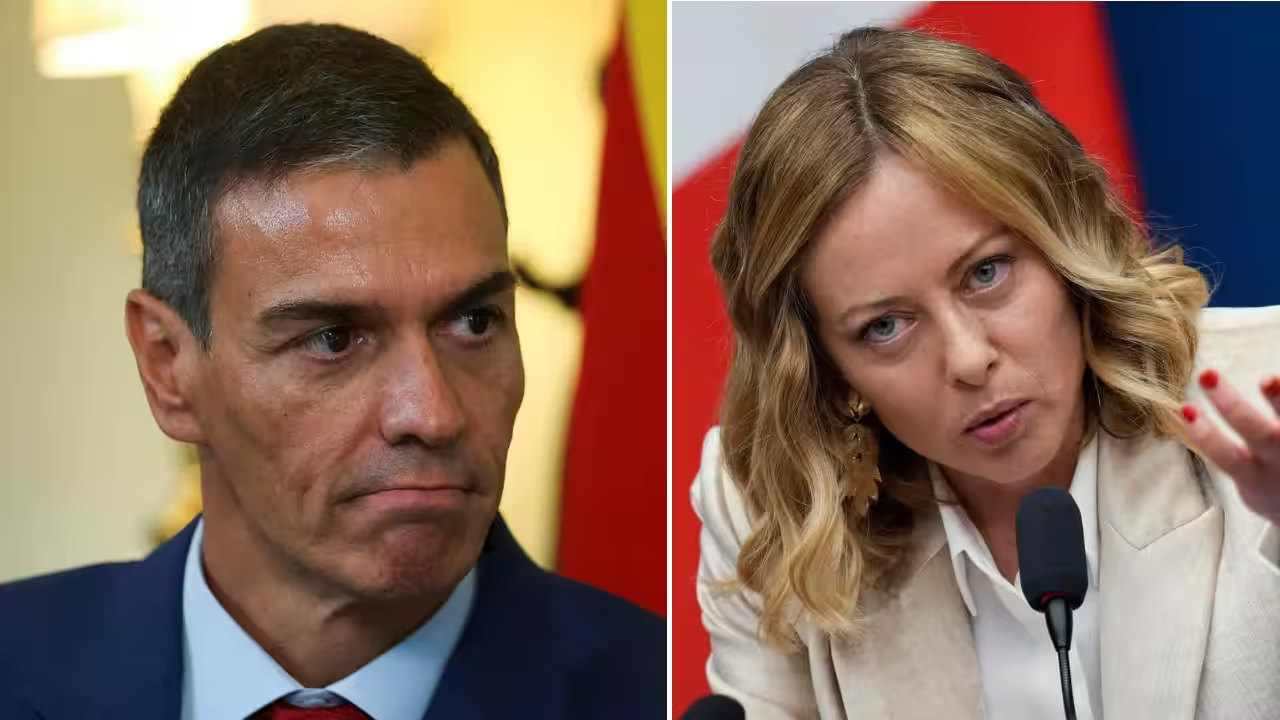
Italy extended its checks on arrivals from Spain by only seven days on Friday, following weeks of tension between the two governments. The decision came after a bilateral meeting between Meloni and Sanchez on the sidelines of the European Union summit in Brussels, according to a diplomat who spoke to Euronews.
The shorter extension signals a possible improvement in relations between Rome and Madrid, which have exchanged reciprocal border restrictions amid disagreements over how to manage irregular migration.
Italy first introduced the temporary checks on 1 August for an initial period of one month, following the arrival of almost 90,000 irregular migrants in Ceuta, a Spanish territory on the North African coast. The Italian government subsequently extended the controls three times, adding 15 days on each occasion and effectively suspending the normal free-movement arrangements with Spain.
Madrid responded by introducing its own border measures, which were also repeatedly renewed. The Spanish government considered Italy’s restrictions unjustified and adopted the reciprocal controls in response.
The latest Spanish extension was due to expire on 22 October. By aligning the two countries’ measures, the latest decision means their temporary controls will now end on the same date, creating an opportunity for both governments to seek an alternative arrangement.
Interior ministers from Italy and Spain are expected to discuss possible alternatives next week, according to diplomatic sources from both countries. However, neither government has yet announced a replacement for the existing controls.
The checks are being carried out at airports and ports because Italy and Spain do not share a land border. They have therefore affected selected points of entry rather than a shared land frontier.
During the first month of the Italian checks, authorities inspected almost 500,000 people, according to Italy’s interior minister. Thirty-one people were refused entry, including eight Moroccan citizens. The minister did not clarify whether those refused entry had arrived in Spain during the large influx of migrants to Ceuta.
The Spanish government, meanwhile, has said that no irregular migrants have moved from Ceuta to mainland Spain. The differing concerns surrounding migration have nevertheless contributed to tensions between the two countries, whose leaders have sharply contrasting political positions.
Meloni leads a far-right government, while Sanchez heads a centre-left administration. Their disagreements over migration reflect wider divisions within the European Union over border security, asylum policy and the responsibilities of individual member states.
The issue is also expected to feature prominently at the European summit, where EU leaders have scheduled a strategic discussion on migration. Italy and Spain are likely to approach several of the questions from different perspectives, particularly as European governments debate how to manage irregular arrivals and coordinate national policies.
Another contentious issue is Spain’s plan to regularise the status of around 600,000 undocumented migrants. Several EU countries have expressed concern that the measure could encourage more irregular migration or create a pull factor for people seeking to enter the bloc.
Critics of the plan fear that regularisation in one member state could have consequences for other countries within Europe’s system of free movement. The debate highlights the difficulty of reconciling national decisions on immigration with the EU’s broader approach to migration management.
For now, the agreement between Meloni and Sanchez offers a limited step towards reducing immediate tensions. The aligned expiry date gives both governments time to explore alternatives, but their broader disagreement over migration remains a central obstacle to a lasting resolution.