
Interlaken vs Innsbruck is a useful comparison for travellers trying to choose between two of Europe’s best-known Alpine destinations for a winter holiday. Both offer snow-covered mountains, winter sports, distinctive places to stay and plenty of opportunities to spend time outdoors, but the experience is quite different in each destination.
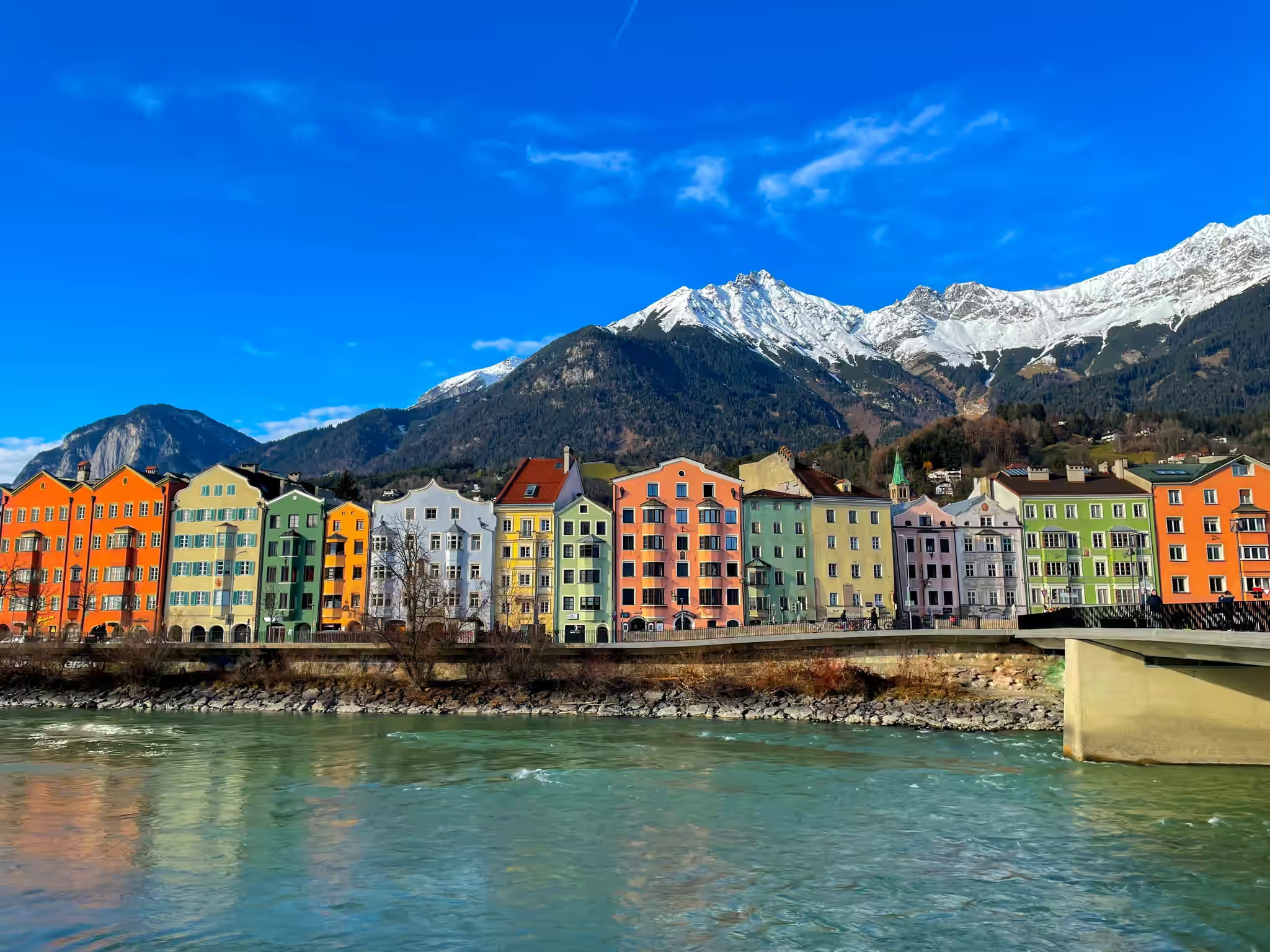
Winter in the Alps is often associated with skiing and snowboarding, but neither Interlaken nor Innsbruck is limited to the ski season. Both destinations offer alternatives ranging from hiking and tobogganing to mountain sightseeing, cycling and, surprisingly, winter water activities.
Interlaken sits in Switzerland’s Bernese Oberland, between Lake Thun and Lake Brienz and surrounded by some of the country’s most recognisable Alpine scenery. The resort is a year-round destination, and its winter landscape creates opportunities to explore the region even when temperatures fall and snow covers the surrounding mountains.
Around 370 kilometres to the east, Innsbruck provides a different interpretation of an Alpine holiday. The Austrian city is the capital of Tyrol and is widely associated with the “capital of the Alps” title, although Grenoble in France also uses the description. Unlike a traditional mountain resort, Innsbruck combines an urban centre with immediate access to ski areas, mountain trails and other winter activities.
For skiers and snowboarders, Interlaken provides access to five areas within the wider Interlaken Holiday Region: Beatenberg-Niederhorn, Brienz-Axalp, Diemtigtal, Habkern and Aeschi-Aeschiried. The landscape includes broad pistes, downhill runs and snowparks, with the surrounding Bernese Alps providing a dramatic backdrop.
Habkern is a smaller ski area where one lift serves four pistes of different difficulty levels. Aeschi-Aeschiried offers another particularly scenic setting, with views towards Lake Thun and the distinctive Niesen peak. Both areas can become especially attractive when winter snowfall is heavy.
There are also ways to explore Interlaken without putting on skis. The region has about 220 kilometres of winter walking trails, many of which are maintained for use during the colder months. The circular Aeschi hike is one option, with views towards Niesen along the route.

Cycling is another possibility. Winter conditions can make outdoor riding more demanding, but Yellow Velo’s “Winterlaken” tour provides a more relaxed way to see the area by e-bike. The approximately two-hour guided route takes visitors through Interlaken’s old town, past the remains of a 13th-century castle and into the traditional village of Bönigen.
Interlaken also offers an unusual winter experience on Lake Brienz. Visitors can kayak or use surf skis on the lake during the colder months, with dry suits providing protection from the low temperatures. Tours take place on the lake’s relatively calm waters, with snowy mountains surrounding the route.
Accommodation in the Interlaken area is varied, ranging from hotels and wellness properties to campsites that accommodate tents, caravans, mobile homes and bungalows. There are also properties at higher elevations for travellers who want to stay closer to the mountain landscape.
Getting to Interlaken is relatively straightforward despite the town not having its own airport. Bern Airport is about 50 kilometres away, while Zurich Airport is approximately 135 kilometres away. Within Switzerland, trains connect Interlaken with major cities including Bern, Zurich, Geneva and Basel, with services running at regular intervals. The region is also connected to Switzerland’s road network, making it accessible by car.
Innsbruck offers a different kind of winter adventure, with activities built around its position between the city and the surrounding Tyrolean mountains. Skiing remains central to the experience, but tobogganing and cross-country skiing provide alternatives for visitors who want to explore the landscape at a different pace.
The city and surrounding region are home to Tyrol’s highest toboggan run, located at the Kühtai ski resort at an altitude of 2,127 metres. The 2,020-metre route takes around 45 minutes to climb before the descent begins. The experience can continue after sunset because the run is floodlit at night.
Another of Innsbruck’s most recognisable landmarks is the Bergisel Ski Jump, a 50-metre-high structure designed by Iraqi-British architect Zaha Hadid as part of a major redevelopment. It is a working sports facility, but visitors can also use the viewing terrace to take in the surrounding landscape. The Bergisel Sky restaurant, with its large glass windows, provides another way to see the mountains from the landmark.
For cross-country skiers, the Innsbruck region has almost 40 trails. At the cross-country ski centre in Rinn, the Panoramaloipe route passes through open fields towards Judenstein, at around 900 metres above sea level. The trail includes both diagonal and skating tracks and is free to use.
Food is another part of the winter experience in Innsbruck. At Graf Ferdinand Haus, visitors can warm up after time outdoors with the restaurant’s hot-stone dining, meat or cheese fondue and spare ribs. The mountain hut operates from December through April and has a sun terrace overlooking the surrounding landscape.
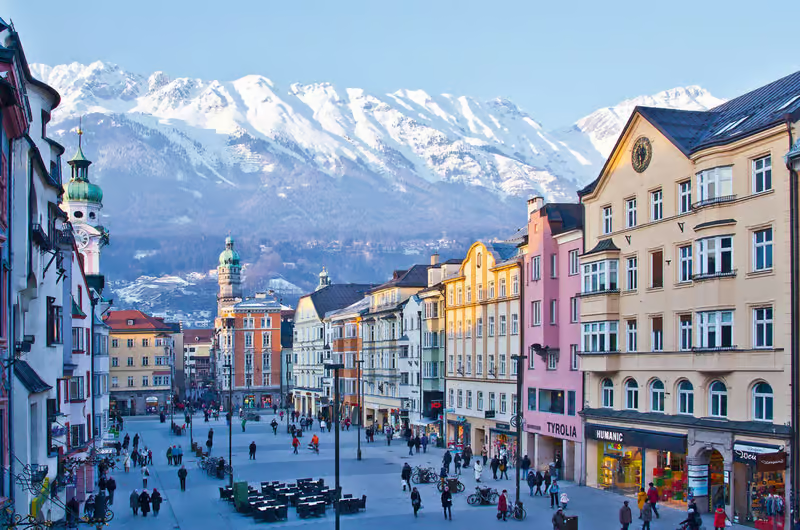
The accommodation experience also differs from what travellers might expect from a conventional city break. Visitors can stay in apartments rented by local farmers for a closer experience of Tyrolean rural life, while mountain accommodation at different elevations offers another way to remain close to the winter landscape.
Transport is one area where Innsbruck has a clear advantage. The city has its own airport, with flights operated by around 50 airlines. Carriers serving Innsbruck include Lufthansa, Icelandair, British Airways, easyJet and Finnair. The city also has a dedicated coach terminal and a central railway station with international connections.
Trains from Vienna run around 20 times a day, while there are also twice-daily services from Venice and a daily connection from Frankfurt. This makes Innsbruck particularly convenient for travellers combining the city with other destinations in Austria or neighbouring European countries.
The choice between Interlaken and Innsbruck therefore depends largely on the kind of winter holiday a traveller wants. Interlaken has the advantage of its lakes, dramatic Bernese Oberland scenery and the unusual possibility of combining mountain activities with winter experiences on the water. It also works well for travellers who want access to smaller ski areas and walking routes without giving up the convenience of Switzerland’s rail network.
Innsbruck, meanwhile, offers a stronger combination of city life and mountain adventure. Its airport and extensive rail connections make it easier to reach, while activities such as night tobogganing, cross-country skiing and visits to the Bergisel Ski Jump add variety beyond the conventional ski holiday.
Both destinations can deliver a memorable Alpine winter, but they appeal to slightly different travellers. Interlaken is particularly suited to those drawn to lakes, mountain villages and broad landscapes, while Innsbruck is a natural choice for visitors who want an Alpine setting combined with a functioning city, strong transport links and a wider mix of winter activities.


