ICC convictions have placed former Central African Republic rebel commander Mahamat Said Abdel Kani at the centre of a case involving the torture and mistreatment of detainees during the country’s civil conflict.
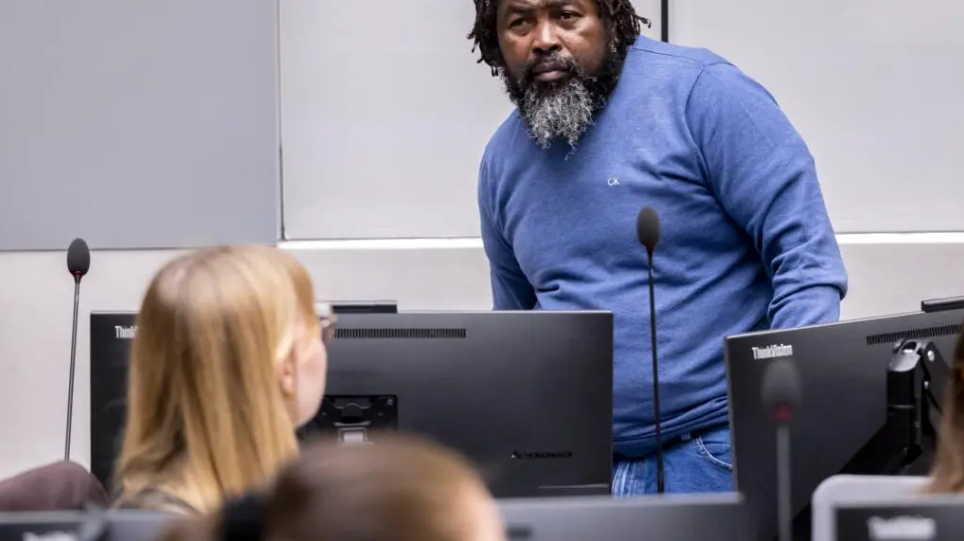
Said, 56, was convicted by the International Criminal Court of war crimes and crimes against humanity linked to abuses committed at a detention centre in Bangui in 2013, when the Central African Republic was descending into a violent conflict. He was acquitted of three other war crimes charges. The court has not yet announced his sentence.
Said was a senior member of the predominantly Muslim Seleka rebel coalition, which seized power in 2013 after overthrowing President Francois Bozize. He was responsible for a unit at the Central Office for the Repression of Banditry, known by its French acronym OCRB, where detainees were held and interrogated.
Presiding judge Miatta Maria Samba said Said participated in the interrogation and mistreatment of prisoners and was present when detainees were tortured. During the reading of the judgment, Said repeatedly shook his head as the judge described the findings against him.
The court heard evidence of severe physical abuse and degrading conditions inside the facility. Judges found that detainees were beaten, tortured and subjected to treatment that caused lasting physical and psychological harm.
One form of torture described in the judgment was “arbatachar”, in which a prisoner’s hands, elbows and feet were tightly bound together behind the back. Other detainees were beaten with ropes and whips or doused with water.
Victims told the court about the consequences of the abuse long after the immediate violence had ended. Judge Samba referred to one victim who said the experience had left him “completely unbalanced” and that his life had been “completely destroyed”.
The conditions in which some detainees were held added another layer of abuse. According to the court, prisoners were confined in a cramped underground cell beneath Said’s office, where there was no adequate sanitation or ventilation.
“Detainees had to urinate and defecate inside the underground cell. The underground cell was dark, cramped, dirty, and insufficiently ventilated,” Samba said. The floor, she added, was covered in waste and smelled of faeces and urine.
Said’s conviction comes from one of the darkest periods in the Central African Republic’s recent history. The Seleka takeover in 2013 triggered a broader conflict that quickly took on a sectarian dimension. Predominantly Christian and animist armed groups known as the anti-Balaka emerged to fight Seleka forces, and civilians were caught in widespread violence.
Thousands of people were killed during the conflict, while armed groups on opposing sides were accused of serious abuses against civilians and detainees. The violence also prompted international intervention. French troops operating under a United Nations mandate helped government forces regain control of major cities from 2014.
The Central African Republic later entered a political process aimed at ending the conflict, culminating in a peace agreement signed in Khartoum in 2019. But accountability for crimes committed during the fighting has remained a central issue, including through cases brought before the ICC.
The court has prosecuted figures associated with both sides of the conflict. In 2025, former Central African Republic sports minister Patrice-Edouard Ngaissona and former lawmaker Alfred Yekatom were convicted of war crimes and crimes against humanity. Yekatom was sentenced to 15 years in prison after being convicted of 20 counts, including murder and torture. Ngaissona received a 12-year sentence after being convicted on 28 counts.
Said’s case adds another conviction involving the Seleka side of the conflict, while the earlier cases against Yekatom and Ngaissona dealt with figures linked to the anti-Balaka movement. Together, the prosecutions reflect the court’s efforts to establish individual responsibility for crimes committed during the Central African Republic’s civil conflict.
The ICC, established in 2002, prosecutes individuals accused of genocide, crimes against humanity, war crimes and the crime of aggression when the court has jurisdiction. Unlike a national court, it does not prosecute states or governments. Its cases focus on individual criminal responsibility for some of the gravest crimes under international law.
For Said, the conviction establishes criminal responsibility for the abuses covered by the charges on which he was found guilty. The next stage of the case will be sentencing, which the court is expected to determine separately.