Heathrow Airport tear gas incident left more than 20 people needing treatment after a confrontation at Terminal 3 developed into a chaotic scene in which passengers and airport workers reported coughing, breathing difficulties and vomiting, with one worker telling a court she vomited blood.
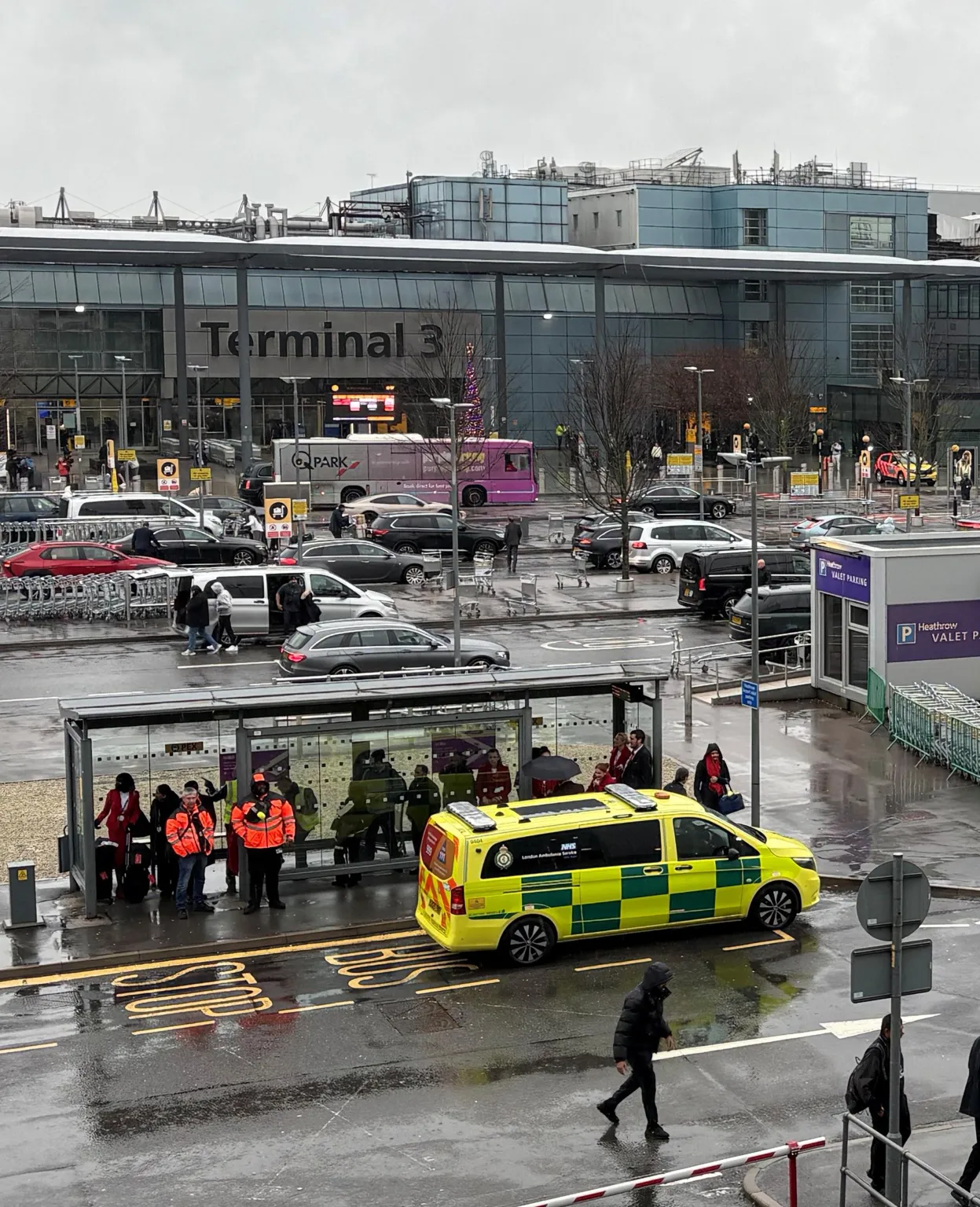
Four men have pleaded guilty to affray over the December 7 incident at Heathrow Airport, which triggered a lockdown at parts of Terminal 3 and caused widespread disruption to passengers using the airport.
Tyrone Richards, 31, Anton Clarke-Butcher, 25, Omoneke Whyte, 31, and Denzel Eduardo, 29, entered their guilty pleas at Isleworth Crown Court in June. The case returned to court for sentencing, where prosecutors outlined how the incident unfolded shortly after 8am.
The court heard that three of the defendants were wearing face coverings and dark clothing when they sprayed a substance believed to be CS gas into a lift in a multi-storey car park. Inside were two women who had just arrived from Johannesburg, South Africa, along with two men who had met them at the airport.
The group inside the lift prevented the defendants from getting in, prompting other members of the public to flee the area. The substance was later released when the lift reached the ground floor, exposing people in the surrounding area, including those near a Caffè Nero.
More than 20 people were treated by paramedics and five were taken to hospital.
One of the coffee shop’s baristas told the court that she began coughing and vomiting blood after being exposed to the substance. She said she had felt completely well moments earlier before becoming suddenly unwell, leaving her frightened by how quickly her condition changed.
The two women who had arrived from Johannesburg later made their way to an airport taxi forecourt. Prosecutors said the defendants followed them there and took their suitcases, which were never recovered.
One of the women was also allegedly sprayed directly in the face at close range, causing her to cough and choke.
The effects of the incident were felt beyond the immediate area. Parts of Terminal 3 were locked down for several hours, disrupting shuttle buses and train services and leaving passengers and airport staff struggling to move through the terminal.
A customer service agent described the situation as terrifying. She told the court that she became dizzy and felt as though she was about to lose consciousness. A woman in a wheelchair whom she had been assisting was struggling to breathe and needed an inhaler.
Another passenger, a mother who had arrived from South Africa with her 14-month-old son, said the child began coughing after the substance spread through the area. She told the court she was immediately afraid for both her baby’s safety and her own.
A man who was arranging a taxi from the airport car park described seeing between 20 and 30 people coughing. He said he was also struggling to breathe.
Prosecutor Gary Rutter told the court that the precise circumstances leading to the incident were not clear, although he suggested that the circumstances pointed towards an underlying dispute.
The prosecution said the incident caused members of the public to cough and vomit, with some reportedly vomiting blood.
Richards was arrested at Heathrow shortly after the incident. The other three men were later identified and arrested separately.
During the sentencing hearing, however, lawyers representing the defendants challenged parts of the prosecution’s account and sought to distinguish their clients’ individual roles in what happened.
Genevieve Moss, representing Eduardo, argued that the CS gas had been released by a rival group. She told the court that Eduardo suffers from asthma and that exposure to the substance would have posed a serious danger to him. Eduardo, who has 12 previous convictions for 18 offences, would not have agreed to participate in an activity involving such a substance, she argued, adding that he had expressed deep remorse.
Rushnay Sikander, representing Whyte, said her client was very remorseful and referred to his difficult childhood. She told the court that Whyte’s father was murdered when he was five and that he had later been the victim of three separate stabbings.
Shanda McAteer, representing Clarke-Butcher, who has 14 convictions for 31 offences, said her client denied releasing the gas but genuinely regretted what happened.
Patrick Harte, representing Richards, who has three previous convictions, said Richards was not present when the first spray was released. He also said his client was sorry that innocent members of the public had suffered as a result of the incident.
The four men have admitted affray, but the sentencing hearing has not yet concluded. The case has left questions over what led to the confrontation at one of the UK’s busiest airports, while the accounts heard in court underline the extent to which the incident affected passengers and staff who were caught up in it.