
Europe’s fossil fuel transition is facing renewed pressure as governments across the European Union seek additional oil and gas supplies to protect their economies from rising energy costs and potential shortages.
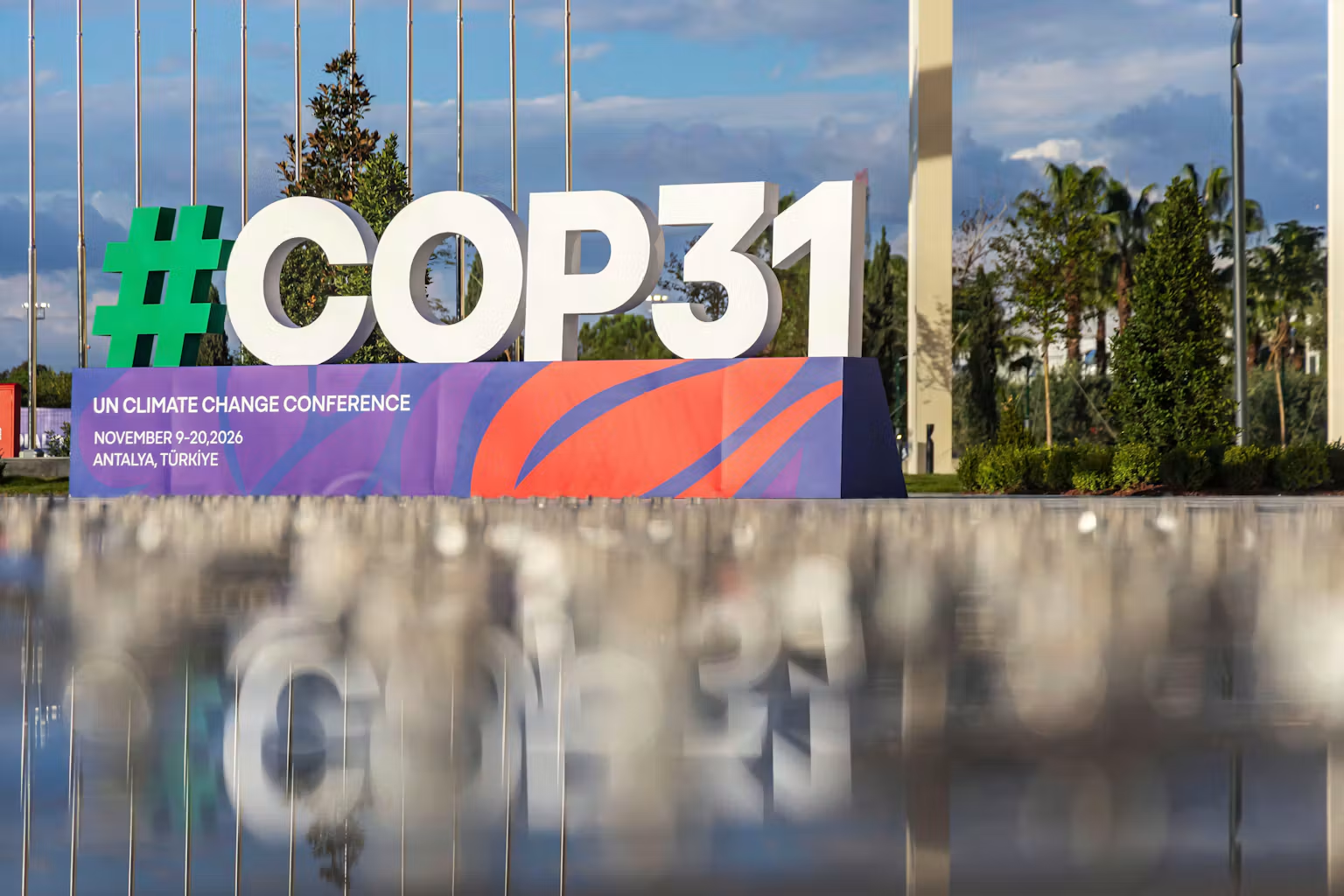
The contradiction is becoming increasingly visible at COP31, the United Nations climate summit taking place in Antalya, Turkey, where European leaders are calling for a faster shift away from fossil fuels while their governments pursue new supply agreements, expand gas infrastructure and reconsider domestic energy production.
The energy crisis linked to the US-Israeli war on Iran has brought energy security back to the centre of European policymaking. With prices rising and concerns about supply disruptions growing, several governments are placing greater emphasis on affordable and reliable energy, even when this means maintaining or expanding their reliance on fossil fuels.
All 27 EU member states have endorsed the bloc’s position at COP31, but their domestic energy policies reveal differences in how they intend to achieve the transition. For countries heavily dependent on imported oil and gas, securing alternative supplies has become an immediate priority.
Hungary is among the countries particularly concerned about the risks of relying on a limited number of energy suppliers. Energy Minister István Kapitány recently said Budapest was discussing potential gas purchases from Romania’s Neptun Deep offshore project and seeking greater access to liquefied natural gas (LNG) terminals in Croatia and Greece.
Speaking at the G7 Paradigma energy conference, Kapitány used the example of someone standing on one leg to explain the importance of energy security. “If someone stands on one leg, security is the most important question,” he said.
György Bacsa, chief executive of Hungarian oil and gas company MOL, has also warned that ending Russian energy supplies could carry significant economic consequences for Hungary and Slovakia.
In an interview with Euronews, Bacsa argued that the cost of replacing existing supplies with non-Russian alternatives or greener energy was becoming increasingly difficult for businesses and consumers to absorb.
“This is also a question of affordability. Today, you have to pay such a premium for basic raw materials and energy supplies that, at a certain point, it can lead to societal dysfunction,” he said.
Bacsa said the issue had moved beyond a willingness to pay slightly more for cleaner or alternative energy. He warned that rising energy bills could seriously damage the Hungarian and Slovak economies and potentially trigger political instability with wider consequences for Europe.
He also stressed that MOL was investing in alternative supply routes and infrastructure, including the pipeline connection between Slovakia and Hungary, as part of efforts to diversify its sources of energy.
Croatia is positioning itself as another important supplier for Central and Eastern Europe. The country wants to expand the role of its Krk LNG terminal and port infrastructure in helping neighbouring countries reduce their dependence on Russian gas.
Prime Minister Andrej Plenković has promoted the Adriatic pipeline as an alternative route for Russian oil supplies to landlocked countries, including Hungary and Slovakia. However, the two countries have raised concerns about the higher costs associated with alternative routes.
For Greece, energy security is increasingly connected to national sovereignty and its wider foreign policy interests.
Environment and Energy Minister Stavros Papastavrou argued ahead of COP31 that countries should not have to choose between climate protection and reliable energy supplies. Speaking to local media, he described the development of national energy resources as a matter of national importance.
Greece is pursuing offshore gas exploration while seeking to reduce its dependence on Russian energy. It is also strengthening energy relationships with the United States, Cyprus, Egypt and countries in the Balkans. LNG imports and gas infrastructure have consequently become important elements of its strategy to expand regional influence and diversify supply.
The country’s energy transition, however, presents a more complicated picture. Wind and solar power accounted for more than 40% of Greek electricity generation in 2025, but their combined share did not increase that year. Natural gas gained ground despite continued investment in renewable energy.
Romania is also seeking to establish itself as a major regional energy supplier, using its natural resources and infrastructure to attract investment.
Speaking in Abu Dhabi on 3 November, Romanian State Secretary for Energy Marius-Viorel Poșa presented the country as a potential energy hub for Central and Eastern Europe.
“Romania’s energy resources and infrastructure position it as an energy hub in Central and Eastern Europe and an attractive investment destination,” he said.
Poșa pointed to the Neptun Deep offshore gas project in the Black Sea, which is expected to supply Romania and neighbouring countries. He also highlighted investments in wind power, the Cernavodă nuclear power plant and electricity connections with other countries in the region.
Despite these ambitions, Romania is also concerned about the financial pressure that the transition away from fossil fuels could place on its industries.
At a meeting of EU energy ministers on 15 October, Romanian Energy Minister Dumitru Chisăliță supported decarbonisation but warned against policies that could weaken industrial competitiveness.
Romanian industrial production was 2.6% lower than the previous year, placing the country among the EU members experiencing the sharpest contractions, according to Eurostat.
Chisăliță said businesses needed predictable regulations and realistic deadlines to make the investments required for the transition. He argued that climate objectives should be pursued without overlooking their effects on energy security, economic activity and household costs.
The differences between national priorities are creating a challenge for the European Union as it tries to present a united position at international climate negotiations.
Brussels wants COP31 to build on the commitment made at COP28 in Dubai to move away from fossil fuels. However, turning that commitment into a more detailed international plan is proving politically difficult, particularly as countries face pressure to protect consumers, businesses and national energy supplies.
A senior European Commission official acknowledged that securing progress on the issue at COP31 would be difficult. The EU has nevertheless welcomed a roadmap presented by Brazil’s COP30 presidency, which aims to provide a framework for countries working towards a transition away from fossil fuels.
The initiative has also received support from countries seeking to turn the COP28 commitment into practical national policies. Following COP30, 57 countries, including 14 European nations, backed a declaration at the Santa Marta conference in Colombia to develop roadmaps for moving away from fossil fuels.
The European Commission hopes Brazil’s proposal will encourage more countries to participate in the process and translate their climate commitments into concrete action.
“We do hope that the Brazilian roadmap will inspire an increasing number of countries to sign up and to make work of it,” the senior Commission official said.
But the European position faces a difficult test as Turkey hosts COP31 in Antalya. Although the summit’s official agenda places emphasis on electrification and the transition to cleaner energy, environmental organisations have criticised the country’s continued reliance on fossil fuels and plans for further expansion.
For European governments, the immediate challenge is balancing the cost and reliability of energy with the long-term commitments made under international climate agreements. Their support for moving away from fossil fuels remains part of the EU’s official position, but the search for additional oil and gas supplies shows how difficult it is to translate that ambition into national energy policy.


