
The easiest digital nomad visas to qualify for financially are not necessarily found in the world’s cheapest destinations. The real difference lies in how much a country expects remote workers to earn, whether that income must come from foreign clients or employers, and what additional financial evidence applicants must provide before receiving permission to live there.

For freelancers, employees working remotely and entrepreneurs who want to relocate without giving up their existing income, the monthly earnings threshold can determine which countries are realistic options. Some immigration programmes set a relatively modest minimum income, while others expect applicants to earn several thousand euros every month, maintain substantial savings or prove that their work will not compete with the local labour market.
A useful comparison must therefore distinguish between a low income threshold and an easy visa application. Income is only one part of the assessment, and the requirements can change as governments revise their immigration rules, minimum wages and financial benchmarks.
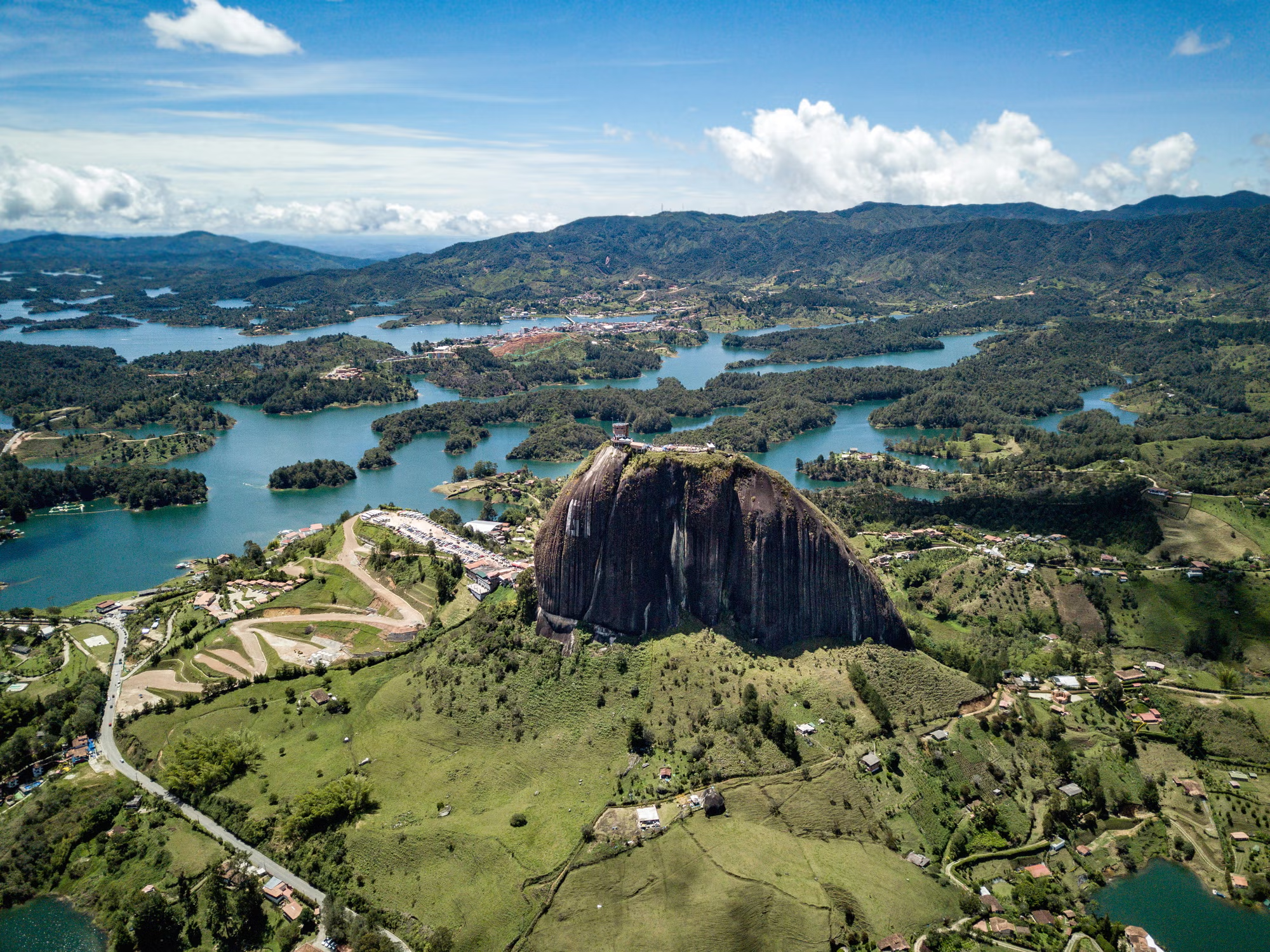
Colombia is among the first destinations worth examining for applicants whose income is modest but consistent. Its digital nomad visa allows eligible foreign nationals to work remotely for employers or clients abroad, with qualifying applicants able to receive permission to stay for up to two years. The income test is tied to three times the country’s legal monthly minimum wage, rather than a fixed amount in US dollars. That makes the threshold sensitive to changes in Colombia’s wage rules and exchange rates. Applicants must also provide evidence of their remote work and health insurance, and the programme is not open to every nationality. The visa is therefore an attractive starting point for eligible remote workers, although meeting the financial test alone does not guarantee approval.

Ecuador also offers a relatively accessible financial threshold. Its official Nomad Visa guidance requires foreign-source income equivalent to at least three unified basic salaries per month during the three months before applying. Applicants can alternatively demonstrate savings equal to 36 basic salaries for each year. Because the threshold is linked to the national minimum wage, it changes when the government adjusts that figure. Ecuador’s dollarised economy makes the requirement particularly straightforward for applicants who earn in US dollars, although applicants should confirm the current salary benchmark and whether their nationality is eligible before preparing an application. The programme also requires evidence that the applicant works remotely for a foreign company or person.

Brazil sets a clearly stated minimum of $1,500 in monthly income from a foreign source. Applicants who do not meet the monthly-income route may instead demonstrate at least $18,000 in available bank funds. The alternative is important because it gives people with savings, but less predictable monthly earnings, another way to demonstrate financial capacity. The Brazilian rules also require evidence of remote-working arrangements and a professional relationship with an employer or client abroad. For freelancers whose income varies from month to month, the savings option may be more useful than a programme that assesses only regular earnings.

Spain requires a substantially higher income, but remains a prominent option for people who want to establish themselves in Europe while continuing to work remotely for businesses outside the country. Under the 2026 benchmark published by Spain’s consular authorities, a solo applicant must show at least EUR 2,442 per month, equivalent to 200 per cent of the national monthly minimum wage. The threshold rises for accompanying family members. Applicants must also establish that their professional relationship with the relevant foreign employer or clients meets the programme’s conditions, including the required period of prior professional engagement. Spain is therefore less accessible to lower earners than Colombia, Ecuador or Brazil, but it offers a structured route for qualified remote employees and self-employed professionals.

Costa Rica sets its minimum at $3,000 in stable net monthly income for an individual applicant, with a higher threshold for families. The country’s official tourism guidance lists $5,000 per month for family applications, while another official government service page gives a different family figure. Applicants travelling with dependants should verify the current amount directly with the relevant authority rather than relying on older summaries. Medical insurance is also required, and the application involves a one-time fee. The income threshold is higher than Brazil’s, but Costa Rica may still appeal to workers who can meet it and want a programme designed specifically for remote work.

Hungary’s White Card requires at least EUR 3,000 in net legal monthly income. Applicants must have earned that amount for at least six months before entering the country and are expected to maintain the required income throughout their stay. The programme is intended for eligible third-country nationals working remotely for a company or business outside Hungary, subject to the programme’s conditions. The distinction between gross and net income matters here: an applicant earning EUR 3,000 before tax may fall short of the requirement. Hungary’s threshold is consequently more demanding than the headline figure might initially suggest for employees whose salaries are quoted before deductions.

Greece requires at least EUR 3,500 in monthly net income for a digital nomad residence permit. The amount increases when family members accompany the main applicant, with additional percentages applying to a spouse or partner and children. Remote work must be performed for an employer or clients outside Greece. Applicants generally begin with a national visa application through a Greek embassy or consulate before proceeding with the residence-permit process. The financial bar is higher than in Spain, Brazil or Colombia, making Greece a more realistic option for established professionals than for people just starting out as freelancers.

Croatia’s requirement is also substantial. The Croatian Ministry of the Interior currently lists a minimum of EUR 3,622.50 per month for digital nomads, calculated using the country’s average net salary figures. Applicants can prove their means through regular income, recent payslips or sufficient funds held in a bank account for the intended period of stay. For a 12-month stay, the authority lists EUR 43,470 in available funds as an alternative to demonstrating the monthly amount. This option makes the distinction between income and savings especially relevant: someone with a large reserve may qualify financially without receiving a regular monthly salary at the required level.

Estonia has one of the highest thresholds among the programmes compared here, requiring evidence of at least EUR 4,500 in monthly income before tax under its published digital nomad visa guidance. Applicants must demonstrate that they met the threshold during the six months before applying and establish that their work is location-independent, typically through an employer registered abroad, their own foreign company or freelance clients mainly outside Estonia. The country offers a formal route for remote workers, but the income test puts it beyond the reach of many early-career freelancers and lower-paid remote employees.
These figures offer a useful ranking by financial entry point, but they do not establish which visa is easiest to obtain overall. Colombia, Ecuador and Brazil have comparatively low stated income tests, while Spain occupies a middle position and Costa Rica, Hungary, Greece, Croatia and Estonia demand greater financial resources under the criteria described above. Because the thresholds use different currencies, tax definitions and calculation methods, the order should be treated as a practical comparison rather than a definitive measure of application difficulty.
The distinction between gross and net earnings can change the result for an applicant comparing countries. So can the way a government treats savings, the number of months of income evidence required, the nationality restrictions attached to a programme and the documentation needed to prove that work is genuinely remote. A freelancer with fluctuating invoices may find a savings-based route more suitable, while a salaried employee may prefer a programme that accepts a stable employment contract and payslips.

Prospective applicants should also consider what happens after approval. A digital nomad visa does not automatically provide permanent residence, unrestricted access to the local labour market or exemption from every tax obligation. The length of the permitted stay, renewal conditions, family provisions and rules governing foreign-source income differ by country. A visa that is affordable at the application stage may not be the best long-term choice if its renewal requirements are difficult to meet or the cost of living consumes most of the applicant’s earnings.
For remote workers deciding where to relocate, the most useful first step is to compare their documented income with the official threshold, then check the remaining eligibility rules before paying for translations, insurance or application fees. Government immigration pages and consular offices should take priority over third-party visa guides, which can retain outdated figures long after a minimum wage or financial requirement has changed. The lowest threshold can open the door, but a successful application depends on proving that the applicant qualifies under the full set of rules.


